
The reservation is at 8:30. The dining room has low light, white linens, a serious wine list, and a chef whose tasting menu takes three hours to unfold. A fine dining dress code guide is less about memorizing arbitrary rules than reading that room before you arrive. The goal is not to look wealthy, fashionable, or conspicuously formal. It is to look as though you understand the occasion and are ready to give it your attention.
That distinction matters. A great restaurant should make guests feel welcome, not judged at the door. Still, what you wear affects your own comfort, the tone of a business dinner, and the way you move through an evening built around craft. Clothes that feel right let the food take center stage.
Fine Dining Dress Code Guide: Read the Restaurant First
The restaurant’s stated policy always wins. If the reservation page says jacket required, take it literally. If it says elegant casual, do not translate that to gym sneakers and a logo hoodie simply because the city is relaxed. Restaurants use different language, and the phrase itself can be frustratingly vague, but a few signals usually reveal what they mean.
A Michelin-starred dining room, a formal hotel restaurant, or a destination tasting menu generally calls for polished attire, even where jackets are optional. A chef-led counter in a design-forward neighborhood may welcome more fashion-forward pieces, but it still rewards care. Look at the restaurant’s setting, dinner price, photography, and recent guest images. A room filled with tailored jackets, silk blouses, and refined knits is telling you something before the host ever does.
The time and purpose of the reservation matter, too. A 5:30 p.m. weekday meal at a celebrated restaurant can support a slightly easier look than a Saturday anniversary dinner at 8:45. For a client dinner, dress one degree more formal than you think necessary. You never regret a jacket at the table; you may regret realizing your counterpart has treated the evening as an occasion while you dressed for errands.
What “Smart Casual” Actually Means at Fine Dining
Smart casual is the category that causes the most confusion because it is not casual at all. It means relaxed structure, good materials, and intentional finishing. Think of it as the difference between clothing that happened to be clean and clothing chosen for dinner.
For men and masculine dressers, dark, well-fitting jeans can work at restaurants that explicitly lean casual, especially with a crisp button-down, fine-gauge knit, unstructured blazer, or polished overshirt. Chinos or tailored trousers are safer and usually look better under dining-room light. Leather loafers, clean minimal sneakers, or sleek boots can be appropriate depending on the restaurant. Running shoes, distressed denim, cargo shorts, ball caps, and athletic wear almost never are.
For women and feminine dressers, a midi dress, tailored trousers with a silk or structured top, a refined knit set, or a skirt with an elevated blouse all sit comfortably in smart-casual territory. The most useful question is whether the piece has shape and intention. A sundress may be perfect at a coastal restaurant in summer; a bodycon club dress may feel out of step with a quiet tasting menu. Shoes should be elegant enough for the room but realistic enough for an evening that may include stairs, a bar, or a walk home after dessert.
For anyone, fabric carries more weight than trend. Wool, silk, linen with structure, cotton poplin, cashmere, polished leather, and quality denim read differently from thin jersey, obvious athleisure, or anything visibly worn out. Fine dining is sensory. The same is true of your clothes: texture and finish register before anyone names them.
When to Dress Up: Jackets, Dresses, and Formal Rooms
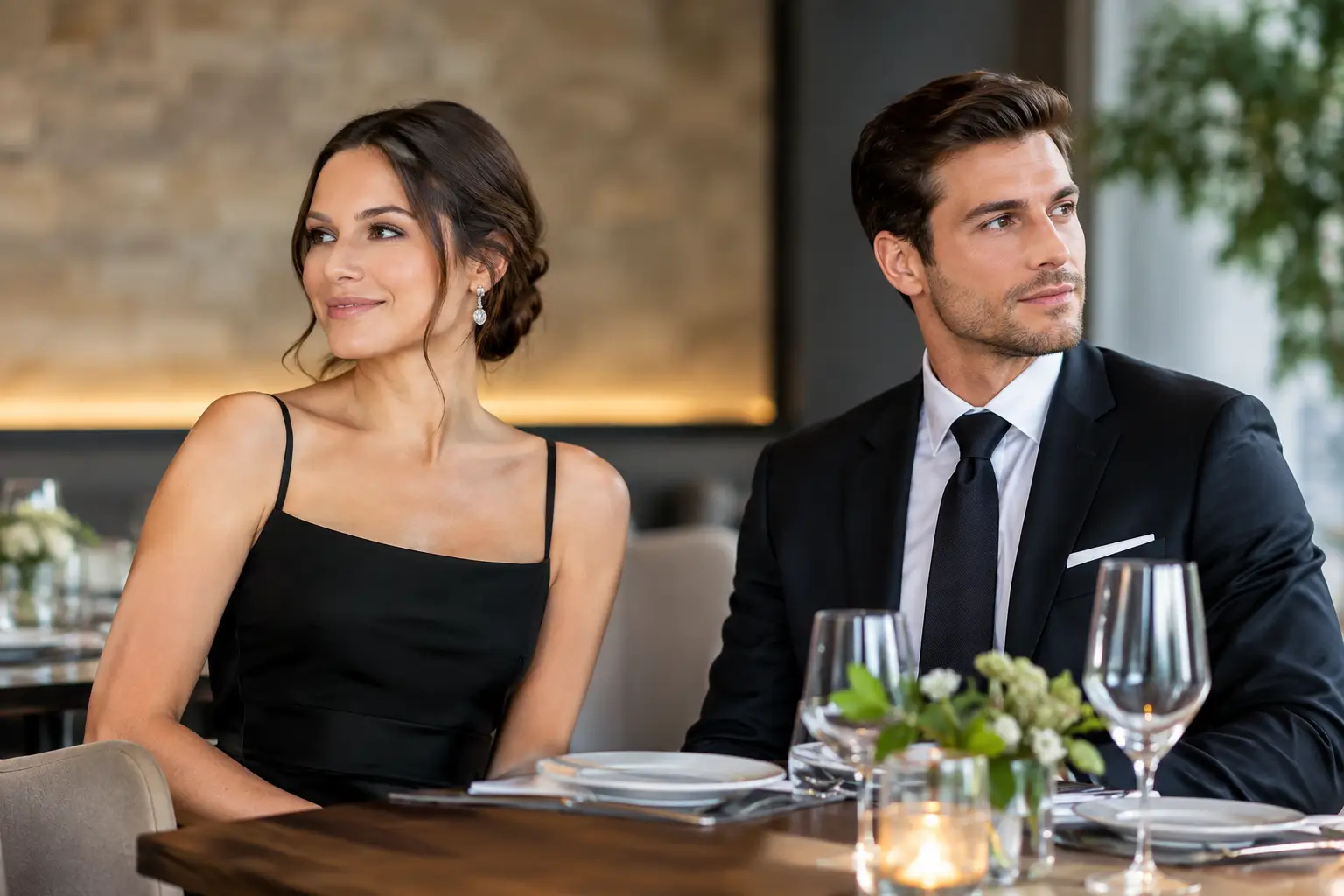
If the dress code says business formal, formal, or jacket required, treat that as a clear instruction rather than a negotiation. A suit is the cleanest answer for men and masculine dressers, though a tailored jacket with dress trousers can be enough where a full suit is not specified. A tie is not always required, but it remains a smart choice for a traditional fine-dining room, a gala dinner, or an especially important professional meal.
For women and feminine dressers, a cocktail dress, elegant jumpsuit, or tailored separates with dressier shoes will rarely miss. This does not require sequins or a floor-length gown unless the invitation calls for black tie. Formal restaurant dressing is typically about restraint: clean lines, a considered accessory, and an outfit that looks finished from the moment you hand over your coat.
Black tie is its own category. If a restaurant hosts a New Year’s Eve dinner, charity event, or special chef’s table with that instruction, follow it. A tuxedo or dinner jacket for men and masculine dressers, and an evening gown or formal cocktail attire for women and feminine dressers, respects both the event and the people who planned it. “Creative black tie” allows personality, but not a casual shortcut.
The Details That Can Undercut a Good Outfit
A polished outfit can lose its footing through small choices. Heavy fragrance is the most common mistake. At a table where someone is pouring aged Burgundy or lifting a spoonful of caviar, a cloud of cologne or perfume becomes part of everyone else’s meal. Use less than you would for a party, or skip it entirely.
Keep bags manageable. An oversized work tote can be awkward in a compact banquette, while a small bag or a bag that can rest neatly at your feet is easier for you and the staff. Outerwear deserves a glance, too. You will likely check it, but a stained puffer over a beautiful dinner outfit can make the arrival feel less composed than it needs to.
Then there is comfort. A restrictive waistband, shoes you cannot walk in, or a jacket that pinches at the shoulders will become the evening’s main narrative by the fourth course. Fine dining asks you to sit for a while, sometimes through eight, 12, or more courses. Choose clothing that lets you breathe, eat, and enjoy the pace.
Dress Codes by Occasion
An anniversary reservation is a good reason to lean celebratory, but matching outfits are unnecessary. Choose looks that feel compatible in formality and mood. One person in a dinner jacket and the other in beachwear makes both people feel exposed; two distinct looks with equal care feel natural.
At a business dinner, err on the side of discreet polish. Loud branding, aggressively trendy pieces, and anything overly revealing can distract from the conversation. A well-cut jacket, elegant blouse, tailored trousers, or a restrained dress sends the useful message: you value the meeting and can move comfortably in the room.
For a vacation meal, respect the destination without treating the restaurant like a costume set. Linen can be exactly right in Miami, Charleston, or Napa, but it should be pressed and substantial. In Las Vegas or New York, a more dramatic silhouette may feel at home. The local style can shift, while the central rule stays the same: dress for the restaurant’s level of intention.
If You Are Still Unsure, Choose One Step Up
When the website offers no guidance and the restaurant’s mood remains hard to read, choose the more polished version of your first instinct. Swap the T-shirt for a collar or structured top, the casual jeans for trousers, and the everyday sneaker for leather shoes or a sleek boot. You do not need to wear a costume of luxury. You need to arrive looking prepared to participate.
The best fine-dining outfit is one you stop thinking about after the host seats you. It leaves room for the warm bread, the first pour, the precise question from the sommelier, and the pleasure of a table that feels worth dressing for.