
The first plate may be a warm gougère filled with smoked trout mousse, served before you have fully settled into your chair. It is small, precise, and not meant to fill you up. That opening gesture gets to the heart of what is a tasting menu: a chef-designed progression of dishes that tells a story over the course of a meal.
Rather than choosing an appetizer, entrée, and dessert from a broad menu, you place yourself in the kitchen’s hands. Courses arrive in a deliberate order, often beginning with bright, saline, or delicate flavors and building toward richer preparations before easing into dessert. At its best, a tasting menu is not simply dinner in smaller portions. It is a point of view, served one course at a time.
What Is a Tasting Menu, Exactly?
A tasting menu, sometimes called a chef’s menu or prix fixe menu, is a multi-course meal offered at a set price. The restaurant determines most or all of the dishes, which may range from five courses to more than 15. Unlike a traditional prix fixe, where diners might select among a few options for each course, a tasting menu is usually more tightly composed. Everyone at the table receives the same sequence, with accommodations made when possible for allergies or dietary restrictions.
The format gives chefs room to serve dishes that would be difficult to place on an à la carte menu: a single pristine scallop with yuzu and finger lime, a broth poured tableside, or a painstakingly constructed bite that makes sense only as a transition between two larger ideas. It also allows a kitchen to use its most perishable, seasonal ingredients without betting on whether enough individual diners will order them.
That control matters. A tasting menu can move from raw seafood to a vegetable course, then into pasta, fish, meat, cheese, and dessert with the pacing of a well-edited evening. Each dish has a job. Some introduce an ingredient; others create contrast, provide a pause, or bring an earlier flavor back in a new form.
How a Tasting Menu Typically Unfolds
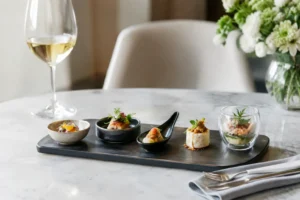
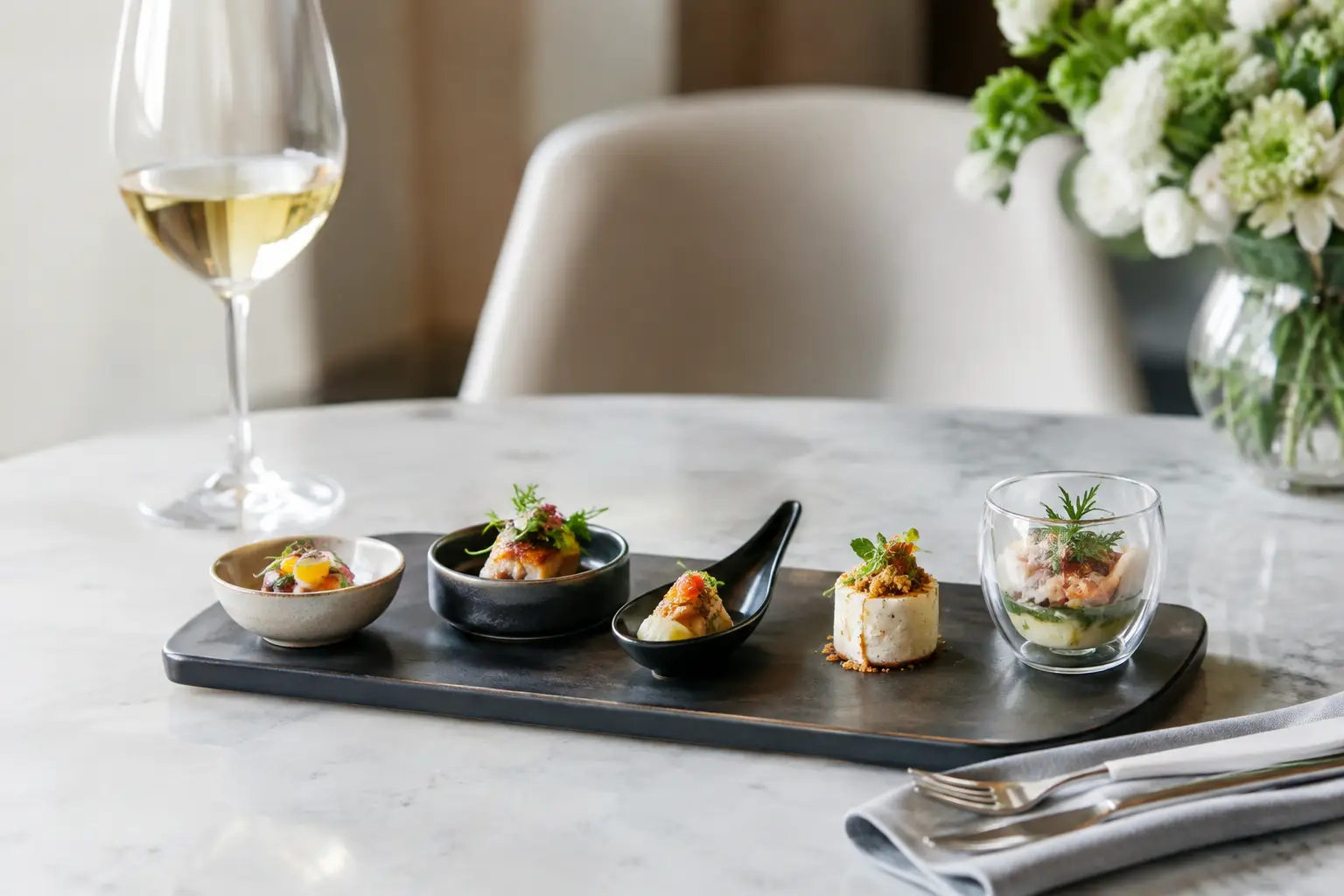
The exact structure varies by restaurant, but the meal often starts with an amuse-bouche: a complimentary one- or two-bite opening from the chef. It might be a spoonful of chilled pea soup, a crisp shell holding lobster, or an edible flower wrapped around a creamy filling. Its purpose is not ceremony for ceremony’s sake. It wakes up the palate and establishes the kitchen’s style.
From there, the menu tends to build in weight and intensity. Early courses may lean on acid, crunch, herbs, raw fish, or clear broths. The middle can include a composed vegetable dish, pasta, shellfish, or a more substantial fish preparation. Meat, if it appears, generally arrives later, followed by a pre-dessert palate cleanser, dessert, and sometimes petits fours with coffee or tea.
A 10-course tasting menu does not necessarily mean 10 full plates. Some courses are only a few bites, while others carry more of the meal’s substance. The goal is satisfaction without the heavy, overstuffed feeling of eating 10 conventional courses. Of course, generous restaurants and rich menus can still leave you very full, especially when bread service, supplemental courses, and wine pairings enter the picture.
Expect the experience to take time. A five-course menu may run about two hours; an ambitious 12-course meal can easily fill three and a half hours. This is part of the appeal for an anniversary or a culinary trip, but it can be a drawback for a business dinner with a hard stop or for diners who prefer a more spontaneous night out.
The Menu May Change Until Service
Many chef-led restaurants do not publish the full tasting menu in advance, and some change it nightly. This can feel mysterious, but it is often a practical result of buying from small farms, fish markets, and specialty producers. A delivery of perfect matsutake mushrooms or local sea urchin can redirect a course entirely.
Restaurants will usually share the broad outline – perhaps a seasonal menu centered on coastal seafood, or a plant-forward menu with optional caviar and wagyu supplements. If you need to know whether the meal includes shellfish, red meat, or alcohol-based preparations, ask when you reserve. Clear questions are welcome; treating the menu as a surprise does not require ignoring your needs.
Why Restaurants Use This Format
For the chef, a tasting menu is a way to control temperature, timing, and context. A crispy-skinned fish course is best when it leaves the pass at precisely the right moment. A delicate custard can be served before a powerful red-wine-braised short rib dulls the palate. In an à la carte dining room, those ideal conditions are harder to choreograph.
For diners, the trade-off is choice for discovery. You may not get to order your usual steak or choose the safest-looking pasta, but you may taste an ingredient or technique you would never have selected on your own. That is why the format works particularly well at restaurants with a clear culinary identity. You are there to understand what the kitchen wants to say.
Not every restaurant needs a tasting menu, and not every diner wants one. A great neighborhood Italian spot can be more satisfying when you can split antipasti, order a bottle, and linger over a favorite dish. Tasting menus shine when the sequence itself is the product.
Tasting Menu vs. Prix Fixe vs. À La Carte
These terms overlap, but they are not interchangeable. À la carte means each dish is ordered and priced separately. You decide the shape of the meal, from a quick main course to a long spread for the table.
Prix fixe means “fixed price” and usually refers to a set number of courses for one price. You may still have choices: soup or salad, halibut or duck, chocolate cake or panna cotta. A restaurant-week dinner is often prix fixe.
A tasting menu is generally more curated and more extensive. The chef selects the progression, portions are designed around that progression, and the meal often includes more technique, service choreography, and explanation. A tasting menu can be prix fixe, but a prix fixe menu is not always a tasting menu.
Wine Pairings Are Part of the Design, Not a Requirement
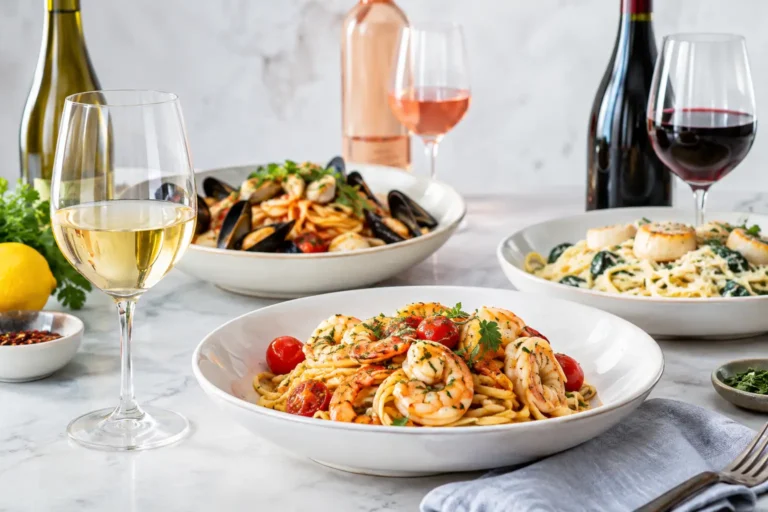
Many tasting menus offer a wine pairing, typically a series of small pours matched to the courses. A skilled pairing can sharpen the experience: high-acid sparkling wine against a creamy opening bite, a mineral white with shellfish, or a lightly chilled red beside duck. The best pairings do more than match color to protein. They respond to sauce, spice, texture, and the dominant flavor of the dish.
Still, a pairing is optional. It can add significantly to the final check, and the volume of pours may be more than some diners want over a long meal. Ask whether the restaurant offers half pours, a nonalcoholic pairing, or by-the-glass options. Ordering a single bottle can also work beautifully, particularly for a shorter menu, though versatility matters more than prestige.
If you are skipping alcohol, do not settle automatically for water. Serious restaurants increasingly offer thoughtful zero-proof pairings built around tea, verjus, ferments, juices, and botanical infusions. They can be compelling, though some are quite sweet, so it is fair to ask how the pairing is structured.
What to Know Before You Book
The most useful tasting-menu etiquette happens before you arrive. Read the restaurant’s cancellation policy, note the full price, and check whether tax, gratuity, supplements, or pairings are included. A menu listed at $225 can become a very different evening once those additions are factored in.
Share allergies and dietary restrictions at booking, not while the first course is being set down. Restaurants can often accommodate vegetarian, pescatarian, gluten-free, or common allergy needs with notice. Severe allergies, vegan requests, and highly restrictive diets may be difficult for a small kitchen working from a fixed menu. An accommodation is never guaranteed, and the right move is to ask plainly rather than hope the kitchen can improvise.
Arrive on time. A tasting menu runs on a kitchen’s rhythm, especially in a small dining room where many tables begin together. You do not need to identify every obscure ingredient or speak in sommelier shorthand. Curiosity is enough. If a course is unfamiliar, ask your server what to notice. Good service should make that question feel natural, not remedial.
A tasting menu is worth booking when you want to give a chef the room to lead. Choose the night when you can slow down, bring an appetite, and let the dish you did not expect become the one you remember.