
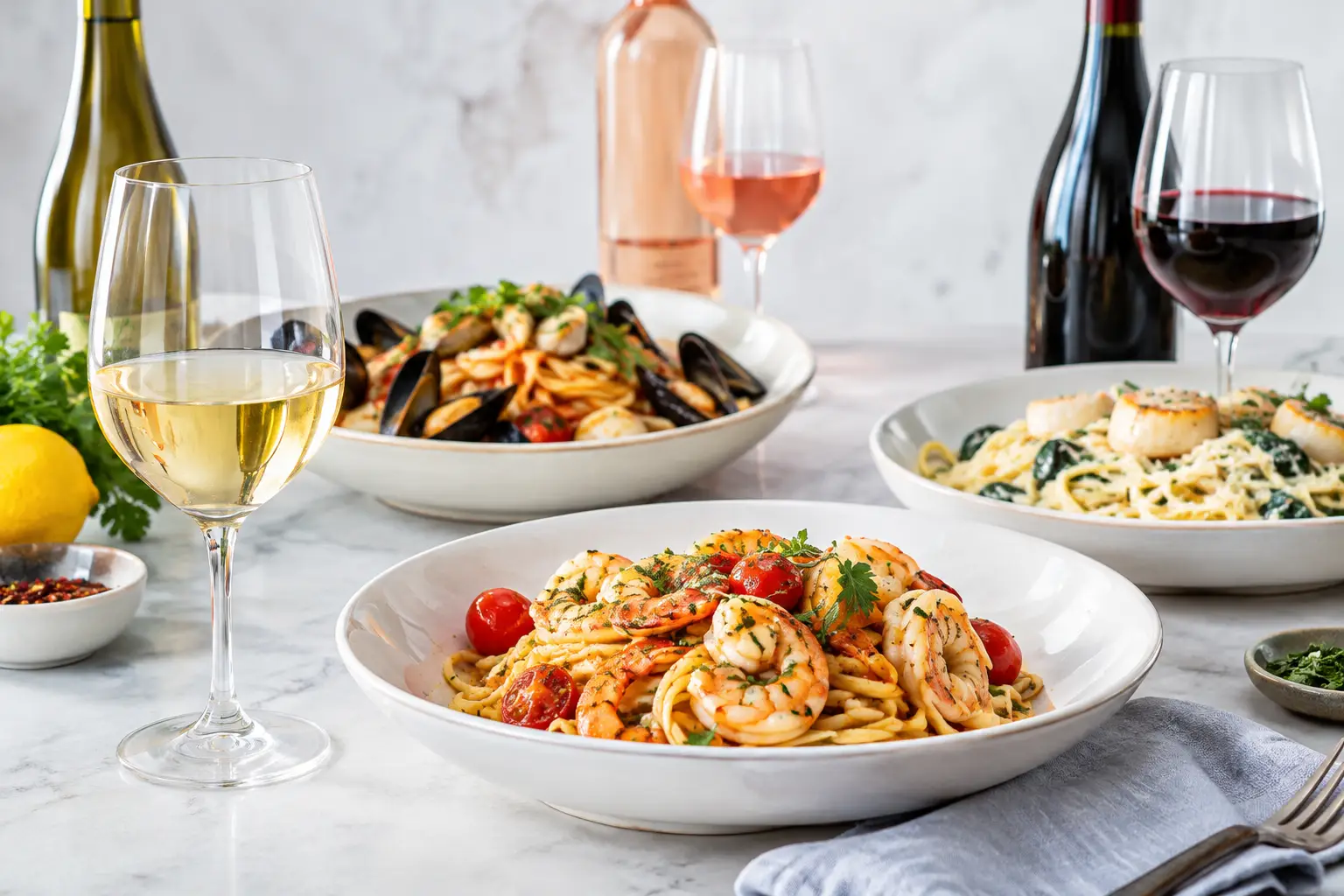
A bowl of spaghetti alle vongole arrives glistening with olive oil, garlic, and clam liquor. The wrong white can make it taste metallic; the right one makes the brine feel brighter, the parsley greener, and the whole plate more composed. That is the useful starting point for finding the best wines for seafood pasta: pair the wine to the sauce and the cooking method, not simply to the fact that fish is involved.
Seafood pasta covers a wide waterfront. It can be a spare tangle of linguine with shrimp and lemon, a tomato-rich frutti di mare, lobster in a cream sauce, or squid ink pasta with cuttlefish. Each asks something different of the bottle. Acidity is usually your ally, but body, sweetness, tannin, oak, and bubbles all matter once the sauce gets richer or hotter.
Best wines for seafood pasta start with the sauce
A useful restaurant rule is to look at what is coating the pasta. Delicate seafood is easily overshadowed by heavily oaked Chardonnay or a firm, tannic red. Yet treating every seafood pasta as a Pinot Grigio occasion leaves excellent pairings on the table. A generous lobster cream sauce may want texture and weight; a spicy tomato sauce can welcome a lightly chilled red.
Think of the wine as another component of the sauce. High-acid wines refresh a buttery or oily dish. Saline, mineral wines echo clams, mussels, and oysters without making them taste more aggressively salty. Aromatic varieties can bridge herbs, citrus, fennel, or saffron. The goal is not to make wine disappear. It is to make the next bite feel as vivid as the first.
Garlic, olive oil, clams, and white wine
For linguine with clams, shrimp scampi, or any olive oil-forward pasta, reach first for Vermentino, Albariño, Muscadet, or a crisp Italian white such as Falanghina. These wines tend to bring citrus, herbs, and a faint sea-spray character that feels especially natural beside shellfish.
Vermentino is arguably the most versatile choice for this lane. Its lemon peel, white peach, and lightly bitter finish keep up with garlic and parsley while respecting sweet shrimp or tender clams. Albariño is a smart alternative when the dish leans lemony or includes firmer seafood such as scallops, crab, or grilled prawns. Its acidity gives the plate lift without turning the pairing severe.
Muscadet, made from Melon de Bourgogne in France’s Loire Valley, is the quiet specialist. It is lean, dry, and often subtly saline, making it excellent with simply prepared bivalves. If the restaurant offers a Muscadet sur lie, the additional lees aging can lend a gentle, bread-like texture without the overt oak that would flatten the dish.
Tomato seafood pasta calls for brighter, not bigger, wine
Tomato changes the equation. Its acidity and sweetness can make a soft, low-acid white seem dull, while its savory depth gives a light red a legitimate role. For spaghetti with mussels in tomato sauce, seafood fra diavolo, or a crabby arrabbiata, consider dry rosé, Etna Rosso, Frappato, or a lightly chilled Barbera.
The classic white answer is still a dry, high-acid Italian bottle – Verdicchio, Fiano in a fresher style, or a restrained Soave. Verdicchio is particularly good with tomato and shellfish because it has enough citrus-driven acidity to meet the sauce, plus an almond-like finish that works with garlic and herbs. Choose it when the seafood remains the central flavor and the tomato is bright rather than slow-cooked and dense.
For a red, prioritize low tannin and lively acid. Etna Rosso, usually based on Nerello Mascalese, can bring sour cherry, dried herbs, and a stony edge that works beautifully with grilled octopus or tomato-sauced calamari. Frappato is even lighter and juicier. Chill either for 20 minutes before pouring. The slight chill sharpens the fruit and keeps the wine from feeling weighty beside seafood.
Avoid Cabernet Sauvignon, Malbec, and most heavily extracted reds here. Their tannins can make shrimp, clams, and squid taste oddly metallic or bitter, especially when the dish has tomato and chili.
Creamy lobster and crab pasta need texture
Lobster ravioli in saffron cream, crab fettuccine, and seafood pasta finished with butter demand more than a brisk, simple white. Chardonnay can be excellent, but style matters. Look for a cool-climate Chardonnay with fresh acidity and measured oak – think citrus, hazelnut, and subtle cream rather than vanilla, toast, and buttered popcorn.
White Burgundy is the fine-dining benchmark when the dish is elegant rather than aggressively rich. Its combination of acidity, texture, and savory complexity meets the sweetness of lobster and crab without drowning it out. At home, a well-made domestic Chardonnay from a cooler coastal site can deliver the same basic logic at a range of prices.
If Chardonnay feels predictable, turn to dry Chenin Blanc. Its waxy texture, quince-like fruit, and bright acidity have a remarkable way with shellfish cream sauces. A dry Vouvray or Loire Valley Chenin is particularly persuasive when the plate includes mushrooms, leeks, tarragon, or a touch of truffle. For a softer, more aromatic option, a dry Pinot Gris can work, especially with crab and sweet corn.
The trade-off is straightforward: the richer the sauce, the more body the wine can carry. But oak is not the same thing as body. A wine can have texture from lees aging, grape variety, or bottle age and still retain enough freshness to keep a creamy pasta from becoming tiring.
Spicy seafood pasta needs a little generosity
Chili heat changes how you perceive alcohol. A high-alcohol, dry wine can make red pepper feel hotter, while a whisper of residual sugar can calm the burn. With shrimp fra diavolo, spicy calamari pasta, or a Thai-leaning coconut seafood noodle dish, consider an off-dry Riesling, dry-to-off-dry Gewürztraminer, or sparkling rosé.
Riesling is the strongest all-around answer. Its lime-like acidity keeps the wine lively, its floral fruit suits ginger and chili, and a modest touch of sweetness buffers the spice. Do not confuse off-dry with syrupy. Many excellent Rieslings taste clean and energetic, with just enough residual sugar to make a spicy dish feel more balanced.
For Italian-style fra diavolo, sparkling rosé offers a more festive route. The bubbles reset the palate after chili and tomato, while red-berry fruit meets the sauce’s sweetness. Choose a dry version, and skip anything heavily sweet or aggressively oaked.
How to order wine with seafood pasta at a restaurant
When a menu lists seafood pasta, scan for the details that signal weight: cream, butter, uni, lobster, bottarga, chili, tomato, charred seafood, or black garlic. A server or sommelier can make a better recommendation if you name the sauce and the dominant seafood rather than asking broadly for a wine with fish.
A useful request sounds like this: “We are ordering the squid ink pasta with crab and chili. Could you suggest something saline and fresh, but with enough texture for the sauce?” It communicates exactly what matters without requiring a vocabulary test.
If two people are sharing several dishes, a bottle of Champagne or a dry sparkling wine is often the diplomatic choice. Blanc de Blancs is particularly strong with oysters, crudo, clam pasta, and lemony shrimp. Rosé Champagne has more breadth for tomato sauces, tuna, salmon, or a table that also includes charcuterie. Bubbles are not a default luxury move – they are structurally useful: acid, freshness, and texture in one glass.
A few pairings worth remembering
Vermentino with linguine and clams is the easy classic. Albariño with shrimp scampi is a bright, confident step up. Verdicchio with tomato-braised mussels earns its place whenever acidity is the main concern. Chardonnay or dry Chenin Blanc with lobster cream pasta gives richness a needed counterweight. Riesling with spicy shrimp pasta is the rescue plan when chili is in charge.
Then allow the dish to overrule the shortcut. A seafood pasta with charred octopus and smoky tomato may be far more compelling with a chilled Etna Rosso than with white wine. A bowl of scallops, peas, and mint in a delicate lemon broth may need nothing more elaborate than a taut Muscadet.
Serve whites cool, not ice-cold, so their aromatics and texture have room to show. Keep a red lightly chilled when seafood is part of the equation. Most of all, taste the sauce before you decide what the seafood “should” drink with. That small act of attention is what turns a safe pairing into one worth lingering over.