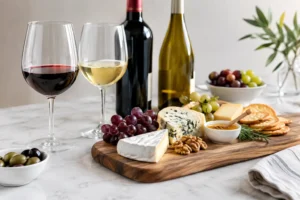
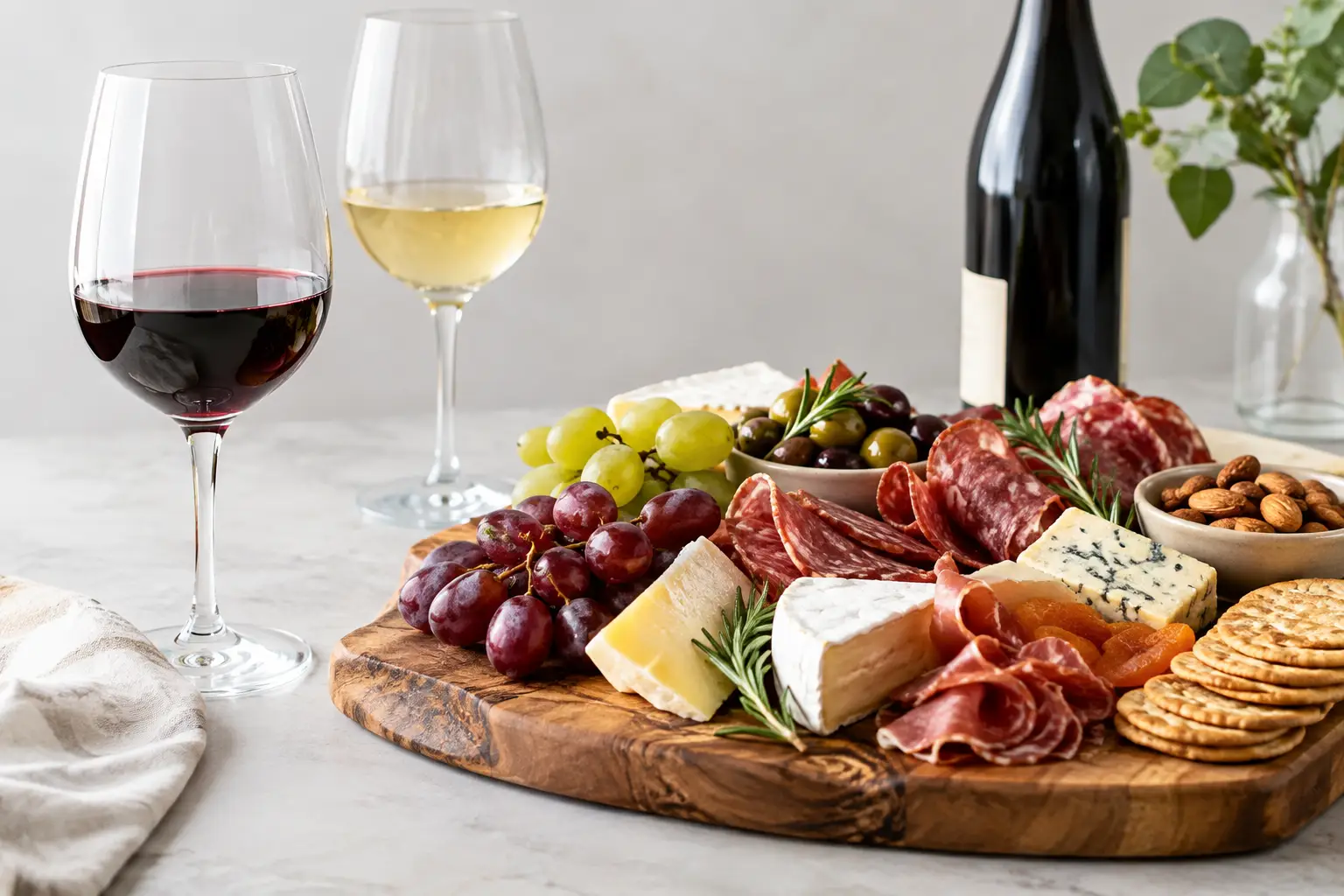
A charcuterie board has a way of making one bottle feel like a high-stakes decision. There is salty prosciutto folding over itself beside buttery triple-cream cheese, a bright swipe of fig jam, sharp cornichons, perhaps a handful of smoked almonds. Wine pairing for charcuterie board is less about finding a single perfect match than choosing a wine agile enough to move through all those contrasts without turning bitter, cloying, or flat.
The most reliable answer is sparkling wine. But that is not the only answer, and it may not be the most exciting one for the particular board you have built. The better approach is to read the board the way a sommelier reads a menu: identify its loudest flavors, then select a wine with enough freshness, fruit, and texture to keep pace.
The rule that makes charcuterie wine pairing easier
Salt, fat, acid, and sweetness are all competing for attention on a good board. Cured meats bring salt and richness. Cheese may be creamy, funky, nutty, or pungent. Pickles and mustard contribute acidity. Dried fruit, preserves, and honey add sweetness. The wrong wine can exaggerate one of those elements, especially tannin against salty meat or dry acidity against a very sweet jam.
That is why high-acid wines and wines with modest tannin tend to perform best. Acidity cuts through fat and refreshes the palate after a bite of salami or Brie. A touch of fruit sweetness can soften heat from peppery soppressata and salt from aged cheese. Tannin, the drying grip often found in young Cabernet Sauvignon and heavily oaked reds, is useful with steak but can become metallic or harsh beside salty cured meat.
Think in terms of refreshment rather than force. A charcuterie board is grazing food, built for conversation and repeat bites. The wine should invite another bite, not demand that the food step aside.
Start with the board, not the bottle
Before opening wine, look at what dominates the arrangement. A board centered on fresh cheeses, mild meats, olives, and fruit wants a different bottle than one crowded with blue cheese, smoked sausage, and hot pepper jelly.
For a classic mixed board, choose sparkling wine
Traditional-method sparkling wine, including Champagne, Crémant, and quality domestic sparkling wine, is the safest choice for a reason. Its acidity brightens creamy cheeses; its bubbles lift fat from the palate; and its subtle toast or brioche notes often echo nuts, crackers, and aged cheeses. Brut is the natural starting point for most boards because it is dry enough for savory ingredients yet generous enough for fruit.
If the board leans salty and spicy, a slightly softer sparkling style can be especially good. Prosecco brings pear and white-flower fruit, while an off-dry sparkling rosé can handle chili heat and sweet preserves with more ease than a bone-dry bottle. The trade-off is that sweeter sparkling wine can make delicate goat cheese seem more tart, so keep the cheeses relatively rich or mild.
For creamy cheeses and delicate meats, pour crisp white wine
Sauvignon Blanc is a strong fit for fresh goat cheese, herbed cheeses, green olives, cucumbers, and lemony spreads. Its citrus and herbal edge gives a board a clean, almost aperitivo-like shape. It is less flattering with sweet fig jam or aggressively smoky meat, where its sharpness can feel a little severe.
For a softer, rounder board, reach for dry Riesling, Albariño, Pinot Grigio, or unoaked Chardonnay. Dry Riesling is particularly versatile because its vivid acidity meets salty ham and washed-rind cheese head-on, while its fruit keeps the pairing hospitable. Albariño brings salinity and stone fruit, making it excellent with Manchego, Marcona almonds, and thinly sliced jamón.
Avoid assuming Chardonnay always means buttery. A lean, lightly oaked example can be beautiful with Brie or Camembert, but a heavily oaked, high-alcohol bottle may overwhelm fresh cheeses and make pickled elements taste oddly sour.
For cured meats and nutty cheeses, open lighter reds
When the board is built around salami, mortadella, prosciutto, Coppa, Gruyère, Comté, or aged cheddar, light-bodied red wine earns its place. Pinot Noir is the polished crowd-pleaser: red cherry fruit, gentle earthiness, and restrained tannin make it comfortable beside a broad range of meats and cheeses. Look for fresh, lower-oak styles rather than dense, extracted Pinot.
Gamay, especially Beaujolais, is often even more useful. It is bright, juicy, and lightly chilled, with enough acidity to handle fat and enough fruit to play well with pepper, mustard, and preserves. A bottle of Beaujolais-Villages or cru Beaujolais is one of the smartest choices for a casual but considered gathering.
Barbera is another excellent option when the board grows more savory. Its naturally high acidity stands up to cured meats and firm Italian cheeses, while its dark cherry profile works with roasted nuts and balsamic onion jam. Serve it slightly cool, around cellar temperature rather than warm room temperature.
For blue cheese, spicy sausage, and sweet accents, use contrast
The most assertive boards need a wine that does not disappear. Blue cheese, peppery sausage, smoked meats, and honey or jam create a situation where a modestly sweet wine is not a compromise but a strategy.
Off-dry Riesling is the classic answer. Its sweetness cushions salt and spice, while acidity prevents it from becoming dessert-like. It is especially persuasive with blue cheese, spicy soppressata, pepper jelly, and dried apricots. Gewürztraminer can work in a similar way, offering rose, lychee, and spice, though its expressive perfume may be too much for a more restrained board.
For a blue-cheese finale with honeycomb, walnuts, or dates, pour a small glass of Sauternes, late-harvest Riesling, or tawny Port. This is best treated as a second wine rather than the all-purpose bottle for the entire spread. Sweet wine is magical with blue cheese, but it can make prosciutto and pickles feel disjointed.
A few pairings worth planning around
If you are building the board around one standout ingredient, let it guide the wine. Prosciutto with melon or peach calls for Prosecco, dry Riesling, or a crisp rosé. Salami and aged cheddar love Beaujolais or Barbera. Goat cheese with herbs and fresh vegetables points toward Sauvignon Blanc. Triple-cream cheese, toasted nuts, and a good baguette are hard to improve upon with Champagne or domestic traditional-method sparkling wine.
Rosé deserves more credit here than it usually receives. A dry Provençal-style rosé, or a similarly dry domestic bottle, sits between white and red in the most useful way: fresh enough for tangy cheese, fruity enough for cured meat, and structured enough for olives and nuts. It is arguably the best single choice for an outdoor board where the ingredients range from delicate to savory and the bottle needs to please several drinkers.
What to avoid, or at least handle carefully
Big, tannic red wines are the most common misstep. Young Cabernet Sauvignon, Malbec, and heavily extracted Syrah can make salty meats taste more saline and leave the palate dry after every bite. They are not forbidden, particularly if the board includes hard aged cheeses and smoked beef, but they are rarely the flexible answer.
Very dry, mineral-driven whites can also be challenging when the board includes fruit preserves or spicy components. A razor-sharp Chablis may be elegant with Comté and ham, yet it can feel austere beside sweet jam. Similarly, a lush, high-alcohol red may turn a light afternoon board into something heavy before dinner has even begun.
Temperature matters as much as grape variety. Chill sparkling wine and whites properly. Give rosé a real chill. Serve light reds cool, roughly 55 to 60 degrees, so their fruit stays lively and their tannin remains gentle. A warm bottle of Pinot Noir can lose the very freshness that made it appropriate for charcuterie.
How many bottles should you buy?
For a small gathering, one versatile sparkling wine or dry rosé is enough. For six to eight guests and a board meant to linger through an evening, offer two contrasting styles: sparkling wine for the opening bites and a light red for the meatier, cheesier center of the board. If blue cheese and sweets are part of the plan, add a half bottle of dessert wine only when you want to turn the final bites into their own course.
The most memorable boards are not necessarily the ones with the rarest bottles. They are the ones where a guest can move from salty ham to ripe cheese to a spoonful of jam, take a sip, and understand why the glass was placed there. Build for that small moment of recognition, then keep the second bottle nearby.