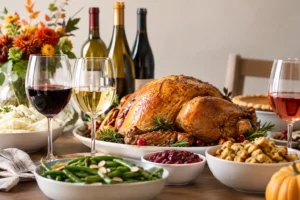
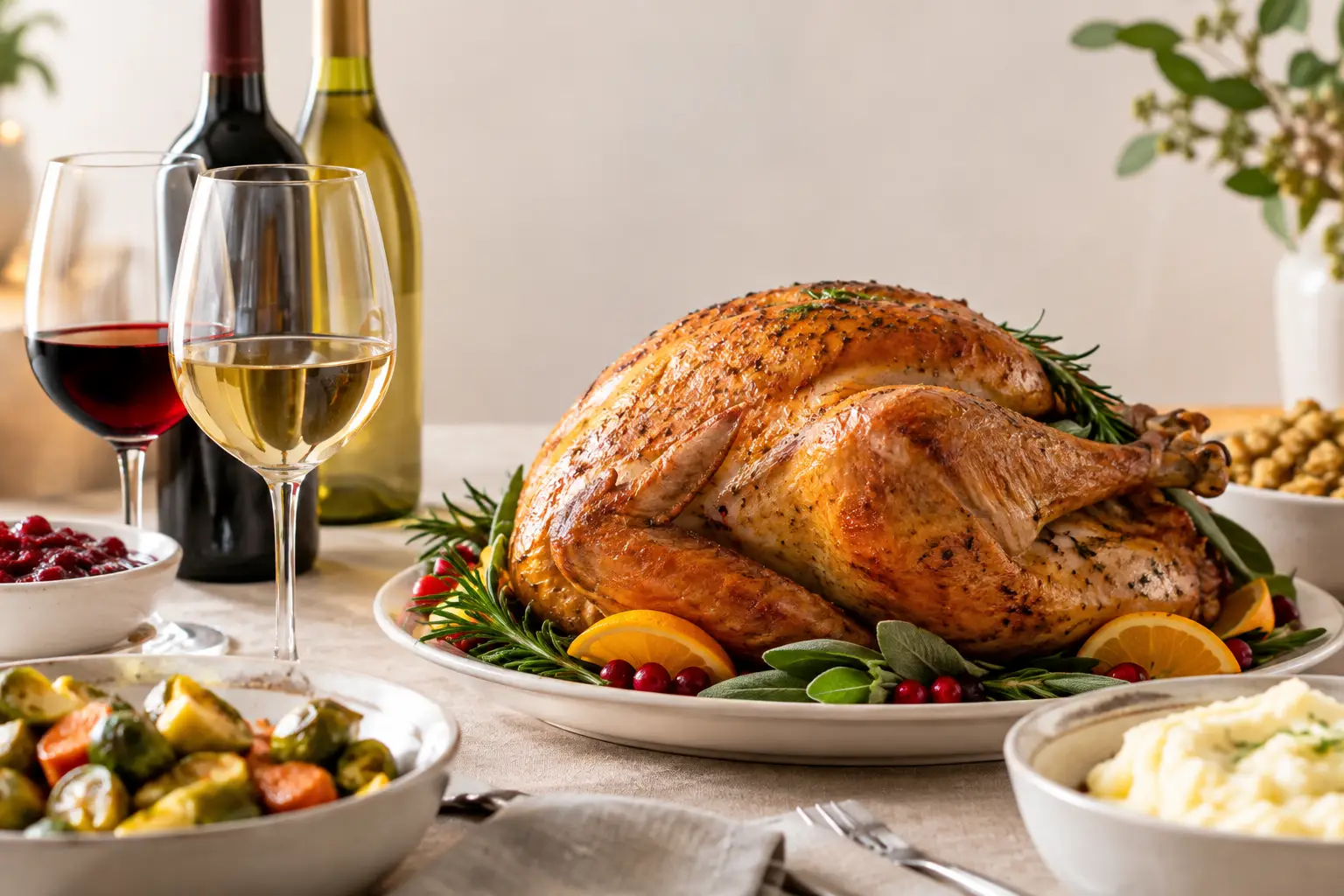
The bird comes out bronzed and fragrant, but turkey is rarely the whole story. There is cranberry sauce with its sharp sweetness, gravy with its savory depth, stuffing rich with sausage or herbs, and perhaps a sweet potato casserole making its own demands on the glass. The best wine for turkey dinner is the one that can move comfortably across that crowded plate, refreshing between bites rather than competing for attention.
For most traditional Thanksgiving-style tables, Pinot Noir is the safest and most satisfying answer. But it is not the only one. A dry Riesling can be magnificent with a fruit-forward spread, while Beaujolais brings a more casual, generous energy to a lively group. The right choice depends less on whether the turkey is white or dark meat than on how you season it, smoke it, glaze it, and surround it.
Why Turkey Is a More Complex Wine Pairing Than It Looks
Turkey itself is gently flavored, with a texture that shifts from lean breast meat to fuller, more succulent thighs. That makes it friendlier to wine than steak, but also harder to pin down. A broad, heavily oaked Chardonnay can flatten the meat. A muscular Cabernet Sauvignon may taste stern beside white meat, its tannins amplified by the turkey’s relative lack of fat.
The supporting dishes usually set the pairing agenda. Tart cranberry sauce favors wines with fresh acidity and red-fruit character. Creamy potatoes and gravy welcome a little texture and body. Sage, thyme, cornbread, chestnuts, roasted squash, and bacon bring earthiness, smoke, sweetness, or umami into the equation. At a holiday table, versatility is the real luxury.
That is why balanced reds, aromatic whites, and sparkling wines tend to outperform bottles chosen only for prestige. You want lift, moderate alcohol, and enough flavor to remain present beside the stuffing. Think of the wine as a well-trained dining-room host: alert, composed, and capable of making every guest at the table feel considered.
Best Wine for Turkey Dinner: Start With Pinot Noir
Pinot Noir earns its place as the classic turkey wine because it speaks to both sides of the plate. Its red-cherry and cranberry notes naturally echo the sauce, while its earthy, mushroom-like edge works with gravy, roasted vegetables, and herb stuffing. Crucially, its tannins are usually soft enough for the delicate breast meat.
Look for a medium-bodied Pinot Noir with bright acidity and restrained oak. Oregon’s Willamette Valley is particularly dependable, often offering juicy fruit, forest-floor complexity, and the kind of freshness that keeps a long meal moving. Cooler-climate California Pinot Noir can work beautifully too, especially from Sonoma Coast or Santa Barbara County, provided the wine is not too ripe or heavily extracted.
Avoid treating Pinot Noir as a single style. A plush, high-alcohol example can feel heavy beside a simply roasted bird. Conversely, a very delicate old-world bottling may disappear if the meal leans smoky, buttery, or sweet. For a classic turkey with pan gravy and herb stuffing, choose the bottle in the middle: fragrant, savory, and energetic.
For a classic roasted turkey
Serve Pinot Noir lightly chilled, around 55 to 60 degrees Fahrenheit. That small adjustment makes the fruit more vivid and the finish cleaner. If you are opening a young bottle, give it 20 minutes in a decanter or a wide glass before dinner. It does not need ceremony, just a little air.
For smoked or deep-fried turkey
Move toward a more structured Pinot Noir, or choose Syrah from a cooler site. Smoked turkey has a darker, more savory profile and can handle pepper, olive, and bacon-like notes. A northern Rhône-style Syrah is especially compelling with smoked meat, but keep the alcohol moderate. The goal is savory contrast, not a wine that turns the meal into a contest.
When a White Wine Is the Better Move
A white wine is often the smarter choice when the menu leans sweet, spicy, or creamy. This is not a compromise for guests who “only drink white.” It is an informed pairing decision.
Dry Riesling is one of the most underappreciated choices for turkey dinner. Its high acidity cuts through gravy and buttery mashed potatoes, while aromas of lime, apple, peach, and white flowers brighten roasted squash and cranberry sauce. A dry or barely off-dry Riesling is especially good with a turkey rubbed in warm spices, a maple glaze, or a menu that includes sweet potatoes and spiced dishes.
If Riesling’s reputation for sweetness gives you pause, look for bottles labeled dry, trocken, or with alcohol around 12 percent or higher. A trace of residual sugar is not a flaw here. With a salty, savory plate, a touch of sweetness can make the wine taste more fruit-driven and harmonious rather than overtly sweet.
Chardonnay also has a place, particularly with a roast turkey prepared with butter, cream-based gratin dishes, or a rich bread stuffing. Choose a fresher, less oaky style from Burgundy, Oregon, coastal California, or Chablis-inspired producers. The wine should bring lemon, orchard fruit, and a subtle creamy texture, not a loud vanilla finish that overwhelms the meal.
The Most Crowd-Pleasing Red: Beaujolais
For a gathering where several bottles will be opened and no one wants a lecture before the first toast, Beaujolais is a brilliant answer. Made from Gamay, it is typically light to medium-bodied, low in tannin, and full of bright raspberry, cherry, violet, and peppery freshness. It is festive without being fussy.
A basic Beaujolais works for a relaxed dinner, while a cru Beaujolais such as Morgon, Fleurie, or Moulin-à-Vent offers more depth for a more serious table. Fleurie tends to be floral and graceful. Morgon has darker fruit and earthier weight, making it particularly good with sausage stuffing or mushroom gravy. Serve either slightly cool, as you would Pinot Noir.
Zinfandel can also work when the meal includes a sweet barbecue glaze, caramelized vegetables, or boldly seasoned dark meat. It brings generous berry fruit and spice, but it is a more specialized pairing. Choose a balanced, not overly alcoholic example, and consider it an additional bottle rather than the sole wine for a traditional spread.
Match the Bottle to the Menu Around the Bird
The turkey recipe matters, but the side dishes often matter more. If cranberry sauce is bright and tart, Pinot Noir, Gamay, and dry Riesling will all find common ground. If it is sweetened, spiced, or made with orange, Riesling’s aromatic lift becomes especially useful.
For cornbread stuffing with sage, mushrooms, and sausage, favor earthy Pinot Noir, cru Beaujolais, or cooler-climate Syrah. With oysters, crab, or a seafood starter before the turkey, sparkling wine provides the cleanest transition into the meal. A dry traditional-method sparkling wine also performs beautifully with fried turkey, thanks to its acidity and palate-cleansing bubbles.
For a turkey glazed with honey, maple, or brown sugar, skip highly tannic reds. Their bitterness can become pronounced against sweetness. Reach instead for Riesling with a touch of sweetness, sparkling rosé, or a fruit-forward Beaujolais. If the meal includes heat from chile, Cajun seasoning, or pepper jelly, Riesling is the most reliable option of all.
How Much Wine to Buy and How to Serve It
A practical rule is one bottle for every two wine-drinking guests, then add a few extra bottles if the gathering is long or the table includes enthusiastic drinkers. A holiday meal rewards variety more than excess. Offering one red, one white, and a sparkling option gives guests a clear path without turning the dining room into a retail shelf.
Serve sparkling wine cold, around 45 degrees. Keep Riesling and Chardonnay cool but not icy, around 48 to 52 degrees. Reds should be cooler than most homes keep them: 55 to 60 degrees is ideal for Pinot Noir and Beaujolais. If a red has been sitting at room temperature, 15 to 20 minutes in the refrigerator is usually enough.
Do not wait until the turkey is carved to open every bottle. Pour sparkling wine as guests arrive, then have the white and red ready once the first plates are served. That rhythm makes the meal feel considered while keeping the host out of the kitchen during the best part of the evening.
The finest pairing is not necessarily the rarest bottle on the table. It is the one that makes the gravy taste richer, the cranberry sauce brighter, and the person across from you reach for another bite.