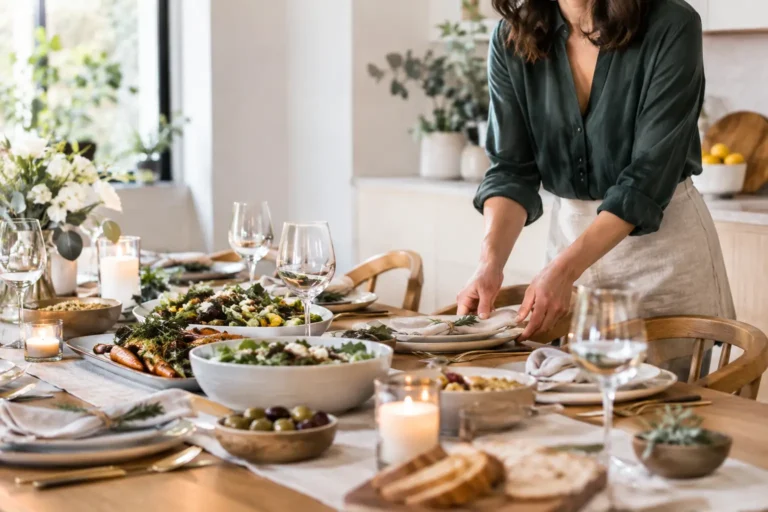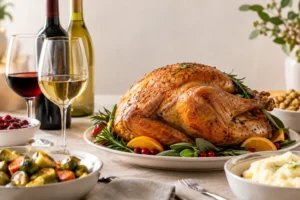
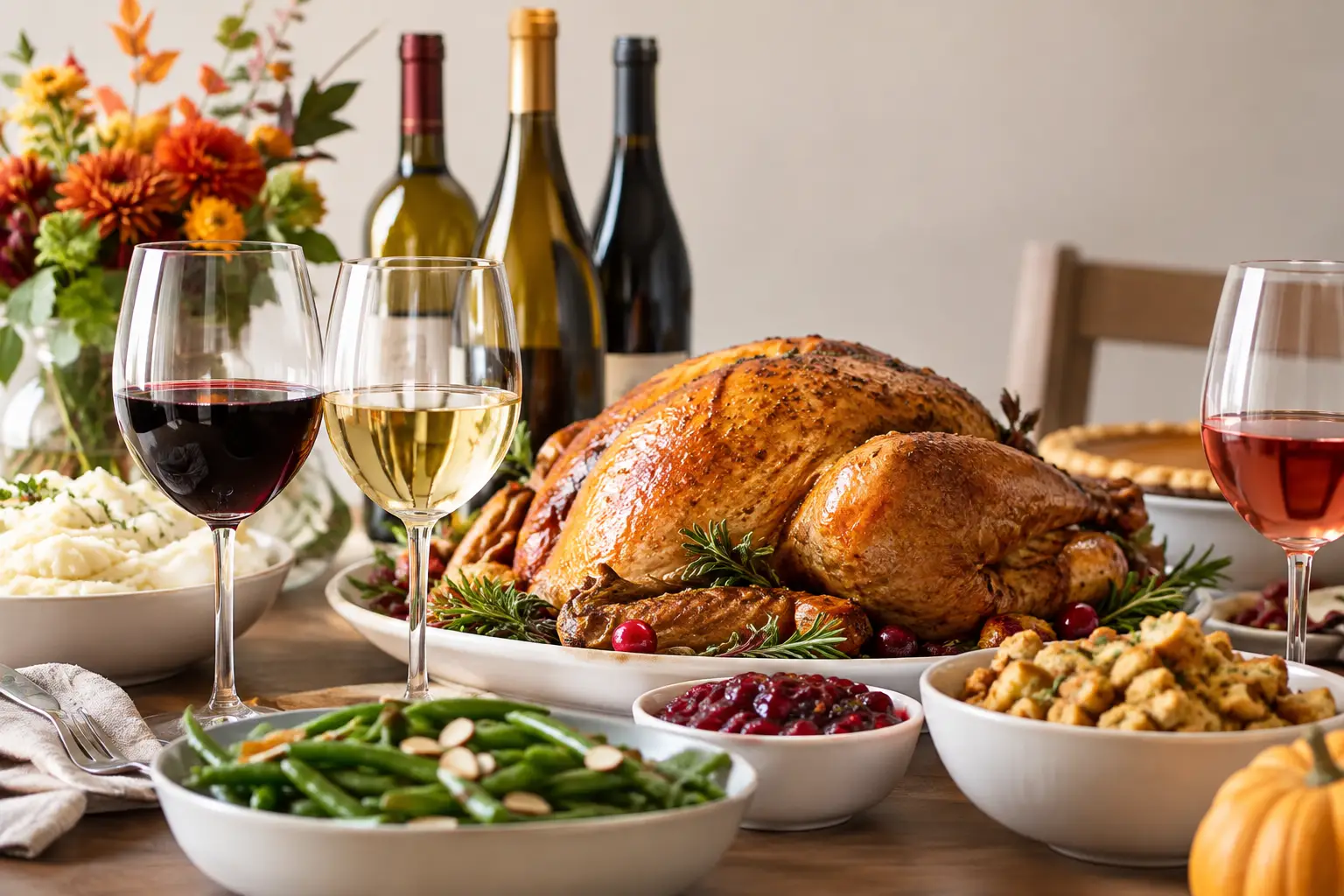
The Thanksgiving table is not built for a single perfect bottle. It is a glorious traffic jam of roast turkey, buttery potatoes, tart cranberry sauce, herb-heavy stuffing, sweet squash, and the relative who brought a casserole with no recipe attached. A smart thanksgiving wine pairing guide begins there: choose wines with enough freshness to cut richness, enough fruit to meet sweetness, and enough flexibility to move from the first forkful to the last.
The goal is not to impress everyone with a cellar trophy. It is to make the meal taste more vivid. For most hosts, that means opening two or three complementary styles rather than forcing one heavyweight red to handle the entire plate.
What Thanksgiving Demands From a Wine
Turkey itself is mild, which gives it an undeserved reputation as an easy pairing. The real challenge is everything around it. Sage and thyme bring savory, resinous aromas; gravy adds salt and depth; cranberry sauce introduces tang and sugar; roasted root vegetables contribute caramelized sweetness. A high-tannin Cabernet Sauvignon can make the turkey seem dry, while a very oaky Chardonnay may turn creamed onions and mashed potatoes from comforting to exhausting.
Acidity is the essential quality. It refreshes the palate after butter, gravy, and crisp turkey skin, much as cranberry sauce does. Moderate alcohol matters, too. Thanksgiving is a long meal, often beginning with snacks and ending with pie. Wines around 11.5 to 13.5 percent alcohol tend to stay graceful at the table, while bigger bottles can feel increasingly loud as the afternoon goes on.
Fruit should be present but not jammy. A little residual sugar can be especially useful beside spicy or sweet sides. And texture counts: a lightly tannic red, a textured white, or a fine-bubbled sparkling wine has more to say to a full Thanksgiving plate than an aggressively lean, simple pour.
The Best Thanksgiving Wine Pairing Guide Starts With Range
If you are serving one wine, make it sparkling. If you are serving two, pour one sparkling or aromatic white and one light-to-medium-bodied red. If you want a more generous, restaurant-minded spread, add a richer white for the guests who gravitate toward potatoes, cream sauces, and darker turkey meat.
Start With Sparkling Wine
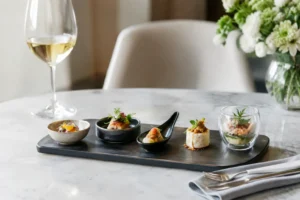
Traditional-method sparkling wine, whether Champagne or a well-made domestic bottle, is arguably Thanksgiving’s most useful wine. Its acidity and bubbles reset the palate, while its toast and brioche notes feel at home with roasted turkey, browned butter, and flaky pastry. It is equally convincing with salty appetizers, from deviled eggs to cheese straws, so it earns its place before dinner even begins.
Look for brut rather than bone-dry extra brut. The slight roundness of brut is friendlier to sweet potato dishes and cranberry sauce. A blanc de blancs brings a brighter, citrus-led profile; a blend with Pinot Noir or Pinot Meunier often carries more savory breadth and works particularly well with turkey skin and gravy.
Choose Riesling When the Sides Run Sweet or Spicy
Riesling has a permanent place on a serious Thanksgiving table because it meets sweetness without becoming cloying. A dry to off-dry Riesling from the Finger Lakes, Germany, or Washington State gives you high acidity, orchard fruit, and often a subtle floral lift. It can handle maple-glazed carrots, candied sweet potatoes, and cranberry relish better than many fashionable dry whites.
Do not be put off by a touch of sweetness. With a savory plate, it reads as fruit and balance rather than dessert. The trade-off is that very sweet Riesling can overpower plainly prepared turkey, so reserve late-harvest bottlings for pie or skip them altogether at dinner.
Bring Pinot Noir to the Turkey Course
Pinot Noir is the classic red answer, but the best example is not necessarily the darkest or most expensive. Seek a fresh, red-fruited style with moderate oak and gentle tannins. Oregon Pinot Noir, cooler-climate California Pinot, and red Burgundy all make sense, depending on budget and preference.
Pinot’s appeal lies in its ability to echo the meal’s autumnal notes: cranberry, dried leaves, mushrooms, baking spice, and roast poultry. It is especially good with dark meat, stuffing, mushroom gravy, and any dish built around roasted vegetables. Serve it slightly cool, around 55 to 60 degrees, not at a warm room temperature. That small adjustment keeps the fruit lively and the alcohol in check.
Consider Beaujolais for a More Relaxed Red
For hosts who want the red wine to disappear into the rhythm of the meal rather than command attention, Beaujolais is often the better choice. Made from Gamay, it tends to offer bright berry fruit, peppery florals, and low tannin. A cru Beaujolais from Morgon, Fleurie, or Moulin-a-Vent has enough structure for the main course, while a lighter Beaujolais-Villages is delightfully easygoing.
This is the bottle to open when the menu leans classic and the guest list is mixed. It welcomes turkey, ham, stuffing, cranberry sauce, and even a lingering appetizer plate. Chill it for 20 minutes before serving. Its charm is immediacy, not solemnity.
Pair by Plate, Not by Turkey Alone
The guest who takes a little turkey and a mountain of mashed potatoes is eating a different meal from the guest who builds a plate around sausage stuffing and cranberry sauce. That is why serving multiple wines is more hospitable than chasing a universal match.
For herbaceous stuffing, Pinot Noir and cru Beaujolais are natural choices, especially if the recipe includes mushrooms, sausage, or toasted nuts. For rich mashed potatoes, scalloped potatoes, and cream-based casseroles, reach for a fuller white with real freshness. White Burgundy, Chardonnay from a cool site, or a dry Chenin Blanc can bring the necessary body without flattening the food.
For cranberry sauce, avoid stern, heavily tannic reds. Tart fruit and tannin can make each other seem sharper. Gamay, Pinot Noir, and Riesling work because they either mirror cranberry’s red-fruit character or soften its acidity with fruit and a touch of sweetness.
If ham joins the table, Riesling becomes even more valuable. Its acidity cuts the meat’s fat and its fruit plays well with a honey or brown-sugar glaze. For a smoky, spice-rubbed turkey or a menu with cornbread stuffing and chile heat, a lightly chilled Syrah can work beautifully, provided it is not excessively oaked or high in alcohol.
Whites Worth Pouring Beyond Riesling
Chenin Blanc is a host’s secret weapon. A dry Vouvray or a lively domestic Chenin can have apple, quince, honeycomb, and woolly texture, but its acidity keeps the wine composed. It is particularly compelling with roasted squash, nutty stuffing, and turkey dressed with a cider-based gravy.
Chardonnay works when you choose carefully. A taut, mineral-driven Chardonnay with restrained new oak complements richer sides and roasted poultry. Overly buttery examples can duplicate the meal’s richness rather than balance it. Think of Chardonnay as the wine for guests who want a white with shape and weight, not as a default selection.
Gewurztraminer is another situational choice. Its rose, lychee, and baking-spice aromas are excellent with spiced sweet potatoes and dishes with a little heat, but its dramatic perfume can dominate a simpler menu. Pour it for a table that welcomes aromatic wines, not for one where every guest expects a neutral white.
A Few Bottles to Skip, or Save for Another Night
The issue is not that certain wines are bad; it is that Thanksgiving exposes imbalance quickly. Young, tannic Cabernet Sauvignon, Barolo, and powerful Napa blends can taste drying beside lean breast meat and clash with cranberry sauce. Save them for prime rib, steak, or a quieter winter dinner.
Very high-alcohol Zinfandel can overwhelm the table, though a fresher, peppery version may suit a smoked turkey or barbecue-leaning menu. Likewise, intensely sweet Moscato is better treated as a dessert pairing than an all-purpose dinner wine. Thanksgiving rewards restraint more often than force.
Serve It Like a Thoughtful Host
Put the sparkling wine and whites in the refrigerator early, then pull richer whites out about 15 minutes before serving. Chill reds briefly, especially Pinot Noir and Gamay. A slightly cool red is more refreshing, more precise, and more forgiving with food.
Plan on roughly one bottle per two wine-drinking guests for a long, wine-centered meal, with a little extra if the gathering carries into dessert. Open the reds 30 to 45 minutes ahead, but do not feel obligated to decant delicate bottles. Thanksgiving is not a tasting-room exercise. The wines should be ready when the turkey is, not staged for ceremony.
When the plates finally land, pour the bottle that feels most generous rather than most prestigious. The right wine is the one that makes a bite of stuffing, cranberry, and crisp turkey skin feel like the reason everyone came to the table.