
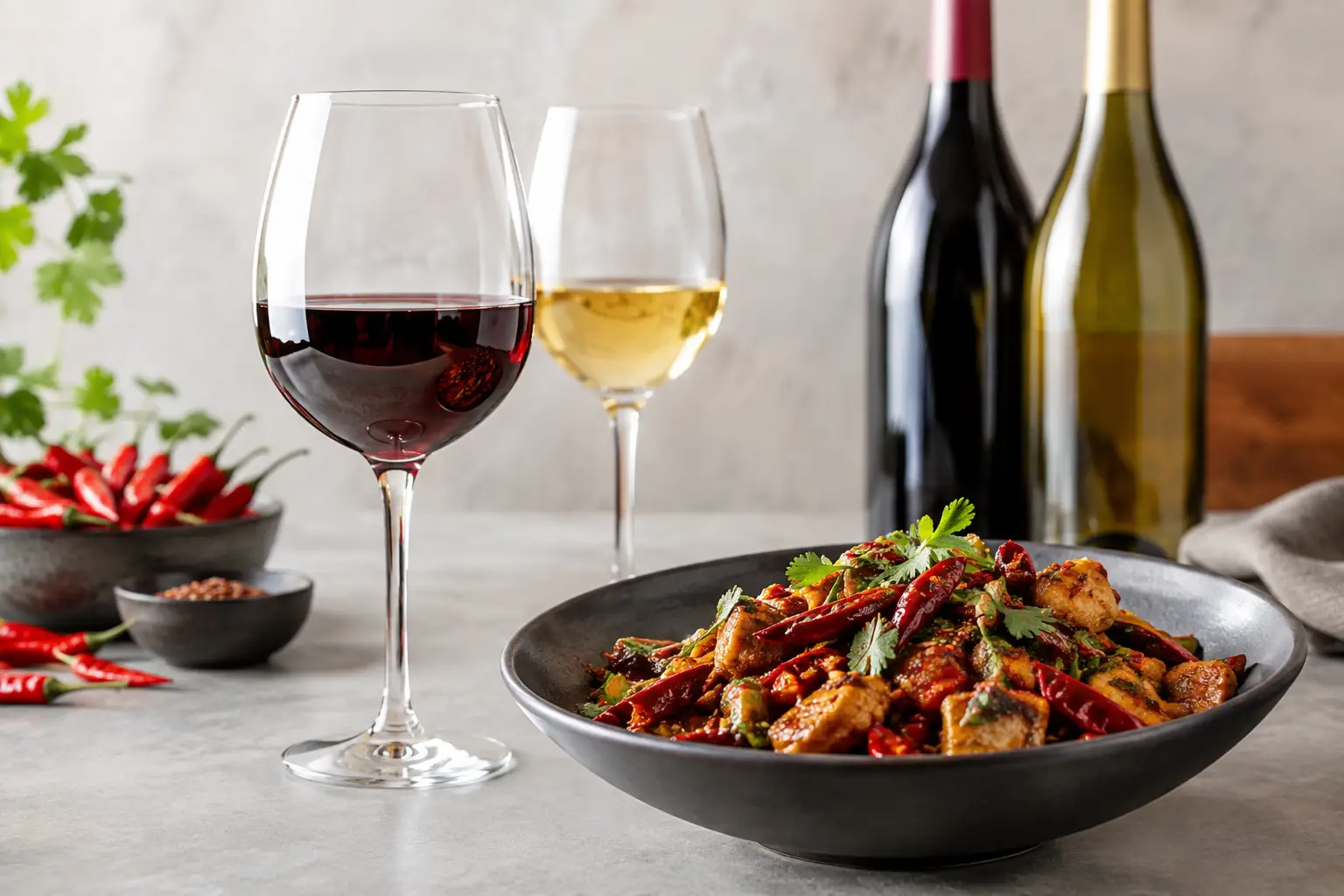
A fiery bowl of Thai curry, a glossy plate of chile-laced noodles, or Nashville hot chicken can make a serious red suddenly taste like hot metal. The trouble is not that wine pairing for spicy food is impossible. It is that many of the bottles diners instinctively reach for – big, dry, high-alcohol reds – intensify the very sensation they hope wine will tame.
The winning bottle does more than survive the spice. It refreshes the palate, respects the dish’s aromatics, and leaves room for the food’s sweetness, smoke, herbs, and texture. That usually means thinking less about the protein on the plate and more about the chile, sauce, and cooking style surrounding it.
Why Spicy Food Changes the Wine Equation
Chile heat is not a flavor in the conventional sense. Capsaicin triggers a physical sensation, which is why alcohol, drying tannin, and a very high serving temperature can make a dish feel even hotter. A muscular Cabernet Sauvignon with spicy Korean fried chicken may seem plausible on paper because both have intensity. At the table, its tannins can turn pepper heat coarse and its alcohol can fan it into a burn.
Residual sugar is the most useful counterweight. A touch of sweetness softens chile’s edge, while bright acidity keeps that sweetness from becoming heavy. Lower alcohol helps, too. Think of the difference between a cold, lightly sweet sip of Riesling and a generous, 15 percent California red when your mouth is already warm from habanero.
That does not mean every spicy dish needs a sweet wine. Heat has levels, and sauces have personalities. A dry, mineral white can be excellent with a green-herb salsa that is more jalapeño-bright than incendiary. But once the food reaches a persistent, lips-tingling heat, off-dry wines are usually the more graceful choice.
The Best Wine Styles for Spicy Food
Off-dry Riesling is the dependable first choice
For most spicy cuisines, Riesling is the bottle to order with confidence. Its lime-like acidity, floral lift, and modest sweetness work with rather than against chile heat. German Kabinett Riesling is a classic expression: light on its feet, lower in alcohol, and often balanced between ripe stone fruit and electric acidity. A domestic off-dry Riesling can work just as well, particularly with richer preparations.
It is especially good with Thai green curry, Vietnamese dishes with fresh herbs and chiles, Szechuan cooking, and spicy pork preparations. With Thai food, the pairing succeeds because Riesling can meet coconut milk’s richness, lemongrass’s perfume, and the heat of fresh chiles in the same sip.
Chenin Blanc brings texture to richer dishes
Off-dry Chenin Blanc is an underused answer for dishes where spice meets depth: mole with a chile-forward profile, hot fried chicken, jerk pork, or a creamy curry. Chenin has enough waxy texture and apple-pear fruit to stand up to substantial food, but its acidity keeps the match alert.
Look for a Vouvray labeled demi-sec when the heat is pronounced. For a less fiery dish with a sweeter glaze or fruit component, a dry Chenin can be compelling. The distinction matters. Dryness is not a virtue if it leaves the wine tasting sharp beside the food.
Gewürztraminer belongs with aromatic heat
Gewürztraminer can smell like lychee, rose petal, ginger, and ripe peach – precisely the aromatic territory of many Southeast Asian and Indian dishes. Its low acidity means it can feel broad, so it is best served well chilled and paired with food that has lift from herbs, citrus, or pickled elements.
Try it with spicy duck larb, chicken vindaloo, or a fragrant curry featuring cardamom and ginger. It can be less successful with salty, deeply fermented dishes, where its perfume risks becoming overly lush. When it works, though, the pairing feels intentional rather than merely soothing.
Sparkling wine resets the palate
Bubbles are useful when the dish is hot, fried, or both. A lightly sweet sparkling Moscato d’Asti is excellent with chile-spiked fried chicken, while an off-dry sparkling wine can bring welcome relief to spicy appetizers at a large dinner. The carbonation scrubs away richness, and the fruit gives capsaicin less room to dominate.
For dry sparkling wine, proceed with more care. Brut Champagne or Cava can work with moderately spicy fried foods, particularly when the dish includes a creamy sauce or a squeeze of lemon. With serious chile heat, however, very dry bubbles may read austere. A dosage with some softness, or a fruit-driven sparkling rosé, is often the better call.
Match the Sauce Before the Main Ingredient
The most useful rule at a restaurant is simple: pair to the loudest element on the plate. If a grilled shrimp dish arrives under a scorching red curry, the curry is the pairing challenge, not the shrimp. If a steak is served with a mild chimichurri, the beef still has a strong claim on the decision. If it is lacquered in a sweet-hot gochujang glaze, the sauce changes everything.
Sweetness in the dish calls for a wine that is at least as sweet, or the wine may taste thin and sour. Coconut milk and cream reward acidity. Smoky dried chiles can make a case for a juicy, lightly chilled red. Fresh green chiles often favor aromatic whites, especially Sauvignon Blanc with a little roundness or dry Riesling.
Salt and umami deserve attention as well. Fish sauce, soy, fermented black beans, and aged cheese can make tannic reds feel bitter. Here, a pale red with minimal tannin or a high-acid white generally performs better than a structured red chosen simply because the plate contains meat.
Can Red Wine Work With Spicy Food?
Yes, with restraint. The best red wines for spicy food are low in tannin, generous in fruit, and often better slightly chilled. Beaujolais, particularly a fresh cru or a straightforward Gamay, can work with spicy sausage, pork, barbecue, and moderately hot dishes built around char and smoke. Frappato from Sicily and cool-climate Pinot Noir can also succeed when the heat is not extreme.
A chilled, fruit-forward red is particularly persuasive with Korean barbecue or chile-rubbed grilled meats. The key is separating heat from richness. If the dish is more smoky and savory than truly hot, red wine has room to operate. If the chile burn builds with every bite, return to Riesling or sparkling wine.
Avoid heavily oaked reds, high-tannin Nebbiolo, and warm, high-alcohol Zinfandel when the spice level is high. Their flavors are not inherently wrong; they are simply likely to feel louder than the food needs.
Temperature Is Part of the Pairing
Serving temperature can rescue an otherwise imperfect choice. Whites and sparkling wines should be genuinely cold, around 45 to 50 degrees Fahrenheit, though not so icy that their aroma disappears. A low-tannin red benefits from 15 to 20 minutes in the refrigerator before pouring. That little bit of chill reins in alcohol and makes fruit feel fresher.
This is particularly useful at dinner parties, where one bottle may need to bridge a range of heat tolerances. Put an off-dry Riesling on ice and serve it in smaller pours. Guests who want a little more relief can refresh their glass without making the table feel like a lesson in wine service.
Ordering With Confidence at a Restaurant
Tell the sommelier or server how spicy you plan to order, not just which entrée you chose. “Medium hot” means very different things across cuisines and restaurants, and a thoughtful wine professional will adjust accordingly. Mention whether the dish is coconut-rich, fried, sweet-hot, smoky, or herbaceous. Those details are more useful than announcing that you usually drink red.
If the restaurant offers wine by the glass, consider splitting the decision across courses. Sparkling wine with spicy snacks, then Riesling with curry or noodles, is often more satisfying than forcing one red through the entire meal. At home, the same principle can make a casual takeout spread feel considered.
The best pairing should make you want another bite, not congratulate itself after the first sip. For a meal built around heat, choose the wine that lowers the temperature while keeping the conversation around the table lively.