
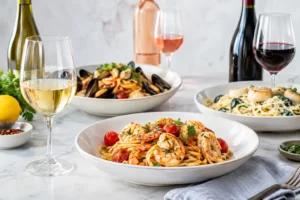


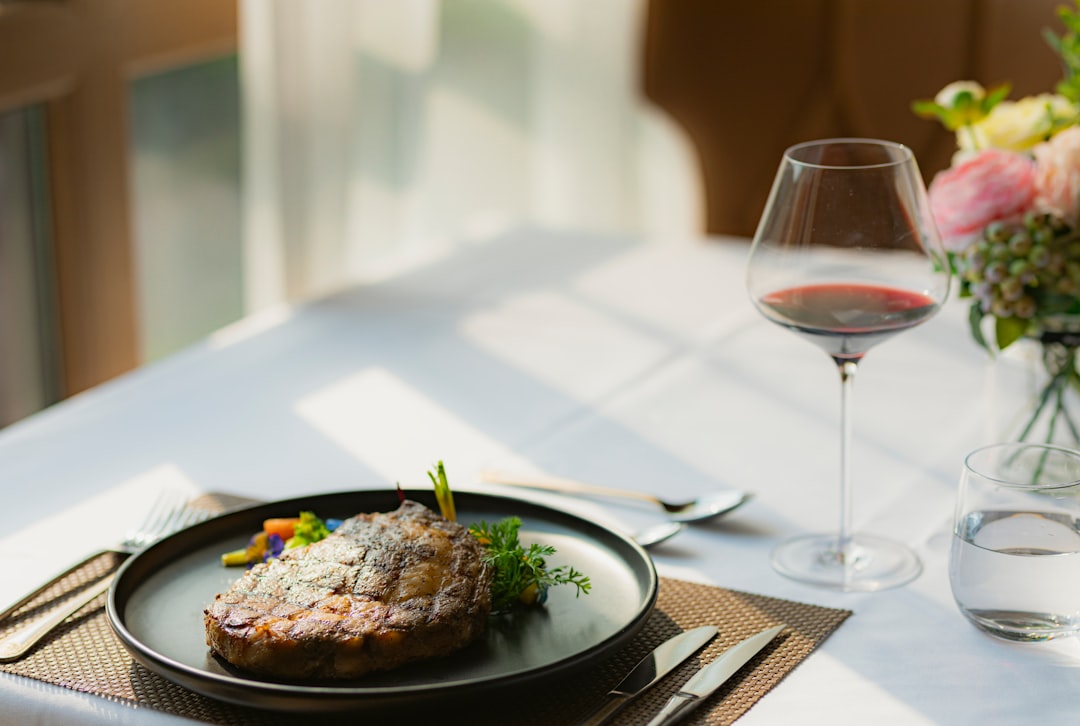
You are standing in the wine aisle, holding a ribeye in your mental shopping cart, and the label on the shelf says nothing useful. “Pairs well with red meat” might as well say “pairs well with food.” Every red wine in the store can claim that. The best wine with steak is not a category. It is a specific match between the fat, char, and texture of one cut and the tannin, acidity, and body of one bottle. Once you understand why those elements interact, you stop needing charts and start choosing with confidence.
Here is the core mechanism that makes the whole subject click. Tannins, the polyphenol compounds in red wine that create a drying, astringent grip on your palate, bind to the proteins and fats in beef. When that binding happens, the wine tastes softer and the steak tastes richer. The fat lubricates the mouth against tannin’s wrinkling effect on mucosal cells, while the tannins strip away the fat coating between bites. It is a two-way cleansing mechanism, and it is the reason a Cabernet that tastes aggressive on an empty palate turns plush the moment there is beef on your fork. As research from the Virginia Tech Enology Lab explains, fats and proteins in food reduce the perception of tannin astringency, which is why tannic reds match best with rich, fatty dishes.
That mechanism also tells you when the pairing will fail. A lean cut like filet mignon does not have enough fat to soften a tannic wine, so the wine tastes harsh and the meat tastes flat. A fatty ribeye paired with a soft, low-tannin Pinot Noir gets swallowed whole by the richness, and the wine disappears. The job is matching the weight of the wine to the richness of the cut, and then adjusting for char, sauce, and doneness. Get that right and the rest is detail.
Why the Cut Matters More Than Red vs. White
The single biggest mistake home cooks make is treating “red wine with beef” as a monolithic rule. It is not. A ribeye and a filet mignon are structurally different ingredients. The ribeye carries 20 to 25 percent intramuscular fat, depending on grade, with marbling that renders as it cooks and coats the palate with every bite. The filet, cut from the tenderloin, is the leanest section of the animal, with almost no marbling and a texture so buttery-soft that it practically dissolves. These two cuts demand opposite wines.
Think of it as a seesaw. On one side sits the fat content of the steak. On the other sits the tannin level of the wine. A high-fat cut can support a high-tannin wine because the fat absorbs the tannin’s grip. A low-fat cut needs a low-tannin wine, because there is nothing on the plate to tame the astringency. If you pour a muscular, young Cabernet Sauvignon over a filet mignon, the wine overpowers the meat’s delicate flavor and leaves a bitter, drying finish. If you pour a silky Pinot Noir over a fatty ribeye, the wine’s subtle aromatics get buried under the beef’s richness.
The cut also determines how much char the steak will carry. Thin, fibrous cuts like skirt and hanger steak are typically cooked hot and fast over open flame or in a screaming cast-iron pan, developing a heavy char crust that adds bitter, smoky, caramelized flavors. Those flavors interact with wine differently than the gentle Maillard browning on a pan-seared filet. A heavily charred cut wants a wine with smoky or peppery notes of its own, like Syrah, so the char and the wine echo each other rather than clash.
Then there is the sauce question. A filet mignon served naked wants a different wine than the same filet draped in a peppercorn cream sauce. The sauce has a vote, sometimes the deciding one. A rich, creamy sauce can pull a bolder wine back into play even on a lean cut, because the sauce itself provides the fat the meat lacks. A bright, herbal chimichurri on skirt steak narrows the field to wines with enough fruit and acidity to meet the garlic and vinegar head-on. As we have noted in our guide to decoding fine dining menus, a sommelier pairing works by finding the wine that makes the food taste more like itself. The same logic applies in your kitchen.
Pairing by Cut: Ribeye, Filet, Hanger, and Skirt
Each cut below has a distinct fat profile, texture, and typical cooking method. The wine recommendations follow from those characteristics, not from tradition or habit. Understanding the reasoning behind each pairing lets you adapt when your preparation deviates from the default.
Ribeye: The Tannin Sponge
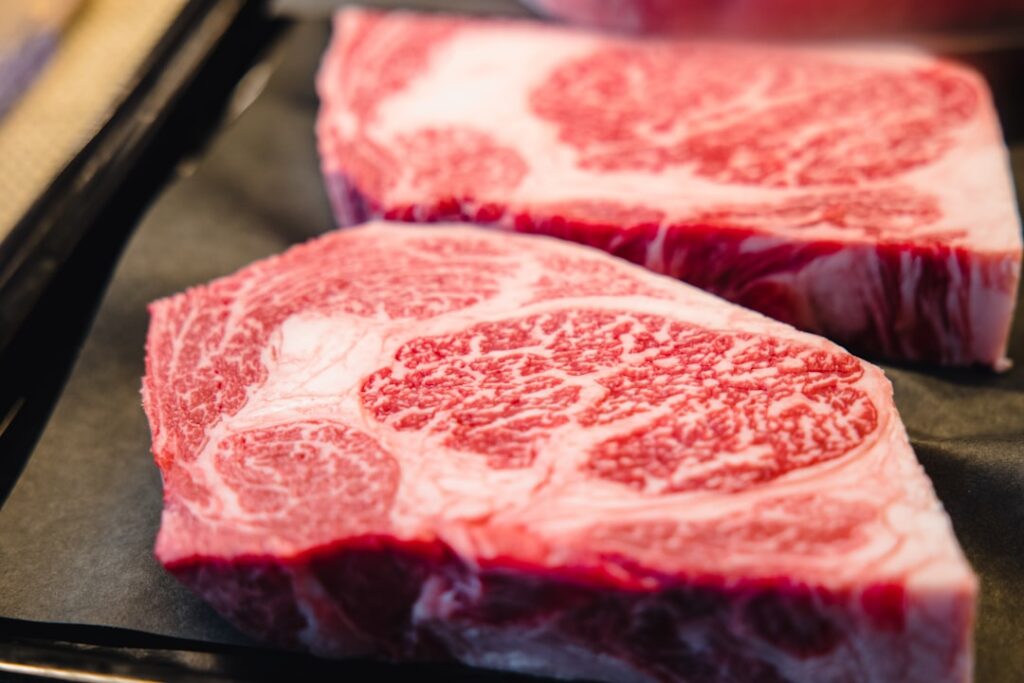
The ribeye is the fattiest common steak cut, with marbling distributed throughout the meat rather than concentrated in a peripheral fat cap. When you sear it, that intramuscular fat renders into the muscle fibers and coats your palate with every bite. This is the cut that can handle the most powerful wines in the cellar, and the reason is mechanical: the more fat on the plate, the more tannin the wine can bring without tasting harsh.
Cabernet Sauvignon is the classic match. A young Napa Valley Cabernet, with its firm tannic backbone and dark fruit flavors of blackcurrant, cedar, and tobacco, tastes structured and almost chewable on its own. Against a fatty ribeye, those tannins soften, the fruit comes forward, and the wine turns generous. The same dynamic works with a Barolo from Piedmont, made from the Nebbiolo grape, which carries some of the highest tannin levels in the wine world. Barolo’s tar-and-rose aromatics and brick-dry structure need a steak with real fat to become approachable, especially in younger vintages. A Chateauneuf-du-Pape, the Grenache-heavy blend from the southern Rhone, offers a different angle: less tannin than Cabernet but more body and spicy warmth, which complements the ribeye’s richness without the astringent grip.
If you want an Argentine route, a bold, oaked Malbec from high-altitude vineyards in Mendoza or Salta works beautifully. Malbec’s tannins are rounder than Cabernet’s, but a structured, barrel-aged bottling has enough grip to engage with the ribeye’s fat while contributing ripe blackberry and plum fruit. The key is choosing a Malbec with some oak aging and concentration, not a thin, unoaked everyday bottle.
Filet Mignon: The Case for Restraint
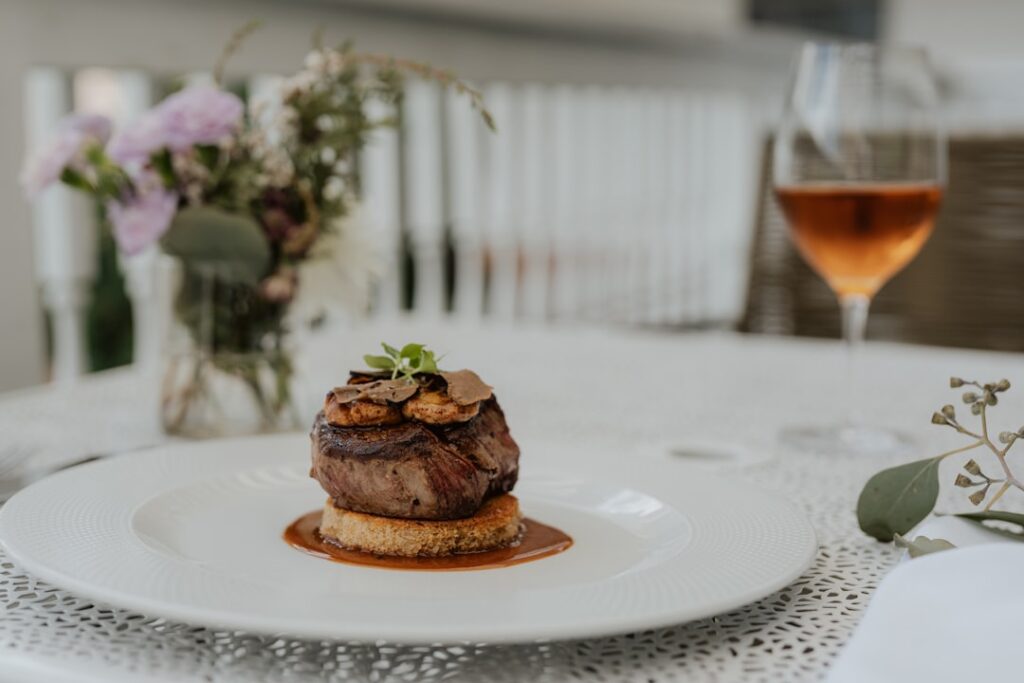
The filet is the most tender cut on the animal and the least flavorful. It has almost no intramuscular fat, which means it cannot soften tannic wine the way a ribeye does. Pour a powerful Cabernet over a filet and the wine dominates the meat, leaving a bitter, astringent finish that erases the filet’s delicate texture. The filet does not need a wine that can stand up to it. It needs a wine that will not stand over it.
Pinot Noir is the ideal match, particularly a Burgundy from the Cote de Nuits or a quality domestic Pinot from Oregon’s Willamette Valley. Pinot Noir’s thin skins produce lower tannin levels, and its bright acidity acts as a palate cleanser rather than a structural challenge. The wine’s red-fruit aromatics, cherry and raspberry with earthy undertones, complement the filet’s mild beef flavor without burying it. Look for a Pinot with minimal oak influence if the filet is served simply with salt and pepper. If the filet comes with a peppercorn sauce or a mushroom reduction, you can move toward a more concentrated Pinot, or a soft Merlot from Bordeaux’s Right Bank or Washington State, which adds plum fruit and a velvety texture that mirrors the filet’s tenderness.
A Pomerol, the Merlot-dominant wine from Bordeaux’s right bank, is the sommelier’s choice when the filet is sauced. A Pomerol, the Merlot-dominant wine from Bordeaux’s right bank, is a strong sommelier’s choice when the filet is sauced. Its soft tannins and plush fruit complement the cut rather than competing with it. The wine’s soft tannins and plush fruit complement the cut rather than competing with it.
Hanger Steak: The Char Whisperer
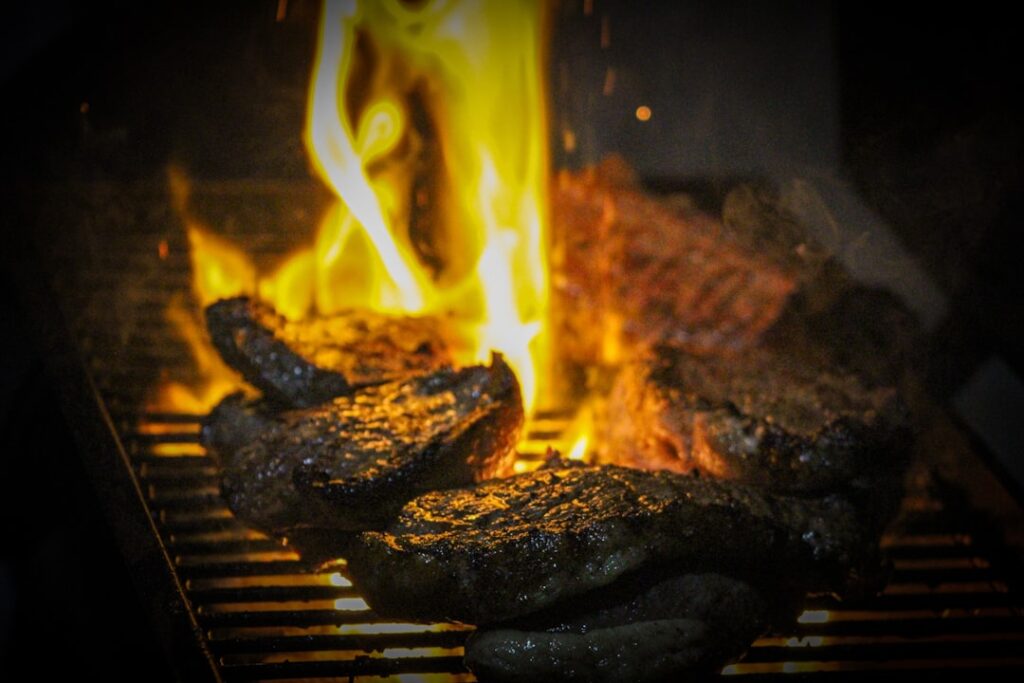
Hanger steak sits between the ribeye and the filet in fat content, but what defines it is its mineral, almost livery intensity and the heavy char it develops during cooking. It is typically grilled or seared hot and fast, developing a dark crust that contributes smoky, bitter, caramelized flavors. This is a cut that wants a wine with both structure and smoky nuance, something that can echo the char rather than fight it.
A Northern Rhone Syrah, particularly a Crozes-Hermitage or a St.-Joseph, is a natural match. Syrah from the northern Rhone carries dark fruit, black olive, and smoked-meat aromatics that mirror the char on the steak. The tannins are present but more finessed than a young Cabernet’s, sitting between Pinot Noir’s delicacy and Cabernet’s power. A super-Tuscan blend, which combines Sangiovese with Bordeaux varieties like Cabernet Sauvignon and Merlot, also works well. The Sangiovese contributes bright acidity and sour-cherry fruit that cuts through the hanger’s richness, while the Bordeaux components add structure and depth.
Cabernet Franc, especially from the Loire Valley, is an underrated choice. A Saumur-Champigny or a Chinon offers herbal, peppery notes with medium body and bright acidity. The wine’s vegetal edge, which some drinkers find challenging on its own, comes alive against the char and mineral intensity of a hanger steak. Drinkers who have paired Saumur-Champigny with grilled hanger often note that the char amplifies the wine’s fruit and concentration, making each element more vivid.
Skirt Steak: The Marinade Decoder
Skirt steak is thin, fibrous, intensely beefy, and almost always marinated before cooking. It is the cut behind fajitas and carne asada, and it is the steak most likely to arrive at the table with chimichurri, a vinegar-driven herbal sauce that has strong opinions about wine. Because skirt is leaner than ribeye but more assertive in flavor than filet, it sits in a middle zone that demands a medium-bodied wine with lively fruit and acidity.
Argentine Malbec is the default for a reason. It is the wine that grew up alongside skirt steak on the Argentine parrilla. A medium-bodied, fruit-forward Malbec from Mendoza matches the steak’s beefy intensity without flattening it, and its plum-and-blackberry fruit meets chimichurri’s garlic and vinegar without clashing. The tannins are soft enough for a leaner cut, but the wine has enough body to stand up to the marinade and the char.
If chimichurri is on the plate, avoid heavy, oaky wines. The sauce’s parsley, garlic, oregano, and vinegar have an herbal, acidic punch that fights tannin and oak. A Cabernet Franc is an excellent alternative, because its own herbaceous edge echoes the green elements in the sauce. A Sangiovese-based Chianti Classico also works, bringing tart cherry acidity and a savory edge that complements both the steak and the sauce. The principle is simple: match the wine to the sauce as much as the steak. When chimichurri is involved, it often has the louder voice.
Quick Reference: Cut, Character, and Bottle
| Steak Cut | Fat Level | Cooking Method | Best Wine Match | Why It Works |
|---|---|---|---|---|
| Ribeye | High marbling | Grill or cast-iron sear | Cabernet Sauvignon, Barolo, oaked Malbec | Rendered fat softens firm tannins; wine’s acidity cuts richness |
| Filet Mignon | Very lean | Pan-sear, butter baste | Pinot Noir, Merlot, Pomerol | Low tannin avoids overwhelming delicate meat; acidity refreshes |
| Hanger Steak | Medium, mineral | Hot and fast grill | Northern Rhone Syrah, super-Tuscan, Cabernet Franc | Smoky, peppery wine echoes char; medium tannin matches intensity |
| Skirt Steak | Lean, beefy | High-heat grill, often marinated | Medium Malbec, Cabernet Franc, Chianti Classico | Fruit and acidity meet marinade and chimichurri; soft tannin suits lean cut |
How Doneness Changes the Equation
The wine you choose should account for how well you cook your steak, because doneness directly affects the fat available to soften tannin. A rare ribeye retains most of its intramuscular fat in a soft, nearly raw state, which means the fat coats the palate efficiently and can tame even a aggressively tannic young wine. A well-done ribeye has rendered out much of that fat into the pan or the grill, leaving the meat drier and less able to buffer astringency. The same Cabernet that turned plush against a rare ribeye will taste harder and more bitter against a well-done one.
This is not a minor effect. It is enough to change the bottle you should open. If you prefer your steak medium-well to well-done, shift toward wines with softer, more resolved tannins. An aged Rioja Reserva or Gran Reserva, where years in bottle have already smoothed the tannins, is a strong choice. A Merlot from a warm vintage, or a Grenache-based Chateauneuf-du-Pape, will also work better than a young, tightly structured Cabernet. The general rule: the more well-done the steak, the lower the tannin you want in the glass.
For rare and medium-rare steaks, the opposite holds. The retained fat and protein in a lightly cooked cut can handle firmer tannins, which means you can open younger, more structured wines that would otherwise need years of aging. A rare ribeye with a young Barolo is a pairing that works because the steak is doing the softening work that time in the cellar would eventually do. This is one of the few situations where a powerful, tannic wine that seems unapproachable on its own finds its ideal context.
Cooking method adds another layer. Grilling over open flame deposits smoky, charred compounds on the steak’s surface, and those flavors want a wine with corresponding smoky or peppery notes. A Syrah from the northern Rhone or a Australian Shiraz from the Barossa Valley carries those aromatics naturally. Pan-searing in a cast-iron skillet produces a cleaner Maillard crust without smoke, which suits fruit-forward wines with less savory edge, like a Zinfandel or a ripe Malbec. The char on the steak and the flavor profile of the wine should move in the same direction.
Budget-Friendly Bottles That Overdeliver
You do not need a $60 Barolo or a $80 Napa Cabernet to pair well with steak. Some of the most reliable steak wines in the world sit in the $12 to $20 range, and the reason is structural: the grape varieties that pair best with beef, Malbec and Syrah primary among them, are produced at scale in regions where land and labor cost a fraction of what they do in Bordeaux or Napa. The tannin-fat mechanism does not care about price. It cares about structure. A well-made $15 Malbec has the tannin and acidity to engage with a steak just as effectively as a trophy bottle, provided the cut and the wine are matched correctly.
Malbec: Mendoza’s Workhorse
Argentine Malbec is the best value in steak wine, full stop. The grape thrives at high altitude in Mendoza, where intense sunlight develops ripe fruit and cool nights preserve acidity, and the resulting wines offer soft, round tannins with dark plum and blackberry flavors at prices that rarely exceed $20 for excellent quality. Nieto Senetiner’s standard Mendoza Malbec is widely regarded as a reliable, fruit-driven value, typically retailing around $14 to $16. It is mostly unoaked, fruit-driven, and versatile enough for skirt steak, hanger steak, or a medium-rare sirloin. For a ribeye, step up to an oaked Malbec from the Uco Valley, where higher elevation and longer hang time produce more concentration and structure. Brands like Zuccardi and Catena Zapata offer entry-level bottlings in the $18 to $25 range that carry enough tannin to engage with fatty cuts.
Syrah and Shiraz: Smoky Value
For grilled or charred steaks, Australian Shiraz from the Barossa Valley or McLaren Vale delivers smoky, peppery, dark-fruit intensity at prices that start around $12 to $15 for solid examples. Look for producers like Yalumba or Penfolds at their entry levels, or smaller Barossa producers like Yarran, whose estate Shiraz offers ripe plum and spice with soft tannins at a price point that makes it an easy weeknight choice for a skirt or hanger steak off the grill. If you prefer the Old World style, a Crozes-Hermitage from the northern Rhone, the most affordable appellation in that region, gives you Syrah’s black olive and smoked-meat character in a leaner, more structured frame, typically for $15 to $22.
Cabernet Franc: The Insider’s Pick
Cabernet Franc from the Loire Valley remains one of the most underpriced red wines in the world. A Saumur-Champigny or a Bourgueil delivers medium body, bright acidity, peppery and herbal notes, and supple tannins that suit hanger and skirt steak perfectly. Bottlings from producers like Bottlings from quality Loire producers often sit in the $15 to $20 range.. The wine’s herbaceous edge makes it especially strong with chimichurri or any steak preparation involving fresh herbs and garlic. For a New World alternative, Cabernet Franc from Chile’s Colchagua Valley or New York’s Finger Lakes offers similar structure at comparable prices.
Pinot Noir on a Budget
Genuine Burgundy at an accessible price is increasingly difficult to find, but domestic Pinot Noir from Oregon’s Willamette Valley and California’s Central Coast has become a reliable source of quality at $15 to $22. Look for producers like La Crema, Cambria, or A to Z for fruit-forward, lightly oaked Pinots that pair well with filet mignon. If you can find them, German Pinot Noir, known as Spatburgunder, from producers like Friedrich Becker or J.L. Wolf offers bright acidity and red-fruit elegance at prices that often undercut comparable domestic bottles. The key for filet is avoiding heavily oaked, high-alcohol Pinots, which will overpower the meat’s subtlety.
For a red blend that can handle almost any cut, consider a Cotes-du-Rhone, the everyday wine of the southern Rhone. Grenache-dominant withSyrah and Mourvedre in support, these blends offer ripe berry fruit, warm spice, and moderate tannins that work with everything from a grilled hanger to a pan-seared ribeye. Good examples from producers like Guigal or Chapoutier retail around $15 to $18 and are widely available. They are the closest thing to a universal steak wine at a price that lets you open a second bottle without wincing.
Frequently Asked Questions
More Wine Pairing Guides
The best wine with steak is the bottle that matches the fat, char, and sauce on your plate, not the most expensive label on the shelf. Once you can read a cut the way a sommelier reads a menu, the pairing becomes a decision you make with reasoning, not a guess you make with a grape variety. If you want to deepen that instinct, our guide to how a tasting menu builds course by course walks through how sommeliers pair wines across an entire progression, from delicate opening courses to the richest proteins. For a broader look at how menu structure shapes what you drink, our fine dining menu decoder traces the logic behind every course position and its pairing.
Browse our latest restaurant features and dining guides at The Dining Post, or subscribe to our weekly dispatch for new reviews and recommendations every week. Have a question about a specific steak dinner and what to pour alongside it? We would love to hear from you.
Frequently Asked Questions
What is the best wine with steak overall?
There is no single best wine for all steak. The right bottle depends on the cut’s fat content, your cooking method, and any sauce. As a general rule, fatty cuts like ribeye want tannic reds such as Cabernet Sauvignon, while lean cuts like filet mignon pair better with softer wines like Pinot Noir or Merlot. Argentine Malbec is the most versatile all-around choice.
Can you pair white wine with steak?
Yes, though it works best with leaner cuts or steaks served with bright, herbal sauces. A full-bodied oaked Chardonnay can complement a fatty ribeye, while a crisp Sauvignon Blanc brightens lean skirt or flank steak. White wine lacks the tannins that bind to fat and protein, so it will not soften the same way a red does, but its acidity can still refresh the palate between bites.
Why does Cabernet Sauvignon pair well with ribeye?
Ribeye has high marbling, and the fat in the steak binds to the tannins in Cabernet Sauvignon, softening the wine’s astringency and making it taste smoother and fruitier. At the same time, the wine’s acidity cuts through the fat, refreshing your palate for each bite. A tannic Cabernet that tastes harsh on its own turns plush against a fatty steak.
Does doneness affect wine pairing?
Yes. Well-done steak loses much of its fat during cooking, which reduces its ability to soften tannic wine. A high-tannin red like Cabernet Sauvignon or Malbec will taste more bitter alongside a well-done steak than a rare one. For well-done cuts, choose a softer, lower-tannin wine like Merlot or an aged red where time has already smoothed the tannins.
What wine goes with skirt steak and chimichurri?
A medium-bodied Malbec is the classic match. Chimichurri’s herbal, garlicky, vinegary punch needs a wine with fruit and acidity to meet it, not a heavy oaked bottle that would clash. Cabernet Franc and Sangiovese also work well, especially if the steak is grilled and carries smoky char.






4 thoughts on “Best Wine With Steak: A Cut-by-Cut Pairing Guide”