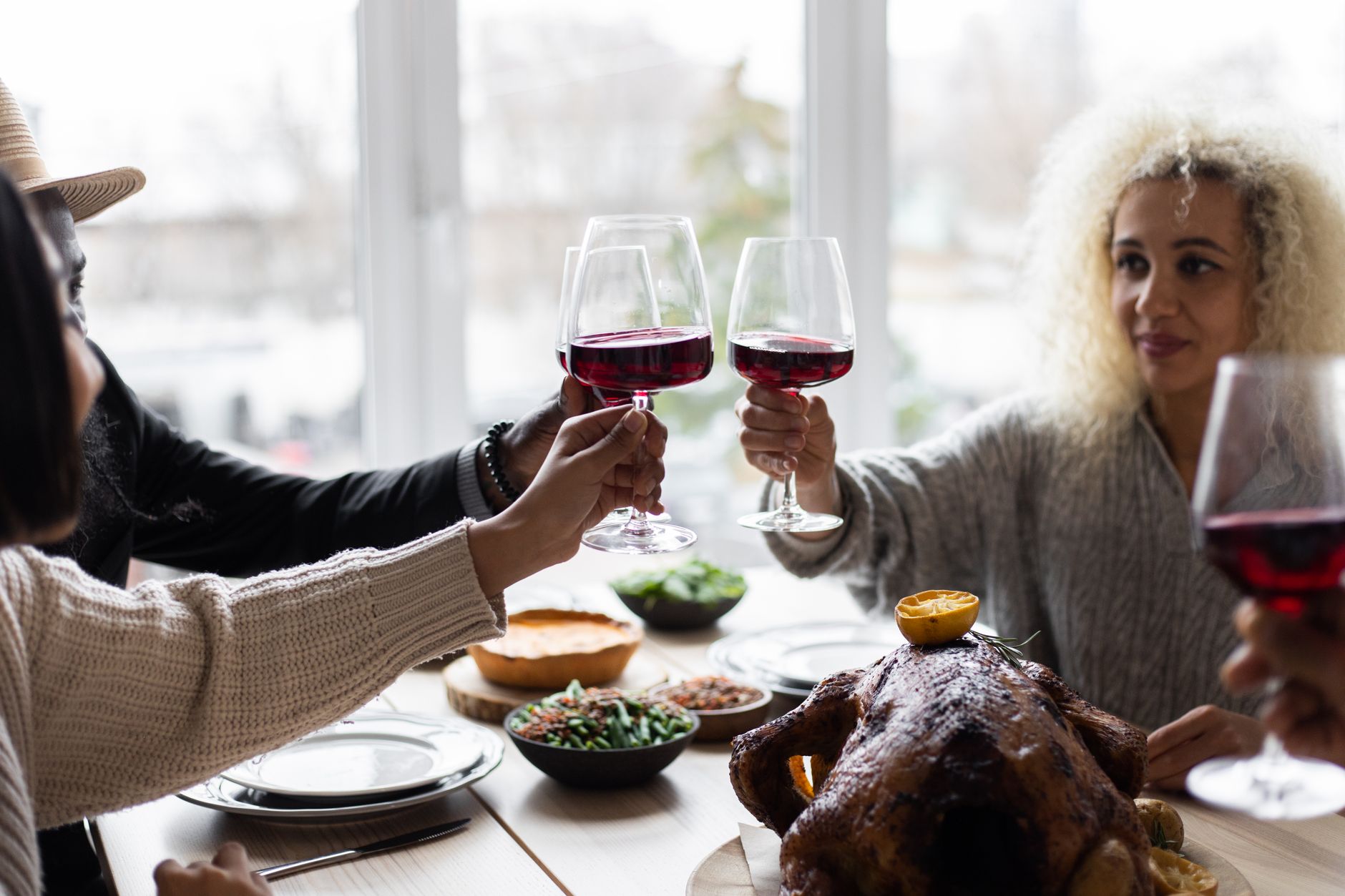
The Thanksgiving table is a flavor collision. Cranberry sauce, with its sugar and acidity, hits sweet potato casserole, with its butter and brown sugar. Sage stuffing rubs against gravy. Roasted turkey sits in the middle, trying to be everything to everyone. The best wine for Thanksgiving is not the most popular bottle or the most expensive label on the shelf. It is the wine whose structure, specifically its acidity, fruit profile, and tannin level, can navigate the most chaotic plate of the year without collapsing.
Here is the core problem, and it is a chemistry problem before it is a taste problem. Research from the Virginia Tech Enology Lab on food and wine interactions demonstrates that sweetness and acidity exist in an inverse perceptual relationship: when you eat something sweet, the wine in your glass tastes thinner, sharper, and less fruity. When you eat something tart, the wine tastes sweeter and flatter. Thanksgiving puts both extremes on the same fork.
That means a dry wine that tastes balanced on its own can turn thin and sour the moment it meets a bite of sweet potato casserole topped with toasted marshmallow. A tannic red that drinks beautifully with steak turns bitter and astringent against turkey, which lacks the fat to soften tannins the way beef does. The cranberry sauce, with its high acidity and sugar content, shifts the palate in one direction. The stuffing, savory and herbal, pulls it in another. Gravy adds fat and salt, which mute a wine’s fruit. Every bite resets the equation.
The wines that survive this gauntlet share three structural traits. First, high acidity, because acid is the palate’s reset button. It cuts through fat, refreshes after sweetness, and keeps the wine lively when the food tries to dull it. Second, bright fruit, because fruit intensity gives the wine enough flavor to remain perceptible when surrounded by competing tastes. Third, low to moderate tannin, because tannins, the polyphenol compounds that create a drying, astringent grip on your palate, need protein and fat to soften. Turkey is too lean to do that job. As we have explored in our guide to the best wine with steak, tannins bind to the proteins and fats in beef, which is why a Cabernet Sauvignon turns plush against a fatty ribeye but turns harsh against a lean filet mignon. Turkey sits closer to the filet end of the spectrum.
This is why the reflexive Thanksgiving pour, Beaujolais Nouveau, is not wrong but is incomplete. It has the right low tannin and bright acidity, but it lacks the concentration and structure to hold its ground across the full range of flavors on the plate. It is a wine designed for immediate, uncomplicated drinking, not for navigating a plate where five competing preparations meet. The wines below are chosen for their ability to do that job, and the reasoning for each pick follows from the flavor chemistry, not from tradition or crowd-pleasing instinct.
White Wines That Hold Their Ground
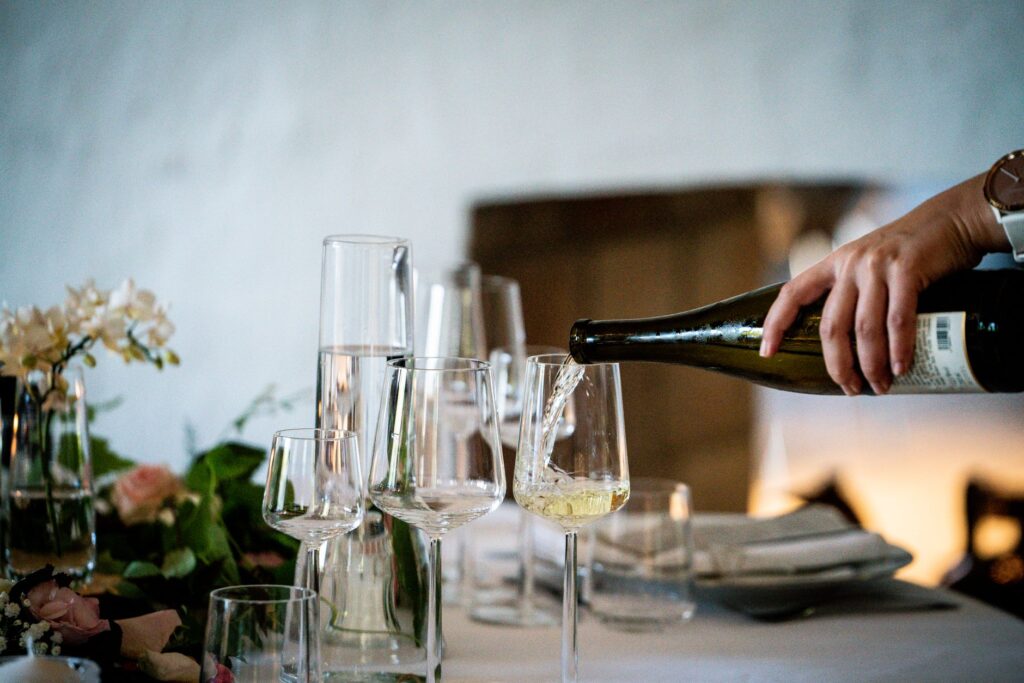
White wines have a structural advantage at the Thanksgiving table: they carry no tannin, which means they cannot turn astringent against lean turkey or become bitter alongside sweet sides. The trade-off is that they also carry less fruit intensity than reds, so they need enough acidity and aromatic character to stay perceptible when surrounded by strong flavors. The three whites below are chosen for their ability to do that.
Riesling (Off-Dry)
Riesling is routinely cited by wine professionals as the single best white wine for Thanksgiving, and the reasoning is structural. An off-dry Riesling, typically with 12 to 40 grams per liter of residual sugar, carries enough sweetness to match the sweet potato casserole and glazed root vegetables without tasting thin. That residual sugar is balanced by bracing acidity, often with a pH below 3.2, which keeps the wine from tasting cloying and refreshes the palate after each rich, butter-laden bite. The mechanism is the same one that makes lemonade refreshing: sugar and acid in tension create vibrancy rather than heaviness. As the International Riesling Foundation’s sweetness scale recognizes, it is the sugar-to-acid ratio, not the sugar alone, that determines how a Riesling drinks. A wine with 30 grams per liter of residual sugar can taste dry if the acidity is high enough to balance it.
Look for a German Kabinett or Spatlese from the Mosel, where steep slate soils produce Rieslings with high acidity and moderate sweetness, or a domestic off-dry Riesling from the Finger Lakes. Dr. Loosen’s off-dry Riesling from the Mosel, widely available around $12 to $15, is a reliable starting point. Serve it at 45 to 50 degrees Fahrenheit, slightly warmer than refrigerator temperature, so the aromatics of peach, lime, and honey open up rather than staying locked behind the chill.
Chenin Blanc
Chenin Blanc shares Riesling’s high acidity and versatility but brings a different fruit profile: green apple, quince, and wet wool rather than peach and lime. A dry Chenin Blanc from South Africa, where the grape is widely planted and well-priced, or a Vouvray from the Loire Valley in France, offers bright acidity that cuts through gravy and creamy dishes without the residual sugar that some drinkers find cloying in off-dry Riesling. Chenin Blanc’s acidity is its primary weapon: it refreshes the palate between bites the way a squeeze of lemon does, stripping away the fat coating that gravy and butter leave behind.
Look for producers like Ken Forrester in South Africa or Domaine Huet in Vouvray. A dry South African Chenin Blanc typically sits in the $15 to $25 range and offers more complexity than similarly priced Chardonnay. The wine’s slight herbal and mineral edge also complements sage stuffing without clashing with it, a structural advantage that oak-heavy Chardonnays lack. Heavily oaked, buttery Chardonnay, the kind many people default to for Thanksgiving, can taste flat against acidic sides and can turn cloying against sweet ones. If you want Chardonnay, choose an unoaked or lightly oaked version, such as a Chablis from Burgundy, which offers crisp apple and lemon notes without the vanilla and butter that fight with the plate’s sweeter elements.
Aligote
Aligote, the other white grape of Burgundy, is the insider’s pick and the one most people have never heard of. It was once important enough to be planted alongside Chardonnay in the Corton-Charlemagne Grand Cru, but growers largely ripped it out in favor of Chardonnay, which sold better. What remains is a grape with higher acidity than Chardonnay, lighter body, and a slightly vegetal, mineral character that makes it a natural partner for vegetable dishes and, crucially, for cranberry sauce. Ian Krupp, the 2024 Michelin sommelier award winner, notes that Aligote goes particularly well with vegetables and that a splash of creme de cassis turns it into a Kir, which is one of his favorite Thanksgiving pairings specifically because it echoes the cranberry.
The wine’s high acidity and low alcohol, typically 11 to 12.5 percent, mean it will not overwhelm delicate turkey white meat or turn hot against spiced stuffing. Look for bottles from Chantereves or other boutique Burgundy producers. Aligote is harder to find than the other whites on this list, but if your wine shop carries it, it is worth the search for the cranberry-sauce compatibility alone.
Reds That Play Well With Everything
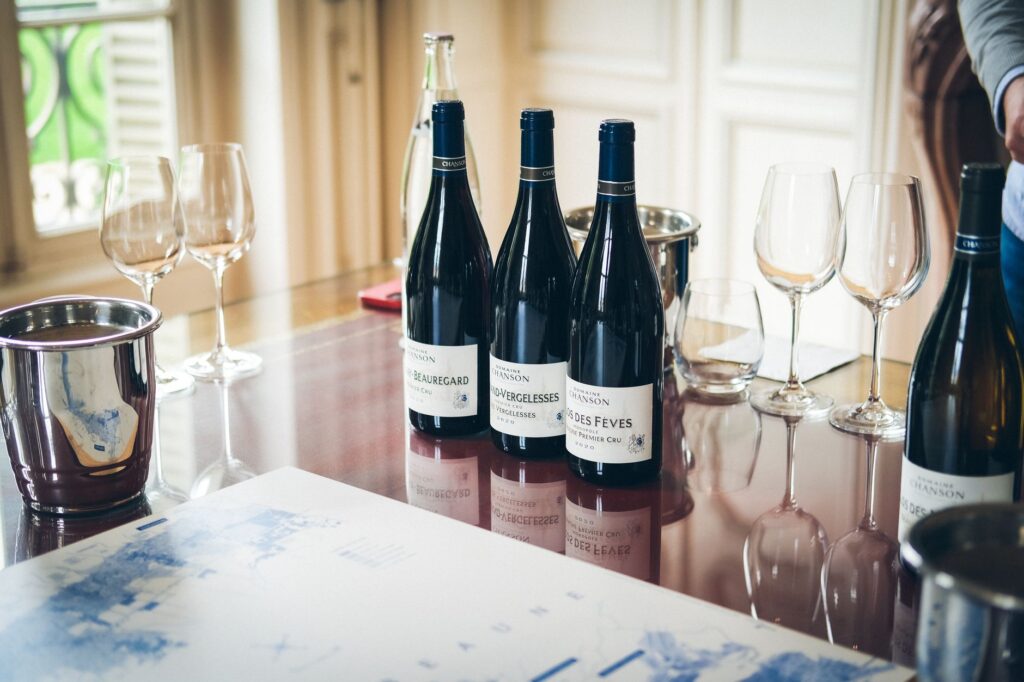
Red wines face a structural challenge at Thanksgiving that whites do not: tannin. Tannins bind to proteins and fats to soften, and turkey is lean. The sides are sweet, which means tannic reds like Cabernet Sauvignon will taste bitter, thin, or both. The reds that work are those with low to moderate tannin, bright acidity, and enough fruit to stay vivid. Each pick below is chosen for its ability to hold its flavor alongside the table’s competing elements.
Pinot Noir
Pinot Noir is the most recommended Thanksgiving red for good reason, and the reasoning is purely structural. The grape’s thin skins produce naturally low tannin levels, which means it will not turn astringent against lean turkey or become bitter alongside sweet sides. Its bright acidity, typically higher than most other reds, refreshes the palate between bites the same way a white wine does. And its red fruit profile, cherry, raspberry, and cranberry, echoes the tart-sweet character of cranberry sauce rather than fighting it.
A Pinot Noir from Oregon’s Willamette Valley, where cool-climate growing preserves acidity and produces bright red-fruit character, is the most reliable domestic choice. A red Burgundy from the Cote de Nuits offers more earthy complexity but at a higher price. The key is avoiding heavily oaked, high-alcohol Pinots, which can taste flabby and hot against the food. Look for bottles in the 12.5 to 14 percent alcohol range with minimal new oak. Serve slightly cool, at 55 to 60 degrees Fahrenheit, so the acidity stays lively. A quality Willamette Valley Pinot typically runs $20 to $35.
Cru Beaujolais (Gamay)
Cru Beaujolais is what Beaujolais Nouveau wants to be when it grows up. Both come from the same grape, Gamay, but the ten Cru appellations of Beaujolais, villages like Morgon, Fleurie, and Moulin-a-Vent, produce wines with far more concentration, structure, and depth than the Nouveau released each November. The structural profile is ideal for Thanksgiving: low tannin, high acidity, and bright red-fruit flavors of raspberry, red currant, and a touch of earth. A Morgon, which is the most structured of the Crus, can approach Pinot Noir’s weight and complexity while costing less. A Fleurie is softer and more floral.
The advantage over Nouveau is concentration: a Cru Beaujolais has enough fruit density to remain perceptible against the table’s competing flavors, where Nouveau fades. Cru Beaujolais is also one of the best values in red wine, with excellent bottles from producers like Marcel Lapierre, Jean Foillard, or Domaine Dutraive typically costing $18 to $30. The wine’s slight earthy and floral notes complement sage stuffing and herb-roasted turkey without clashing. Serve at 55 degrees Fahrenheit, slightly chilled, which keeps the acidity bright and the fruit vivid.
Zinfandel
Zinfandel is the contrarian pick, the red you reach for when your Thanksgiving leans richer and darker than the standard turkey-and-sides format. If you are serving dark meat turkey, a smoked or deep-fried bird, or a table heavy with savory gravy and roasted root vegetables, Zinfandel’s spicy, jammy blackberry and black pepper profile has the fruit intensity to stand up to those bolder flavors without the tannin that Cabernet would bring. Its medium tannin is soft enough not to clash with lean turkey, and its spice notes of clove and black pepper echo the autumnal seasoning in stuffing and rubs.
The risk with Zinfandel is alcohol. Many California Zinfandels run 14.5 to 16 percent ABV, and high alcohol creates a hot, burning sensation that magnifies the heat from spiced dishes. Look for Zinfandels in the 13.5 to 14.5 percent range, or consider a Primitivo from southern Italy, which is genetically the same grape but often produced at lower alcohol levels. Producers like Dashe Cellars or Ridge Vineyards offer balanced Zinfandels in the $20 to $35 range. As sommelier Jill Gubesch of Chicago’s Topolobampo notes, Zinfandel’s spicy fruit pairs well with almost anything on the Thanksgiving table, particularly the sweeter sides.
Nebbiolo (Barolo or Barbaresco)
Nebbiolo is the wildcard, and it comes with a caveat. Barolo and Barbaresco, the two great expressions of Nebbiolo from Piedmont, carry significant tannin, which on paper makes them poor Thanksgiving candidates. But Nebbiolo’s tannins are balanced by extraordinary aromatic intensity: dried rose, tar, cherry, and leather that cleanse the palate and reset your senses between bites. Ian Krupp, the 2024 Michelin sommelier award winner, brings a Nebbiolo to Thanksgiving every year, calling it “the antithesis to cranberry sauce” because its flavor profile is the exact opposite, but it wipes the palate clean.
The key is choosing a Nebbiolo with some age, at least 5 to 7 years, or a Barbaresco, which is generally more approachable in its youth than Barolo. Young, aggressively tannic Barolo will taste harsh against turkey. An aged one, where time in bottle has softened the tannins and integrated the aromatics, turns silky and complex. This is a splurge pick: good Barolo starts around $40 and climbs quickly. If that exceeds your Thanksgiving budget, skip it. The other reds on this list deliver more value per dollar for the table.
| Wine | Tannin | Acidity | Fruit Profile | Best Thanksgiving Match |
|---|---|---|---|---|
| Pinot Noir | Low | High | Cherry, raspberry, cranberry | Turkey, cranberry sauce, lighter sides |
| Cru Beaujolais (Morgon) | Low to medium | High | Raspberry, red currant, earth | Turkey, sage stuffing, herb dishes |
| Zinfandel | Medium | Medium | Blackberry, black pepper, clove | Dark meat, gravy, smoked turkey |
| Nebbiolo (aged Barolo) | High, softened by age | High | Dried rose, tar, cherry | Palate cleanser, dark meat |
Why Sparkling Is the Secret Weapon
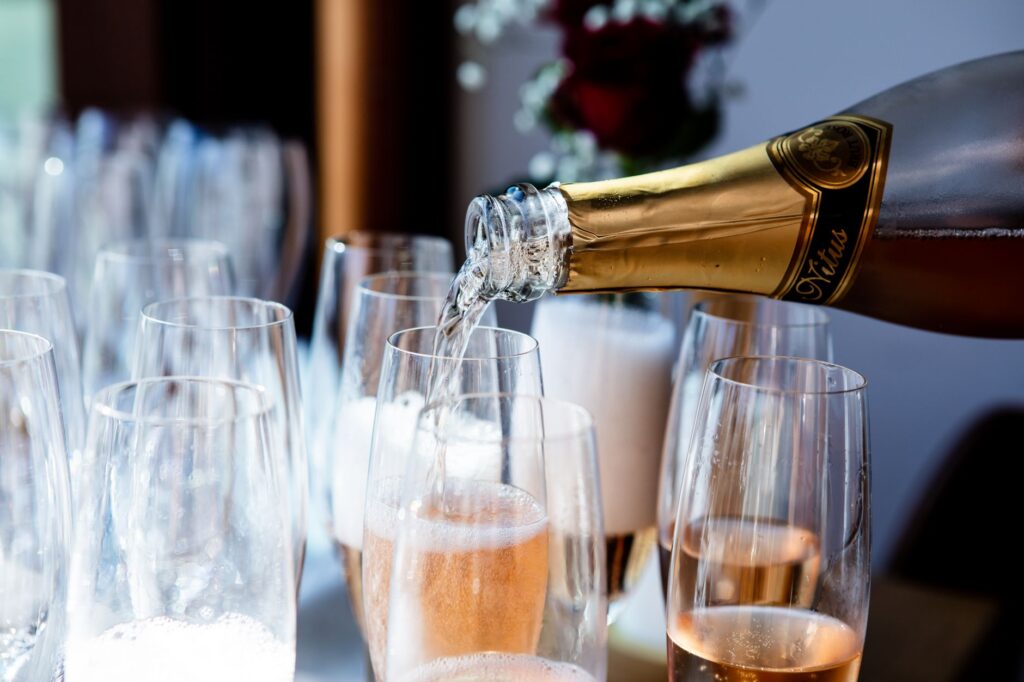
Sparkling wine solves the Thanksgiving problem in a way no still wine can, and the mechanism is physical. The carbon dioxide in sparkling wine creates a scrubbing action on the palate, literally lifting away the fat and sugar residues that accumulate with each bite. The Virginia Tech Enology Lab’s research on food and wine pairing notes that the CO2 in sparkling wine helps cleanse the palate and adds to the sense of acidity, which is why sparkling wines are recommended specifically with high-fat, salty foods. Gravy, butter, and cream-based casseroles are exactly those foods. The bubbles do what acidity alone cannot: they provide a mechanical reset between bites, stripping the coating that rich dishes leave behind and preparing the palate for the next flavor.
Brut Champagne or Traditional-Method Sparkling
A brut Champagne, or a traditional-method sparkling wine from California, Oregon, or the Finger Lakes, is the most versatile single bottle you can open on Thanksgiving. The traditional method, where the second fermentation happens in the bottle, produces fine, persistent bubbles and autolytic flavors of brioche, toasted nuts, and apple that complement roasted turkey and stuffing. The acidity in a well-made brut is bracing, often with a pH below 3.0, which refreshes the palate after every bite. A brut can open the meal as an aperitif, transition to the main course alongside turkey and sides, and even carry through to the pumpkin pie if you choose one with enough fruit.
Look for a brut from producers like Pierre Peters or Larmandier-Bernier in Champagne, or domestic options from Argyle Winery in Oregon or Schramsberg in California. Good traditional-method sparkling wine starts at $20 for domestic and $40 to $60 for entry-level Champagne. Serve at 45 to 50 degrees Fahrenheit.
Lambrusco
Lambrusco, the red sparkling wine of Emilia-Romagna in central Italy, is the Thanksgiving wine most people overlook and should not. It is a red wine, which means it carries the fruit and color that turkey and gravy want, but it is also sparkling, which means it has the palate-cleansing power of CO2. The combination is uniquely suited to the Thanksgiving plate. A dry Lambrusco di Sorbara, with its pale color, bright strawberry and watermelon fruit, and high acidity, works like a rose with bubbles: it handles cranberry sauce, turkey, and lighter sides with equal ease. A Lambrusco Salamino or Grasparossa, which is darker and more structured, can stand up to gravy and dark meat.
Some Lambruscos contain residual sugar, which, as the WSET notes, can be advantageous when your menu leans sweeter. Look for producers like Lini 910, Paltrinieri, or Medici Ermete. Good Lambrusco typically costs $15 to $25, making it one of the most affordable sparkling options on this list. Serve chilled, at 45 to 50 degrees Fahrenheit.
Petillant-Naturel (Pet-Nat)
Petillant-naturel, or pet-nat, is the oldest method of making sparkling wine, and it has become one of the most exciting categories in natural winemaking. The wine is bottled before fermentation is complete, and the remaining fermentation happens in the bottle, producing light, sometimes cloudy bubbles. Pet-nats tend to be low in alcohol, often 10 to 12 percent, high in acidity, and fruit-forward, with a fresh, slightly wild character that works well alongside a rustic Thanksgiving spread. They lack the precision and autolytic complexity of traditional-method sparkling wine, but they bring an easy, unpretentious energy that suits a holiday built around abundance.
Look for pet-nats from producers like La Garagista in Vermont, which makes a cranberry-hued pet-nat from Cabernet Franc that is practically designed for the Thanksgiving table. Pet-nats are typically $18 to $30 and should be served well chilled.
Building the Best Wine for Thanksgiving Lineup
The smartest approach to Thanksgiving wine is not to find one bottle that does everything. It is to build a small lineup of two or three bottles, each playing a different role, and let them work together across the meal. No single wine can match cranberry sauce, gravy, sweet potato casserole, and sage stuffing simultaneously, but a well-chosen sequence can cover the table.
The Three-Bottle Lineup
A practical three-bottle lineup looks like this. Open with a sparkling wine, brut Champagne or Lambrusco, as guests arrive and through the first course. The bubbles and acidity wake the palate and handle appetizers, from cheese platters to deviled eggs. Pour an off-dry Riesling alongside the lighter sides: sweet potato casserole, glazed carrots, green bean casserole. Its residual sugar matches the sweetness of those dishes while its acidity refreshes. Pour a Pinot Noir or Cru Beaujolais with the turkey, gravy, and stuffing. Its low tannin and bright fruit complement the savory elements without turning bitter.
This structure mirrors how a sommelier builds a wine pairing progression across a tasting menu, matching each wine’s structure to the character of the dishes it accompanies. For more on how that progression works in a fine dining context, our guide to how a tasting menu builds course by course walks through the logic in detail.
The Two-Bottle Shortcut
If three bottles feels excessive for a smaller gathering, two will do. A brut sparkling wine and a Cru Beaujolais cover the table between them: the sparkling handles the rich, fatty, and sweet elements, and the Beaujolais handles the turkey and savory sides. The two wines are structurally complementary: one provides the acid-and-bubble reset, the other provides the red fruit and earth. This is the minimum viable Thanksgiving lineup, and it works.
Practical Service Tips
Serve white and sparkling wines at 45 to 50 degrees Fahrenheit, which keeps their acidity bright. Serve red wines slightly cool, at 55 to 60 degrees, which keeps the fruit vivid and prevents the alcohol from feeling hot. Use all-purpose wine glasses rather than narrow Champagne flutes, which trap aromatics and prevent the wine from expressing itself fully against the food. And pour generously: a Thanksgiving meal for eight to ten people will go through three to four bottles of wine across the afternoon, not because anyone is overdrinking, but because the food demands continuous palate refreshment.
Explore More Seasonal Pairings
The best wine for Thanksgiving is the bottle whose structure solves the flavor problem on your plate. Once you can read a wine’s acidity, fruit profile, and tannin level the way a sommelier reads a menu, the pairing stops being a guess and becomes a decision you make with reasoning. The same structural logic that helps you choose a Riesling for sweet potato casserole helps you choose a Cabernet for a ribeye or a Champagne for oysters.
Browse our seasonal pairing guides and restaurant features at The Dining Post, or subscribe to our weekly dispatch for new recommendations every week. Have a question about a specific wine and what to pour alongside your Thanksgiving spread? We would love to hear from you.
Frequently Asked Questions
What is the best wine for Thanksgiving dinner?
There is no single best wine for Thanksgiving because the table has too many competing flavors. The best approach is to choose wines with high acidity, bright fruit, and low to moderate tannin. Off-dry Riesling, Pinot Noir, and brut sparkling are three of the most versatile options.
Can I serve one wine for the whole Thanksgiving meal?
You can, but it is hard to find one bottle that handles every dish. A better approach is to pour two or three wines: a sparkling wine to start, a white for lighter sides, and a red for turkey and gravy. This lets each wine play to its structural strengths.
Why does Cabernet Sauvignon taste bad with Thanksgiving food?
Cabernet Sauvignon has high tannins that need fat and protein to soften. Turkey is lean, and the sweetness of side dishes like sweet potato casserole makes tannic wines taste even more bitter and astringent. Low-tannin reds like Pinot Noir or Cru Beaujolais work far better.
Is Beaujolais Nouveau a good Thanksgiving wine?
Beaujolais Nouveau has the right low tannin and bright acidity for Thanksgiving, but it lacks the concentration and structure to hold up across the full range of flavors on the plate. A Cru Beaujolais from Morgon or Fleurie offers the same grape’s advantages with more depth and staying power.
Does sparkling wine really work with Thanksgiving dinner?
Yes. The carbon dioxide in sparkling wine physically cleanses the palate, and the high acidity refreshes between bites. Brut Champagne, traditional-method sparkling, and Lambrusco all work well, especially as an opening wine or poured alongside the full meal.


One thought on “Best Wine for Thanksgiving: Picks That Survive the Plate”