

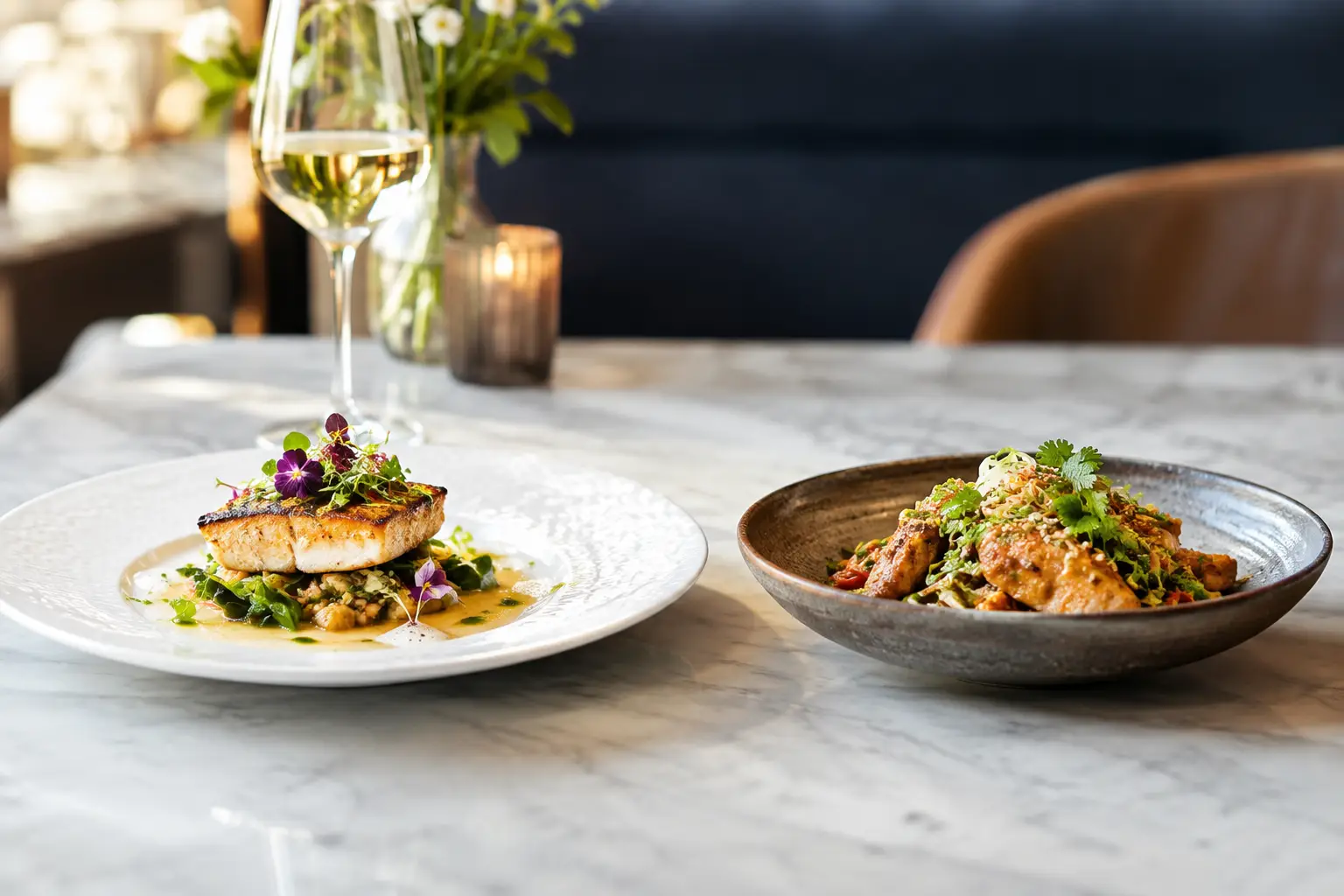
A reservation page can make a Michelin Star and a Bib Gourmand look like neighboring badges in the same guide. They are. But the difference between Michelin star vs Bib Gourmand can mean the difference between a three-hour anniversary tasting menu and the kind of restaurant where you order another plate because the first one disappeared too quickly.
Neither recognition is a consolation prize. Both tell diners that Michelin inspectors found cooking worth seeking out. The distinction is about what, exactly, the guide is celebrating: extraordinary culinary achievement in one case, remarkable value in the other. Knowing which signal you are seeing makes it much easier to book the right table for the night you actually want.
Michelin Star vs Bib Gourmand: The Core Difference
A Michelin Star recognizes cooking of exceptional quality. It is Michelin’s highest and most globally recognized restaurant distinction, awarded in one-, two-, or three-star levels. A Bib Gourmand recognizes restaurants that offer good food at good value, generally within a price threshold set for that particular city or region.
Put plainly, a Star says, “Make a trip for the food.” A Bib says, “You can eat memorably well here without committing to a luxury-level check.”
That framing matters because diners often mistake Bib Gourmand for a lesser Star. It is not. A Bib restaurant may serve a bowl of hand-cut noodles, a sharply calibrated mole, or a bistro roast chicken that is more satisfying on a Wednesday than a formal progression of twelve precise courses. It simply is not being evaluated under the same central proposition as a starred restaurant.
Michelin uses five broad criteria when assessing a restaurant’s cooking: ingredient quality, mastery of technique, harmony of flavors, the chef’s personality expressed in the cuisine, and consistency over time and across the menu. Stars are awarded for the plate, not for crystal stemware, costly interiors, or how hard a table is to secure.
In practice, however, many starred restaurants also deliver highly polished service, ambitious beverage programs, and carefully designed rooms. Those elements shape the evening, even if they are not the reason for the Star itself.
What a Michelin Star Signals at the Table
A one-star restaurant is described by Michelin as “high-quality cooking, worth a stop.” That may be a small chef’s counter where every piece of fish has been cured with unnerving precision, or a refined dining room built around a seasonal tasting menu. The experience can be formal, but formality is not mandatory.
Two Stars indicate “excellent cooking, worth a detour.” Here, the food tends to show greater complexity, confidence, and cohesion. A chef’s point of view is unmistakable, and the kitchen executes it with unusual control. You might encounter a sauce that has taken days to build, a signature dish that returns season after season, or a progression in which temperature, texture, and acidity are orchestrated as deliberately as a wine pairing.
Three Stars are reserved for “exceptional cuisine, worth a special journey.” This is destination dining. The meal may justify planning a weekend around it, arranging travel months ahead, and giving the evening enough room to unfold. A Three-Star dinner is not automatically more enjoyable than every Bib meal, but it operates at a different level of ambition and expectation.
For diners, the practical implications are usually time, budget, and structure. Many starred restaurants offer tasting menus, fixed reservation times, deposits or cancellation policies, and a meal that can run from two to four hours. You may be asked about dietary restrictions in advance. The wine list may be a serious part of the experience, whether you choose a pairing or order a bottle.
That does not mean every Star requires a jacket, a hushed voice, or a four-figure celebration. Some of the most exciting starred meals happen at compact counters, neighborhood restaurants, and lunch services that feel comparatively relaxed. Still, a Star is a good prompt to read the menu, pricing, and reservation terms before you commit.
What Bib Gourmand Means, and What It Does Not
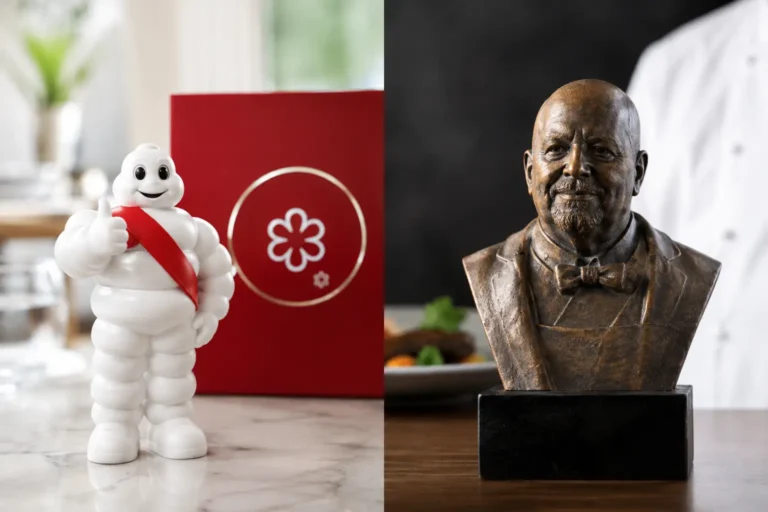
Bib Gourmand takes its name from Bibendum, Michelin’s tire mascot. The designation highlights restaurants where diners can find notably good food at a reasonable price. “Reasonable” is relative: a satisfying meal in Manhattan will not have the same price ceiling as one in a smaller market.
That local flexibility is essential. Bib Gourmand does not mean cheap eats in the narrow sense, nor does it promise that every item on the menu is inexpensive. A restaurant may offer a modestly priced dinner while charging more for natural wine, premium seafood, or a celebratory bottle. The point is that the overall experience delivers conspicuous value for its area.
The category is particularly useful for culinary travelers and regular diners because it often surfaces restaurants with a strong sense of place. Think of a family-run spot turning out fragrant regional dishes, a bustling taqueria with extraordinary masa, or a chef-led neighborhood restaurant whose $30 entrée has the depth and care of something far more expensive.
Service at a Bib Gourmand can range from counter ordering to polished casual hospitality. The dining room may be spare, loud, and fast-moving. Reservations may be available, or you may need to arrive early and wait. That looseness is often part of the appeal: the food is serious, while the occasion can remain pleasantly unceremonious.
A Bib is also not a guarantee that a restaurant will stay inexpensive forever. Rising rents, ingredient costs, and demand affect menus. Check current pricing rather than relying on an older guide listing, especially in major U.S. dining cities.
Which Michelin Recognition Fits Your Occasion?
Choose a Michelin-starred restaurant when the meal itself is the event. It suits anniversaries, milestone birthdays, client dinners where the setting matters, and trips organized around a chef or a singular dining room. Go in ready to let the kitchen lead. If the menu is tasting-only, the best approach is usually to arrive curious rather than trying to control every course.
A Bib Gourmand is often the stronger choice when you want food with energy rather than ceremony. It is ideal for a spontaneous date night, a group of friends with different budgets, or the first dinner after checking into a new city. You can order broadly, share freely, and still have room in the budget for a thoughtful bottle or a second stop for dessert.
There is also a useful middle ground: a Bib for dinner, then a cocktail at a more formal hotel bar; or a Star at lunch, when tasting menus and wine pours can sometimes be more approachable. The best dining plan is not always the most expensive one. It is the one whose pace, price, and personality match the people at the table.
How to Read the Michelin Guide Without Overreading It
Michelin recognition is influential, but it is not a universal measure of every restaurant worth loving. The guide only covers selected destinations, so an absence of a Star or Bib may simply mean Michelin has not inspected that market. Great restaurants also fall outside the guide’s preferred formats, price expectations, or geographic reach.
It is worth separating three Michelin labels that diners commonly blur together. A Star recognizes exceptional cooking. A Bib Gourmand recognizes quality and value. Michelin Selected indicates that a restaurant is included in the guide but has not received a Star or Bib designation. Michelin may also award a Green Star for notable commitments to more sustainable practices. These are different signals, not a ranking from best to worst.
Use the guide as a smart filter, then apply your own preferences. Look at the menu. Consider whether you want a tasting menu or à la carte ordering, quiet conversation or a packed room, a sommelier-led evening or a quick beer with dinner. A restaurant that is perfect for one kind of night can be exactly wrong for another.
For the diner deciding between the two, the most useful question is not, “Which badge is better?” It is, “What kind of pleasure am I trying to have?” A Star can turn dinner into a lasting memory of craft and theater. A Bib Gourmand can remind you that the most thrilling thing on the table is sometimes a $16 dish you immediately want to order again.