
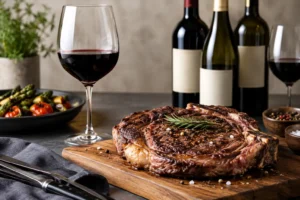
A ribeye hits the table with a deeply browned crust, a gloss of butter, and a pile of crisp fries. The instinct is to order the biggest red on the list. Sometimes that works. But wine pairing is less about reaching for the most expensive Cabernet and more about noticing what is actually happening on the plate: the beef’s richness, the salt, the char, the peppercorn sauce, and even the diners’ appetite for intensity.
That is the useful shift. A successful pairing does not need to be precious, and it rarely hinges on memorizing one approved bottle for each dish. It is a matter of balance. Wine can refresh a rich bite, echo an aromatic ingredient, soften spice, or give a simple meal more shape. Once you understand a few signals, choosing a bottle at a restaurant or in a wine shop becomes far less mysterious.
Wine Pairing Starts With the Plate
Begin with the dominant flavor, not the headline ingredient. Chicken can lead to a light red, a textured white, or sparkling wine depending on whether it arrives roasted with lemon, lacquered in barbecue sauce, or tucked into a creamy mushroom ragout. Salmon may call for bright Sauvignon Blanc when served with herbs and citrus, yet feel perfectly at home beside Pinot Noir when the preparation leans smoky or earthy.
The most influential elements are usually fat, acid, sweetness, heat, salt, and texture. Fat makes a wine’s acidity feel especially welcome. Think of Champagne with fried chicken, Chablis with buttery crab, or Barbera with a cheese-laden pasta. Acid resets the palate after each rich bite, which is why a lively wine can feel more satisfying than a broad, high-alcohol bottle, even when both are technically well made.
Sweetness and heat require more care. Spicy food makes tannin and alcohol feel hotter, so an aggressively oaked red can turn a chile-heavy dish metallic and tiring. A slightly off-dry Riesling, fragrant Gewurztraminer, or chilled Beaujolais is often a smarter answer. With a dessert, the wine should generally be at least as sweet as the dish. A dry red beside chocolate cake can taste thin and bitter; late-harvest wine or tawny Port meets the dessert on its own terms.
A Wine Pairing Framework That Works at Home
When the menu is complicated, assess the meal in a simple order: weight, sauce, seasoning, then contrast. This framework leaves room for preference, which matters more than pairing dogma. If you love bold reds, you do not need to abandon them every time fish appears. You may simply choose a fuller fish preparation, chill the red slightly, or pour a lighter-bodied example.
Match weight before grape variety
Light dishes tend to prefer lighter wines; substantial dishes can carry more body and structure. Delicate sole with a lemon beurre blanc does not need the same bottle as short ribs braised in red wine. The former may shine with Muscadet, Albariño, or dry Chenin Blanc. The latter has the depth for Syrah, Cabernet Franc, or a mature Bordeaux-style blend.
Weight is not the same as color. A translucent Pinot Noir can have considerable intensity, while an ample white Burgundy can feel almost as broad as a red. Use your mouth, not the label’s color category, as the guide. Ask whether the food feels delicate, medium-bodied, or rich and dense, then find a wine that will not overpower it or disappear beside it.
Let acidity do the heavy lifting
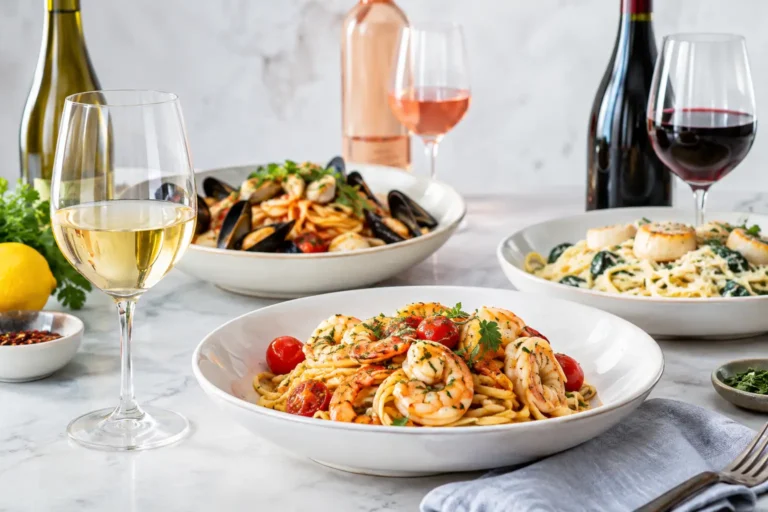
For everyday wine pairing, acidity is the most reliable clue. Wines with lively acidity make rich, salty, or creamy food feel lighter. They also brighten dishes built around tomatoes, citrus, vinegar, or fresh herbs. Italian reds such as Chianti and Barbera are natural pasta wines partly because they keep pace with tomato sauce instead of fighting it.
This is also why Sauvignon Blanc is such a fixture with goat cheese, green vegetables, and seafood. Its citrusy edge and herbal profile can mirror the food’s freshness. The trade-off is that very sharp wine can make a gently seasoned dish seem austere. With a plainly grilled chicken breast, for example, a rounder white such as Viognier or Chardonnay may be more flattering than an intensely tart bottle.
Treat tannin as texture
Tannin is the drying sensation associated with grape skins, seeds, and oak. It loves protein and fat, which is why a firm Cabernet can make sense with a marbled strip steak or lamb chops. The food softens the tannin, and the tannin gives the meat a cleaner finish.
Tannin is less forgiving with oily fish, bitter greens, and fiery spice. A young, heavily extracted red with grilled tuna can bring out a metallic quality; with arugula, it may exaggerate bitterness. When in doubt, move toward lower-tannin reds such as Pinot Noir, Gamay, or Grenache, especially if the dish includes mushrooms, roasted vegetables, duck, or salmon.
Decide whether to echo or contrast
Some pairings work because their flavors rhyme. Earthy mushroom risotto and Pinot Noir share a woodland character. Sancerre and a chèvre tart speak the same tangy, grassy language. Others succeed through contrast: sparkling wine cuts through potato chips, and a sweet German Riesling calms a spicy Thai curry.
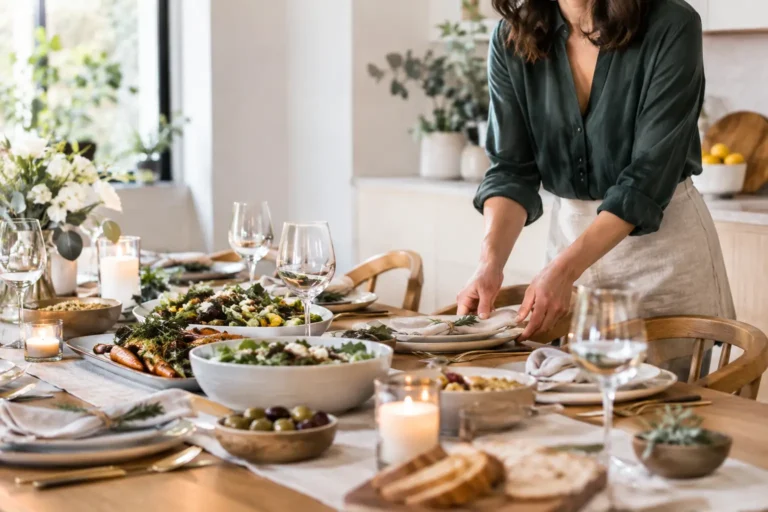
Neither approach is inherently better. Echoing flavors tends to create harmony and a sense of polish. Contrast brings energy and can rescue a meal from heaviness. For a dinner party, one of each can be more interesting than trying to force a single all-purpose bottle across every course.
Pair the Sauce, Not Just the Protein
This old sommelier maxim earns its place because sauces often determine the dish’s true personality. Steak with béarnaise wants freshness to cut through butter and egg yolk; steak with a peppery reduction can support a peppery Syrah. Pork tenderloin with apples has a different destination from pork carnitas with lime and salsa verde.
The same logic applies to vegetables. Roasted cauliflower with tahini has nutty richness and may welcome a textured white, while asparagus with vinaigrette calls for something brisk and green-edged. If you are ordering one bottle for a table, identify the sauce or seasoning thread shared across the menu. It is often the easiest bridge between seemingly unrelated plates.
What Usually Goes Wrong
The most common mistake is treating rules as verdicts. “White with fish” ignores preparation, and “red with meat” ignores cut, sauce, and cooking method. A chilled, light-bodied red can be excellent with salmon, while a powerful oak-aged white may overwhelm a raw oyster.
Temperature causes nearly as many misses as the bottle itself. Whites served ice-cold lose aroma and texture; reds served too warm feel alcoholic and blunt. Most full-bodied whites benefit from a few minutes out of the refrigerator. Many reds, particularly Pinot Noir, Beaujolais, and Barbera, are more refreshing with 15 to 20 minutes of chilling.
Price is not a pairing tool, either. A modest, bright Cava can be more useful with a spread of salty appetizers than a prestigious, tannic red that demands a steak. Spend for complexity when the occasion calls for it, but choose for the food first.
Ordering Wine With Confidence at a Restaurant
A good restaurant wine list is not a test. Give the server or sommelier three pieces of information: what you are eating, how much you want to spend, and whether you prefer something familiar or exploratory. “We have the roast duck and the halibut, around $90, and we’d like a red if possible” is genuinely useful direction.
If the table has ordered across the menu, consider starting with sparkling wine or a versatile, high-acid white. Then move to red with the main course if the meal warrants it. By-the-glass lists can be especially valuable for tasting menus, where one bottle may be too blunt an instrument for a sequence that moves from crudo to lobster to lamb.
The best bottle is not the one that proves you know the most. It is the one that makes the next bite more vivid, invites another sip, and lets the meal remain the main event.


4 thoughts on “Wine Pairing: A Better Way to Choose a Bottle”