
A great cheese course can turn awkward the moment someone reaches for a big, oaky red and pours it beside a fresh goat cheese. The wine suddenly tastes hard, the cheese tastes metallic, and a pairing that looked glamorous on the table loses its charm. Knowing how to pair wine with cheese is less about memorizing a sommelier’s private code than noticing what is actually on the plate: richness, salt, tang, sweetness, and age.
The useful rule is simple: match intensity, then create contrast where it helps. A delicate, milky cheese needs a wine with lift, not muscle. A salty blue cheese often wants sweetness. A dense, nutty wedge can handle structure, but not necessarily tannin. Once you learn to read those cues, a restaurant cheese cart or an ambitious at-home board becomes much easier to navigate.
How to Pair Wine With Cheese: Start With Texture
Texture is often the fastest route to the right bottle. Fresh cheeses, such as chèvre, ricotta, burrata, and mozzarella, have high moisture and gentle flavor. They come alive with crisp, aromatic whites: Sauvignon Blanc, dry Riesling, Albariño, or a mineral-driven Pinot Grigio. Their acidity cuts through creaminess while their citrus and herb notes echo the cheese’s freshness.
Soft-ripened cheeses such as Brie, Camembert, and triple-cream styles need a little more shape. Sparkling wine is the polished answer. Champagne, Crémant, domestic traditional-method sparkling wine, and dry Cava bring bubbles and acidity that refresh the palate after each buttery bite. The pairing works because the wine does not try to overpower the cheese. It clears a path for the next mouthful.
For semi-soft cheeses, think Taleggio, Fontina, Havarti, and young Gouda, move toward wines with rounder fruit and moderate acidity. Chenin Blanc, Grüner Veltliner, dry rosé, and lighter Pinot Noir are particularly flexible. These cheeses are richer and often more savory than fresh styles, but they still do not want a wine that arrives with too much oak or alcohol.
Hard, aged cheeses are a different proposition. Parmigiano-Reggiano, aged Gouda, Pecorino, Manchego, and Comté carry less moisture, more salt, and a deep concentration of toasted, caramelized, or nutty flavor. Here, you can bring in fuller whites and measured reds. A mature Chardonnay with restrained oak is excellent with Comté. Rioja Reserva, Barolo, Brunello, or a savory Syrah can be compelling beside Manchego or Pecorino, particularly when the cheese is served after a substantial dinner.
The caveat is tannin. Cheese fat can soften a red wine’s tannin, but very tannic wines can turn bitter against salty, sharp cheese. If the bottle makes your gums feel dry when tasted alone, use it with an aged, firm cheese rather than a bright, creamy one.
Salt, Sweetness, and the Blue Cheese Exception
Salt changes the equation. It can make dry wines seem less fruity and more severe, which is why the classic blue cheese and sweet wine pairing has endured. Stilton with tawny Port is not a tired rule. It is a smart response to intensity: the Port’s dried-fruit sweetness cushions the cheese’s salt and pungency, while its nutty oxidative notes meet the blue’s earthy depth.
Sauternes, late-harvest Riesling, ice wine, and late-harvest Chenin Blanc can serve the same purpose with Roquefort, Gorgonzola Dolce, or a creamy domestic blue. The wine should be at least as sweet as the food. If it is not, the cheese can make it taste thin and sour.
Not every blue cheese calls for dessert wine. A mild blue folded into a salad with pears and walnuts can work beautifully with off-dry Riesling. A firmer, more savory blue may suit oloroso Sherry, whose toasted walnut character meets the cheese in the middle. What matters is the cheese’s force. A gentle blue and a syrupy wine can feel like a conversation where one person never stops talking.
Washed-rind cheeses deserve their own note. Epoisses, Époisses-style cheeses, Taleggio, and other aromatic wheels can smell formidable while tasting plush and savory. Look for wines with brightness rather than excessive fruit: Alsace Pinot Gris, Gewürztraminer with some acidity, dry Chenin Blanc, or a farmhouse-style cider. A light Belgian ale can also be more persuasive than wine, especially if the cheese has a pronounced barnyard aroma. Pairing well is not about forcing wine into every situation.
The Best Wine Matches by Cheese Style
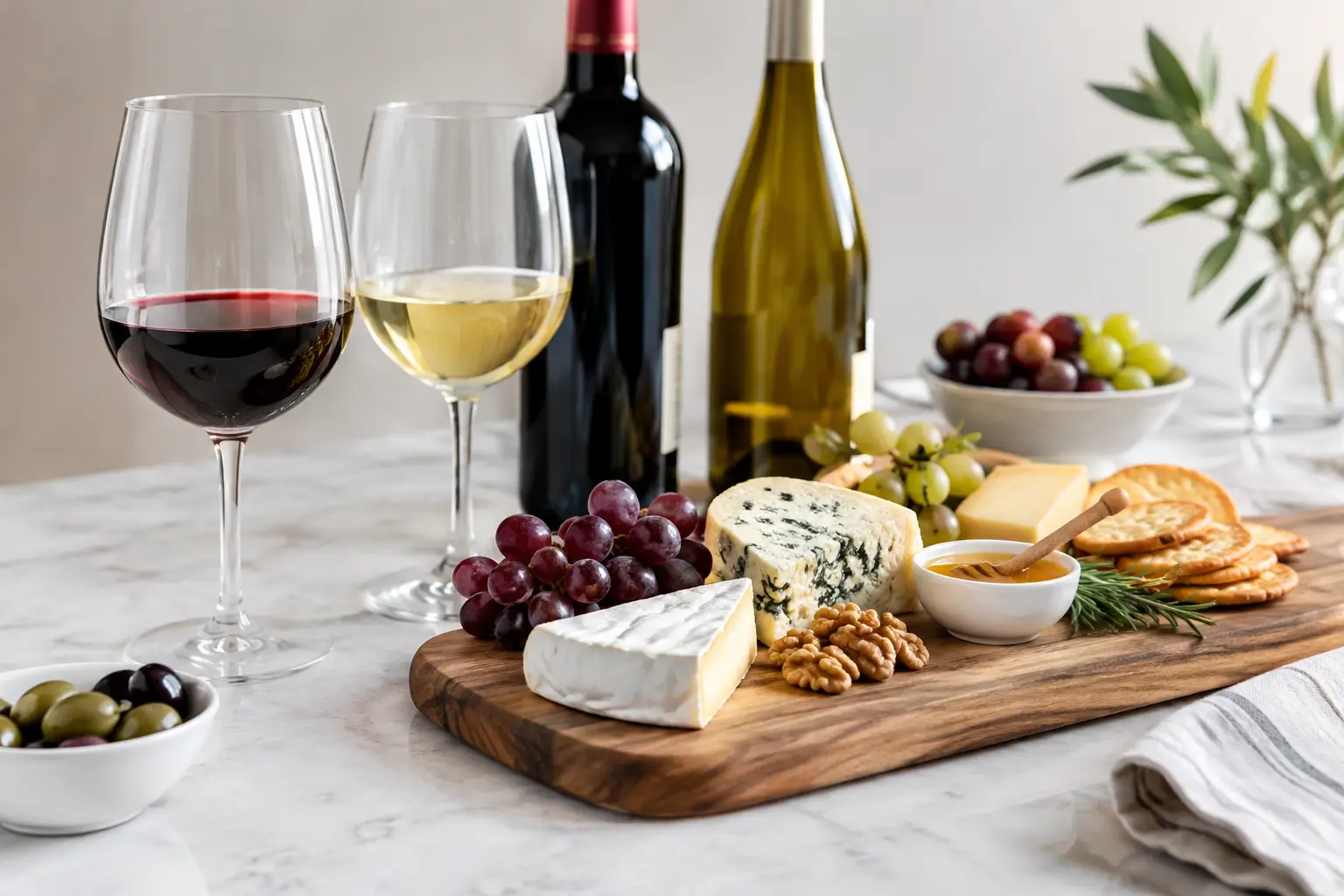
For a cheese board meant to please several people, begin with a white or sparkling wine rather than opening three competing reds. A dry sparkling wine works across fresh goat cheese, Brie, and aged alpine cheese with remarkable ease. It is the rare bottle that feels right at an afternoon gathering, before a dinner reservation, or alongside the final course at home.
If red is essential, Pinot Noir is the most reliable bridge. Its bright acidity, moderate tannin, and red-fruit profile make it friendly with Gruyère, Comté, aged Gouda, Tomme, and mild washed-rind cheeses. Beaujolais, especially cru Beaujolais, brings similar flexibility with a little more floral lift.
For cheddar, consider the cheese’s age. Young cheddar, creamy and approachable, loves cider, dry rosé, or a fruit-forward red such as Beaujolais. Sharp, mature cheddar has enough bite for Cabernet Franc, Rioja, or even a plush Cabernet Sauvignon, provided the wine is not aggressively tannic. Add apple slices or a spoonful of chutney and the pairing becomes more forgiving, because the fruit creates a bridge between wine and cheese.
Goat cheese is one of the clearest matches in the wine world. Loire Valley Sauvignon Blanc and chèvre share a natural affinity: both can carry grassy, citrusy, mineral notes. Domestic Sauvignon Blanc often works just as well, particularly leaner examples with bright acidity. If the cheese is warmed, fried, or served with honey, try a dry rosé or an off-dry Riesling instead.
Build a Cheese Board Around One Bottle
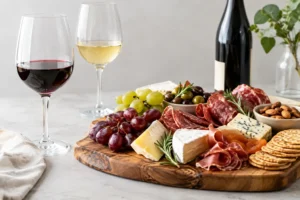
At home, the most elegant move is not buying six cheeses and hoping one wine will cooperate. Choose the bottle first, then build a board that supports it. With Champagne or quality domestic sparkling wine, serve a bloomy-rind cheese, a young goat cheese, and Comté or Gruyère. Add toasted almonds, fresh pear, and a simple baguette. Skip heavily smoked cheeses or aggressively sweet jam, which can flatten the wine’s precision.
With Pinot Noir, place a nutty alpine cheese, aged Gouda, and a supple cow’s-milk cheese on the board. Dried cherries or figs, walnuts, and a little cured ham make sense here. The board gains depth without pulling the wine in too many directions.
With off-dry Riesling, use goat cheese, a mild blue, and a washed-rind selection, then add apple, honey, and lightly spiced nuts. The wine’s sweetness is not a flaw to disguise. It is a tool for balancing salt and funk.
Serve cheese cool, not refrigerator-cold. Thirty to 45 minutes at room temperature is usually enough for flavor and texture to open up. Wine temperature matters too: over-warmed white wine feels dull, while red served too warm can seem alcoholic and heavy beside dairy. A light red around cellar temperature, roughly 55 to 60 degrees Fahrenheit, is usually more graceful than the same bottle left on a warm kitchen counter.
At a Restaurant, Follow the Course Rather Than the Cart
On a tasting menu, cheese may arrive as a composed course rather than a separate board. Pay attention to the supporting ingredients. A blue cheese with quince paste, hazelnut, and Sauternes is asking for a sweet or oxidative wine. A fresh sheep’s-milk cheese with herbs, peas, and olive oil may belong with a taut white already being poured for the savory courses.
If you are choosing from a cheese cart, tell the server what you drank with dinner and whether you prefer a final pour that is dry, red, sparkling, or sweet. A good server or sommelier can select a cheese that keeps the evening coherent. There is no prize for ordering the most challenging wedge on the cart if it fights the glass in front of you.
One final principle helps when the choices feel endless: let the cheese lead, but give the wine room to speak. The best pairings do not merely make both items taste acceptable. They reveal a new detail – the hazelnut in Comté, the lemony tang in chèvre, the cocoa and dried cherry in a mature red – and make the next bite feel necessary.