




How are Michelin stars awarded? The process rests on three pillars that Michelin has publicly described: a team of full-time, anonymous inspectors who dine like ordinary customers; five universal criteria applied identically across every territory; and collaborative “star sessions” where all decisions must be reached unanimously. What follows is a breakdown of that system, drawn from Michelin’s own published statements and FAQ pages.
The Michelin Guide’s Origins
The Michelin Guide began in 1900, when the Michelin brothers, founders of the French tire company, distributed a free travel reference to drivers. The idea was straightforward: more cars on the road meant more tires sold, and a guide listing fuel stations, mechanics, and places to eat gave people a reason to drive further. What started as a practical road companion became, over decades, the most recognized restaurant rating system in the world.
According to Michelin’s own published history, the Guide began awarding stars to fine dining establishments in 1926, initially with a single star. In 1931, a hierarchy of zero, one, two, and three stars was introduced. By 1936, the criteria for the starred rankings were published. The Guide now rates over 30,000 establishments across more than 30 territories on three continents, and more than 30 million copies have been sold worldwide since its founding.
The inspectors themselves were part of the plan early on. Michelin describes recruiting “mystery diners” to visit and review restaurants anonymously, a practice that evolved into the professional inspection corps that exists today.
Who the Inspectors Are

Michelin’s inspectors are full-time, salaried employees, not freelance reviewers or volunteers. Many are former chefs or hospitality professionals who bring years of hands-on experience in restaurants and hotels. According to Michelin’s own description of its inspectors, a candidate must have “concrete expertise” in the restaurant and hotel industry, “a very fine palate,” and “extensive knowledge of the produce, terroirs and culinary cultures of the world.”
The Anonymity Protocol
Anonymity is the system’s foundational safeguard. Inspectors book tables under assumed names, order, eat, and pay their bills in full, exactly like any other diner. Michelin’s stated reasoning is direct: “The Inspector behaves like a typical customer, so readers will subsequently have the same experience as they did.” They do not take notes at the table. The detailed report is written afterward, from memory and training.
There is one documented exception. Michelin acknowledges that inspectors sometimes identify themselves to conduct “technical visits,” during which they collect menus, photographs, and updated information from a restaurant. Once an inspector has revealed their identity to a particular establishment, they are no longer permitted to assess it. Other team members handle subsequent anonymous visits.
Training and Volume
Before going into the field independently, a new inspector spends approximately nine to 18 months trailing a senior inspector to learn the evaluation process. During this apprenticeship, both the trainee and the mentor may order the same meal at the same restaurant, fill out identical evaluation sheets, and compare notes. The goal is to calibrate the trainee’s palate and judgment to Michelin’s standards.
The workload is substantial. Michelin states that an inspector chalks up more than 250 anonymous meals per year, dining at grand hotel restaurants, urban bistros, pubs, and street food stands. They visit throughout the seasons, for both lunch and dinner, on weekdays and weekends, building a complete picture of consistency.
The Five Criteria
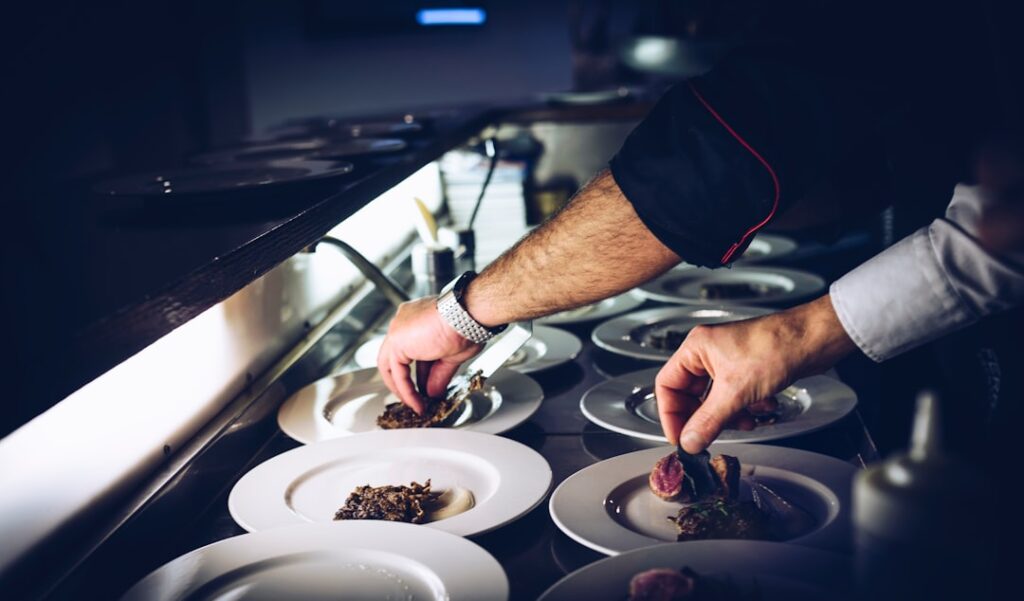
Michelin applies five criteria when assessing restaurants. These are the same across every territory the Guide covers, from Taipei to Paris to San Francisco, and they apply exclusively to the food on the plate. Service, decor, and atmosphere are documented by inspectors but do not factor into star decisions. According to Michelin’s own explanation of the star criteria, the five are:
1. Quality of Ingredients
Inspectors assess the raw materials the kitchen works with. Are the produce, proteins, and pantry components of a high standard? This criterion is applied equally whether a restaurant is sourcing rare Danish seaweed or simply buying the best tomatoes from a local market. The benchmark is not rarity but quality relative to the cuisine being prepared.
2. Mastery of Cooking and Culinary Techniques
This criterion evaluates execution: whether sauces are properly emulsified, meats cooked to the right temperature, doughs handled with the correct touch, and fermentation managed with precision. It is not about complexity for its own sake. A perfectly roasted chicken can score as well as an elaborate composed dish, provided the technique is faultless.
3. Harmony of Flavors
Michelin describes this as the balance and integration of tastes within a dish and across a meal. Do the components work together? Is there a coherent flavor logic, or do elements compete? This criterion has appeared in Michelin’s more recent communications, and in some earlier published formulations it was expressed as “value for money.” The two are not interchangeable; the shift reflects an evolution in how Michelin publicly frames its criteria. For context, the 2023-era FAQ pages list “harmony of flavours” as the third criterion, while earlier articles list “value for money” in its place. Both are considered part of Michelin’s assessment framework.
4. Personality of the Chef in the Cuisine
This is the most subjective of the five, and Michelin acknowledges it. The criterion asks whether the food expresses something distinctive, a point of view, a signature. As Michelin puts it, the assessment looks for “the personality and emotion that the chef conveys in the dishes.” Two restaurants can both serve technically excellent food and receive different star levels based on whether one conveys a stronger, more memorable identity. Michelin has stated that what separates a two-star restaurant from a three-star is, in part, emotion: a three-star meal should be “an emotional experience that is engraved in one’s memory for many years to come.”
5. Consistency Across the Menu and Over Time
Consistency is what separates a one-off great meal from a starred restaurant. Michelin dines at a restaurant multiple times, across seasons and dayparts, before making any decision. A three-star establishment, Michelin notes, must serve three-star meals “without fail.” This is why inspectors return repeatedly and why the Guide re-evaluates every starred restaurant annually. As Michelin states: “An incredible meal could be a one-off experience. We’re after those restaurants that deliver the same standard every time.”
Star Levels and Special Designations
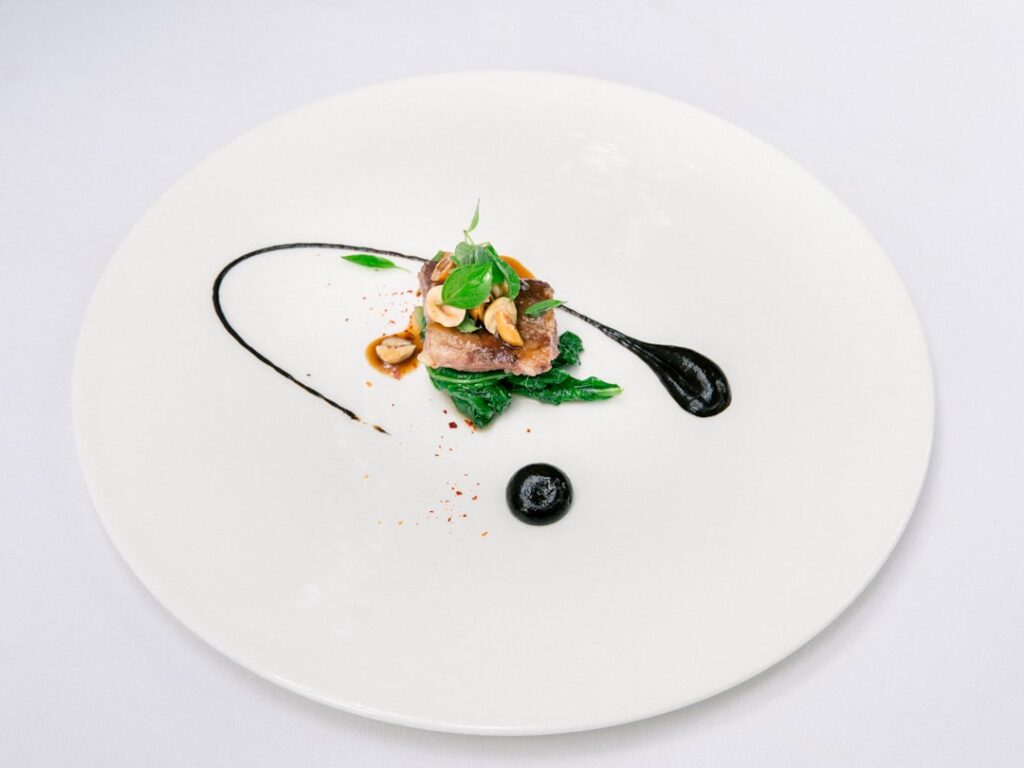
Michelin’s rating system includes three star levels and two additional designations that sit outside the star hierarchy: the Bib Gourmand and the Green Star. Each recognizes something different. Stars are awarded for the quality of the food alone; the Bib Gourmand rewards quality relative to price; and the Green Star recognizes sustainable practices.
| Designation | What It Means (per Michelin) | Year Introduced |
|---|---|---|
| One Star | “A very good restaurant in its category.” Top-quality ingredients, distinct flavors, consistently high standard. | 1926 |
| Two Stars | “Excellent cooking, worth a detour.” The team’s personality and talent shine through in refined, inspired dishes. | 1931 |
| Three Stars | “Exceptional cuisine, worth a special journey.” Chefs at the peak of their profession; cooking elevated to an art form. | 1931 |
| Bib Gourmand | High-quality food at great value. Price threshold varies by country. Named after Bibendum, the Michelin Man. | 1997 |
| Green Star | Restaurants at the forefront of sustainable practices: sourcing, seasonality, waste reduction, environmental footprint. | 2020 (2021 editions) |
One Star
Michelin defines a one-star restaurant as one that uses top-quality ingredients and prepares dishes with distinct flavors to a consistently high standard. The original definition, published in 1936, called it “a very good restaurant in its category.” One star does not mean “almost great.” It means the kitchen is doing something genuinely well, reliably, across the menu.
Two Stars
Two stars are awarded when “the personality and talent of the chef are evident in their expertly crafted dishes” and the food is “refined and inspired.” Michelin’s 1936 definition called it “excellent cooking, worth a detour.” The jump from one to two stars is significant. Michelin has indicated that inspectors take a conservative approach here: they may wait a year before awarding a second star rather than risk awarding it prematurely and having to withdraw it. They also consider whether the kitchen can handle the demands that a second star brings.
Three Stars
Three stars represent Michelin’s highest honor, awarded for “the superlative cooking of chefs at the peak of their profession” where “the cooking is elevated to an art form and some of their dishes are destined to become classics.” The 1936 definition: “exceptional cuisine, worth a special journey.” Michelin has stated that what distinguishes a two-star restaurant from a three-star is emotion: the three-star meal should create a lasting, memorable impression.
Bib Gourmand
Introduced in 1997 and named after Bibendum, the Michelin Man, the Bib Gourmand recognizes restaurants that serve high-quality food at great value. The price threshold varies by country depending on the cost of living, but inspectors apply the same principle worldwide: excellent food at a moderate price. According to Michelin’s Bib Gourmand page, there are over 3,000 Bib Gourmand restaurants globally. The cooking style tends to be simpler than what you might find at a starred restaurant; molecular gastronomy and extremely precious ingredients are less common. The focus is on satisfaction and value.
Green Star
First revealed in 2020 and introduced into the 2021 editions, the MICHELIN Green Star highlights restaurants at the forefront of sustainable practices. Any restaurant in the Guide is eligible, whether or not it holds a star or Bib Gourmand. There are no fixed criteria. Instead, inspectors look at the provenance of ingredients, the use of seasonal produce, the restaurant’s environmental footprint, food waste systems, recycling, resource management, and how the team communicates its sustainability approach to guests. Michelin notes that every Green Star restaurant is different and works in its own way, from foraging and regenerative farming to reducing plastic in the supply chain.
How Restaurants Gain and Lose Stars
Star decisions are not made by a single inspector. Michelin describes a collaborative process in which inspectors who have visited a given restaurant over the course of the year present their reports, and the team discusses them together. The final star decisions are made at special “star sessions” attended by the International Director of the Michelin Guides, the local Editor, and all inspectors involved in that selection.
One word defines the star session: unanimous. Michelin states that stars “are awarded unanimously.” If inspectors disagree about an establishment, further visits are organized until a consensus is reached. This means a restaurant does not receive a star by majority vote. Every inspector who dined there must agree.
The Conservative Approach to Awarding
Michelin has acknowledged that inspectors take a conservative approach to giving out stars. If a restaurant seems like a solid one-star but not quite a two, inspectors may choose to wait a year before awarding the second star rather than risk awarding it too soon and having to take it away. They also consider whether a second star will push the restaurant forward constructively, and whether the kitchen is ready for the increased attention and volume that a second star brings.
Losing Stars
Stars are re-evaluated annually. If inspectors find, across multiple visits, that a restaurant’s cooking has declined, the star can be removed. Michelin frames the Guide as a reflection of the present moment, not a lifetime achievement award. A restaurant that was exceptional three years ago but has since dropped in quality will be reassessed based on what is served today.
Stars are awarded to restaurants, not to individual chefs. If a restaurant changes its head chef but the standard of cooking remains the same, the star stays. If the cooking changes, the star may change with it. Michelin’s former International Director Michael Ellis put it plainly: the Guide “reflects an opinion” and “it’s a point of view.” A chef who publicly returns a star does not, in Michelin’s framing, actually return it, because the star belongs to the restaurant as an institution, not to the person.
Editorial Independence
Michelin has faced questions about whether financial relationships with tourism boards influence star decisions. The company’s position, as stated by its former International Director, is that editorial independence is “non-negotiable and will never change.” Inspectors are full-time salaried employees, restaurants cannot pay to be listed, and the selection process is described as internally driven by the inspection team’s findings.
Common Myths About Michelin
Myth: Stars Only Go to Fine Dining
Michelin explicitly states that stars can be found “everywhere from street food stalls to grand palaces.” The criteria evaluate the food on the plate, not the tablecloth. A food stall in a night market and a restaurant in a luxury hotel can both be assessed under the same five criteria, because those criteria are designed to apply to any cuisine in any setting.
Myth: Service and Decor Are Part of the Star Decision
They are not. Michelin has stated this directly. Service and atmosphere are documented by inspectors and may appear in the Guide’s written summaries, but they have no bearing on whether a restaurant receives a star. The star is awarded for the food alone. This is one reason the Guide includes restaurants with wildly different service styles, from counter ordering to multi-course choreographed table service.
Myth: Restaurants Can Pay for Stars
Michelin states that restaurants “do not and cannot pay to be listed in the guide.” The inspection process is funded by Michelin, inspectors pay for their own meals, and the company describes its editorial independence as foundational to the Guide’s credibility.
Myth: Inspectors Are Never Identifiable
Mostly anonymous, but not always. Michelin has acknowledged that inspectors sometimes reveal their identity for technical visits to collect menus, photographs, and operational details. However, once an inspector identifies themselves to a restaurant, they are barred from assessing it. The assessment falls to other team members on separate, unannounced visits.
Reading More About Starred Dining
Understanding how Michelin stars are awarded is one thing. Experiencing a starred meal is another. The five criteria and the unanimous decision process tell you what the inspectors are looking for, but they do not fully capture what it feels like to sit down in a restaurant that has earned that consensus. A three-star meal, as Michelin itself frames it, is meant to be emotional, something you remember for years.
For those curious about what that experience actually looks like on the plate, exploring the structure and pacing of a tasting menu is a natural next step. The progression of courses, the rhythm of flavors, and the way a kitchen builds a narrative across an entire meal are all part of what inspectors are evaluating when they assess consistency and personality. The Dining Post will continue exploring these angles, from the mechanics of the rating system to the experience of sitting in the dining room.
Have questions about how the Guide works or what to expect at a starred restaurant? Our team at The Dining Post is here to help you dig deeper.
Frequently Asked Questions
Can a restaurant pay to get a Michelin star?
No. Michelin states explicitly that restaurants cannot pay to be listed in the Guide, let alone to receive a star. Inspectors visit anonymously, pay their own bills, and editorial independence is described by Michelin as non-negotiable.
Are Michelin stars awarded to chefs or to restaurants?
Stars are awarded to restaurants, not to individual chefs. If a restaurant changes its head chef but maintains the same standard of cooking, it can keep its star. The award reflects the food on the plate, not the person in the kitchen.
How often does a Michelin-starred restaurant get visited by inspectors?
According to Michelin, every venue listed in the Guide is visited at least every 18 months, and starred and Bib Gourmand restaurants are visited as many times as necessary. Inspectors visit across different seasons, for lunch and dinner, on weekdays and weekends.
Do service and decor affect Michelin star decisions?
No. Michelin awards stars based solely on the food on the plate. Service, decor, and atmosphere are documented by inspectors but are not part of the star decision. This is why starred restaurants range from street food stalls to luxury hotel dining rooms.
Can a restaurant lose its Michelin star?
Yes. Stars are re-evaluated annually. If inspectors find that a restaurant’s cooking standards have declined across visits, the star can be removed. Michelin takes a conservative approach to awarding stars to avoid having to remove them, sometimes waiting a year before awarding a higher star.





3 thoughts on “How Michelin Stars Are Awarded: Inside the Process”