

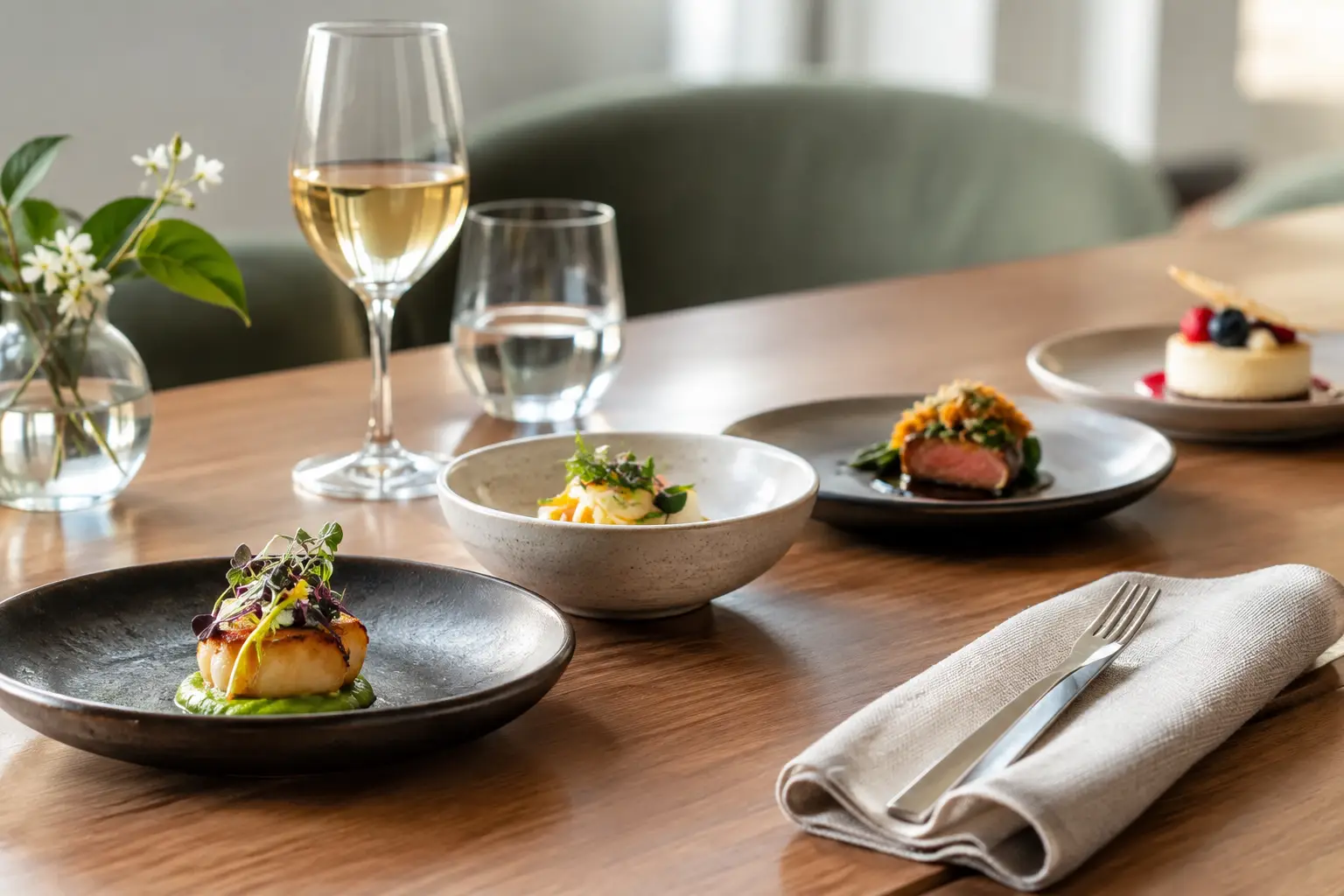
The question, “how long does tasting menu take?” usually arrives just after the reservation is confirmed and just before someone suggests an 8:30 p.m. show. The short answer: reserve two and a half to three hours for most serious tasting-menu dinners. At the most ambitious restaurants, especially those built around 12 or more courses, a wine pairing, and a room that treats each plate as a small production, dinner can easily stretch to four hours.
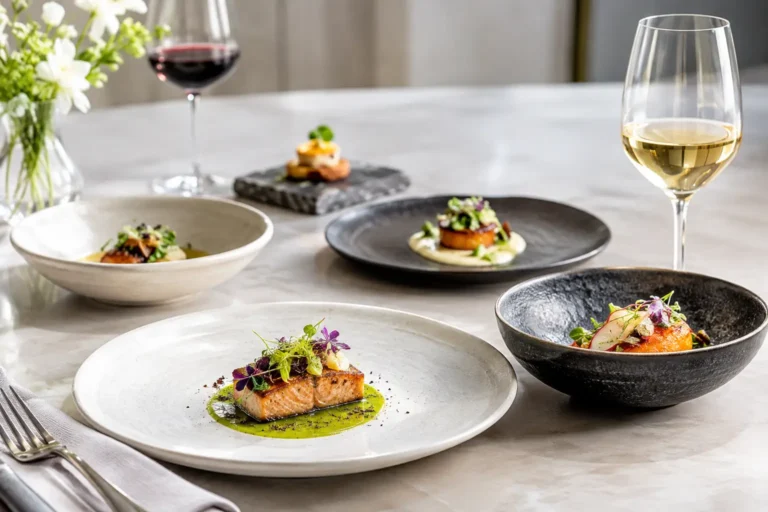
That is not a warning. It is the point. A tasting menu is designed as a paced experience rather than a quick sequence of dishes. There may be a warm bite at the bar, an opening sip of Champagne, a chilled shellfish course that arrives almost silently, then a hot course whose sauce is poured tableside at precisely the right temperature. The evening has its own rhythm, and it rewards diners who make room for it.
How Long Does a Tasting Menu Take at Most Restaurants?
For a standard estimate, plan on two and a half to three hours from the moment you sit down to the moment you ask for the check. This is the most useful answer for a Michelin-starred restaurant, a chef’s counter, or a polished independent restaurant offering a seven- to 10-course menu.
A shorter tasting menu, perhaps five or six courses at a neighborhood fine-dining restaurant, may take about 90 minutes to two hours. A longer, theatrical menu with 14 to 20 courses can run three and a half hours or more. Add a full wine pairing, and the pace may slow further – not because the staff is dragging the meal out, but because each pour deserves a moment of explanation and each course needs room to land.
The stated course count is only a clue. A menu advertised as eight courses may begin with three snacks, include a bread service and palate cleanser, and finish with pre-dessert, dessert, petit fours, and a final digestif. Suddenly, eight courses feels closer to 14 moments at the table.
A useful planning rule
If the restaurant’s reservation system does not specify a dining length, give yourself a three-hour window. Do not schedule a concert, late flight, or nonrefundable theater curtain immediately afterward. If you are booking for a business dinner, tell guests that it is a long-format meal so no one is checking a watch during the second seafood course.
What Changes the Pace of a Tasting Menu?
The kitchen’s style matters more than the menu’s price. Some restaurants serve courses with crisp efficiency: plates arrive in steady succession, and the room is calibrated to keep the meal moving. Others favor ceremony. A server may introduce a rare mushroom, a captain may shave truffle over a warm dish, or the chef may pause to present a course personally. These gestures can make dinner memorable, but they take time.
The number of guests at your table also matters. A table for two is generally easier to pace than a group of six, particularly when everyone chooses a different beverage pairing or has distinct dietary needs. Large groups can be delightful in a tasting-menu setting, but expect more coordination between the dining room, bar, and kitchen.
Then there is the question of supplements. A caviar course, a Japanese wagyu upgrade, a tableside cheese course, or an additional dessert can add 10 to 20 minutes, sometimes more. None should be treated as a delay. They are optional extensions of the menu, and worth considering if you have left the evening open.
Wine changes the feeling of time, too. A pairing can make a three-hour dinner feel richly paced rather than lengthy, because each course has a fresh point of contrast: saline white Burgundy with scallop, peppery Syrah with duck, a late-harvest wine with stone fruit. But pairings involve additional service and conversation. If your group is eager to linger over every pour, dinner will follow suit.
Arrival Time Is Part of the Experience
Your reservation time is rarely the exact moment the first course appears. Aim to arrive 10 to 15 minutes early, especially at a destination restaurant where the host may offer an aperitif before seating. Arriving very early is less helpful unless the restaurant has a bar and invites it. Fine-dining rooms are often carefully timed; showing up 30 minutes ahead can put the staff in an awkward position.
Once seated, expect a brief settling-in period. Water is poured, menus or dietary preferences are confirmed, and drinks are selected. At some restaurants, the tasting menu begins almost immediately with an amuse-bouche. At others, you may have 20 minutes to enjoy a cocktail before the first bite. Neither approach signals better hospitality. They simply create different kinds of evenings.
If you are running late, call. A tasting menu is a choreographed service, and a late arrival can compress the kitchen’s timing or force the restaurant to alter the progression. More importantly, rushing through a meal designed around detail is an expensive way to miss the details.
Can You Ask for a Faster Tasting Menu?
Yes, but ask thoughtfully, and ask before you sit down. If you have a real constraint – a train, a babysitter, a curtain time – mention it when booking and repeat it discreetly to the host. Many restaurants can tighten the pacing, serve certain courses closer together, or advise whether the menu is realistic within your window.
There are limits. A kitchen may not be able to accelerate a dish that is fired to order, rested, and plated in a precise sequence. Some restaurants will be candid that their menu cannot be rushed. Take that answer seriously. It is usually better to choose an à la carte restaurant for a compressed evening than to turn a tasting menu into a race.
The reverse is also true. If you want to linger, do so with awareness. Ordering another bottle after dessert may be welcome, but the dining room could be nearing close or preparing for a second seating. A good server will guide you. The most gracious move is to follow the room’s energy rather than assume your table is yours indefinitely.
How to Plan the Rest of the Night
Treat a tasting-menu reservation as the evening’s main event. Book it early enough that you are not arriving stressed, and resist stacking it between obligations. A 6:00 or 6:30 p.m. reservation is ideal for diners who want time for a drink afterward without finishing at midnight. An 8:30 p.m. seating works well if you prefer a later, more languid night and have nowhere to be the next morning.
For anniversaries and milestone dinners, build in a small buffer before the reservation. Traffic, parking, coat check, and a pre-dinner glass can all take longer than expected. If you are meeting friends, choose one clear arrival time rather than letting the reservation become a rolling gathering.
Dietary restrictions deserve similar advance planning. Most accomplished restaurants can accommodate many needs with notice, but substitutions sometimes require a parallel menu and extra coordination. Tell the restaurant when you reserve, not when the bread basket arrives. You will receive a more considered meal, and the service team can maintain the intended tempo.
The Best Way to Think About the Time
A tasting menu is not simply dinner multiplied by more plates. It is closer to a chef’s argument, course by course: this is the ingredient at its brightest; this is the wine that shifts its texture; this is the final sweet note that makes the earlier savory course feel newly complete. Time is one of the ingredients.
So, plan for three hours, leave room for four when the restaurant is especially ambitious, and let the table breathe. The rare pleasure is not just tasting something exquisite. It is having enough time to notice why it was served when it was.





One thought on “How Long Does a Tasting Menu Take? Plan for It”