


If dessert menus feel like they all say the same word this fall, they mostly do: tiramisu. The Italian classic of coffee-soaked ladyfingers and mascarpone cream has become 2026’s flavor of the moment, showing up in milkshakes, lattes, ice cream, protein snacks and martinis. Here’s how a decades-old dessert became a viral trend, what the new versions look like, and how to order the real thing at a restaurant.
The numbers behind the tiramisu boom
USA Today reported in October that tiramisu on restaurant menus has grown 17% over the past four years, citing Datassential’s Menu Trends platform, which tracks thousands of U.S. restaurants. The flavor has also hit the biggest chains. Over the last year, Shake Shack released tiramisu shakes, Dunkin’ launched a tiramisu-inspired drink collection, and Starbucks has a Tiramisu Velvet drink line on the way. Social media is amplifying it too: social trend tracker Buzzabout lists tiramisu among the steadily large food topics on TikTok, next to matcha lattes and bone broth.
The trend also took on a sad note this year. USA Today noted the death of Roberto “Loli” Linguanotto, the pastry chef widely credited as the “father of tiramisu,” at 81. That has renewed interest in where the dessert came from.
The new flavors: matcha, ube, pistachio and more
Restaurants aren’t stopping at coffee and cocoa. USA Today lists versions now on menus made with matcha, chai, Biscoff, Basque cheesecake, ube, pandan, pistachio and black sesame. Tiramisu-focused cafés have become destinations in their own right. New York’s Cafe 2By2 went viral for its matcha berry and sesame soybean tiramisu.
Black sesame deserves its own mention. The Philadelphia Inquirer called it the hot “new” flavor on cafe, dessert and cocktail menus there, and it’s one of the most natural tiramisu twists. Its nutty, slightly bitter edge does the same job espresso does in the original.
Why tiramisu works so well as a trend
- It’s built on flavor pairs people already love. Coffee, cream, cocoa and a little booze can carry almost any twist.
- It photographs beautifully. The clean layers and cocoa-dusted top look great in a short video.
- It travels across categories. The same flavor profile works as a drink, a frozen dessert, a cookie or a cocktail.
- It’s nostalgic. For many diners it’s the dessert of family Italian dinners, now reinvented.
What makes a great restaurant tiramisu
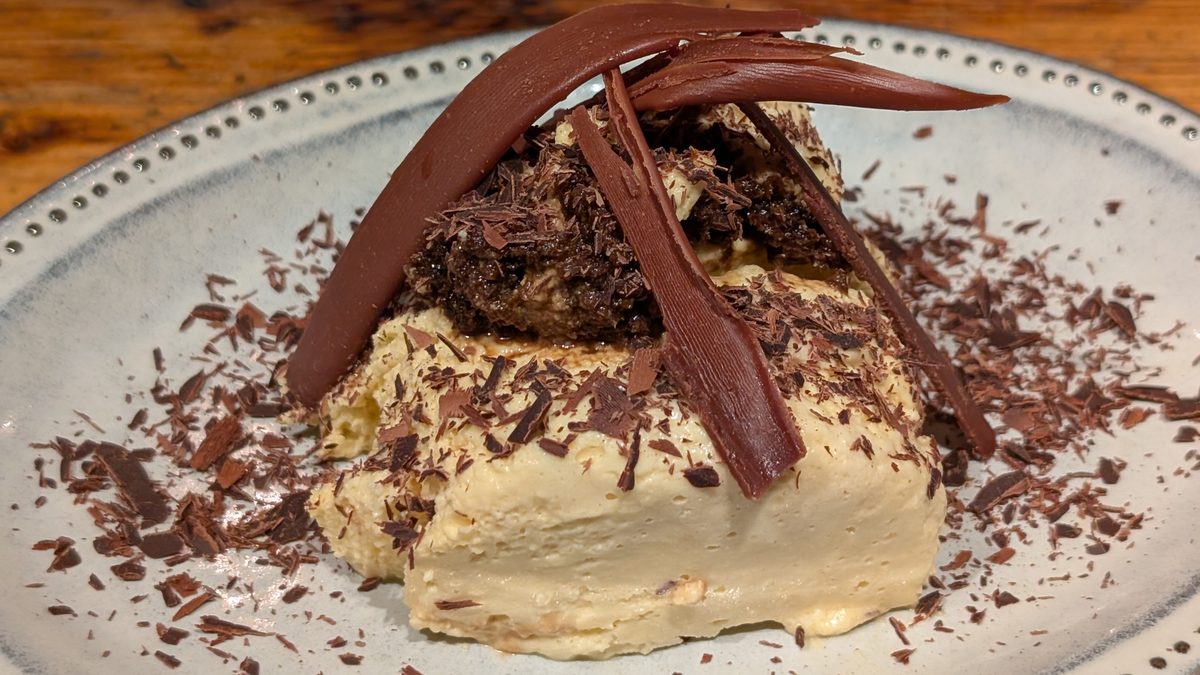
Trend flavors are fun, but the classic is still the benchmark. When you order it at an Italian restaurant, here’s what separates great from forgettable:
- Texture: the ladyfingers should be soaked but not soggy, holding their shape under a fork.
- Cream: the mascarpone layer should be airy and rich, not stiff or sweet like whipped topping.
- Coffee: you should taste real espresso, bitter enough to balance the cream.
- Cocoa: it should be dusted on just before serving so it doesn’t turn pasty.
- Balance: it should be sweet enough to feel like dessert, but you should want another bite rather than feel done.
Ask whether it’s made in-house. Many of the best Italian kitchens make it daily, and servers are usually happy to tell you. Our guide to reading a restaurant menu like a regular has more questions worth asking.
What to drink with tiramisu
A sweet dessert needs a drink at least as sweet, or the wine will taste sour. Good matches include a glass of Vin Santo, a tawny port, Marsala, or a demi-sec sparkling wine. Coffee-lovers can simply order an espresso. For a festive table, a lightly sweet sparkler is a crowd-pleaser. Our guide to Champagne vs Prosecco explains which styles lean sweeter. And if a tiramisu martini shows up on the cocktail list this season, now you know why.
Frequently asked questions
What does tiramisu mean?
In Italian, tiramisù translates roughly to “pick me up” or “lift me up,” a reference to the espresso and cocoa in the dessert. It’s traditionally associated with the Veneto region of northern Italy.
Does tiramisu have alcohol?
Many recipes add a splash of Marsala, rum, brandy or coffee liqueur to the coffee soak or the cream, but plenty of versions are alcohol-free. If you’re avoiding alcohol, ask your server, since restaurants vary.
Does tiramisu contain raw eggs?
Traditional recipes fold raw egg yolks and sometimes whites into the mascarpone. Many restaurants now use pasteurized eggs or a cooked custard (zabaglione) base. If you’re pregnant or have food-safety concerns, ask how it’s made.
What is black sesame tiramisu?
It’s a version that replaces or supplements the cocoa and coffee with roasted black sesame, usually as a paste folded into the cream or dusted on top. It tastes nutty, toasty and slightly bitter, which is why it pairs so naturally with mascarpone.
Is tiramisu served cold?
Yes. Tiramisu is chilled for several hours, often overnight, so the ladyfingers soften and the layers set. It should arrive cool but not icy. If it’s frozen hard, it was probably made far in advance.
How long does tiramisu last?
Homemade tiramisu keeps covered in the refrigerator for about two to three days. The ladyfingers keep softening, so it’s best within the first day or two.
Will the trend last?
Viral flavors come and go, but tiramisu has something most trends don’t: decades of history and a recipe that already works. Expect the wilder versions to cycle through limited-time menus while the classic stays on Italian menus for good. Until then, the matcha, ube and black sesame versions are worth trying at least once, then order the original and compare.