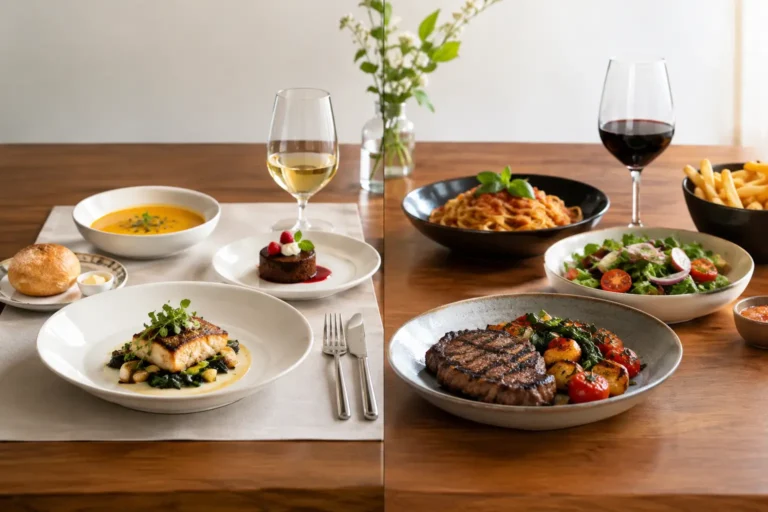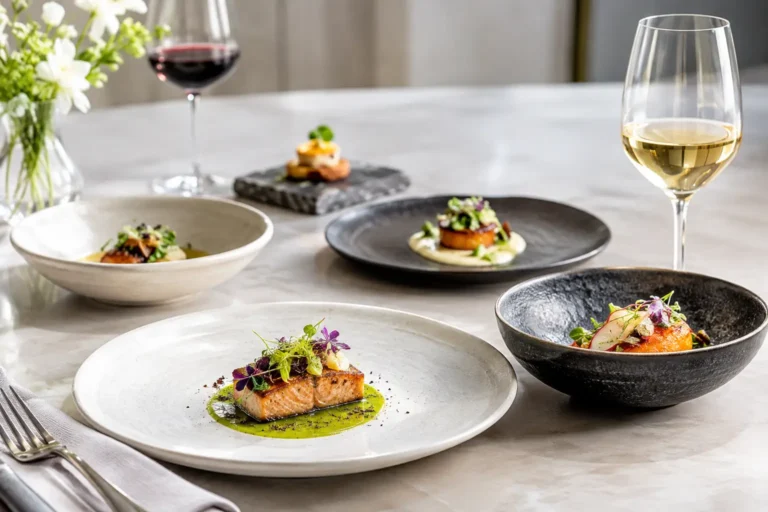


The wine list arrives just as the table settles: menus folded back, a first round of decisions already made, the prospect of a dry-aged ribeye or scallops in brown butter ahead. Knowing how to navigate wine lists is less about memorizing every appellation than recognizing what a list is trying to tell you – and giving the restaurant enough useful information to guide you toward the right bottle.
A good choice does not need to be rare, expensive, or approved by the neighboring table. It needs to suit the food, the people drinking it, and the pace of the evening. That is a much more achievable standard.
How to Navigate Wine Lists in the First Minute
Start with the list’s architecture. Most restaurant wine lists are organized by country, region, grape, style, or some combination of the four. A concise list may lead with sparkling, white, rosé, and red. A deep cellar list may send you through Burgundy, Piedmont, Napa Valley, and the Rhône with the formality of a library catalog.
Do not read it from page one to page twelve. First, identify the style that makes sense for the meal. Then look for a region or grape you recognize as an entry point. If you know you enjoy crisp Sauvignon Blanc, for example, look toward Sancerre, the Loire Valley, New Zealand, coastal California, or dry Austrian Grüner Veltliner. They are not interchangeable, but each can deliver freshness, lift, and the kind of acidity that makes seafood and vegetables taste more alive.
With red wine, think in terms of weight and texture before prestige. Pinot Noir, Gamay, Barbera, and Cabernet Franc tend to feel lighter or more agile than Napa Cabernet Sauvignon, Barolo, or a powerful Syrah. That distinction matters when your table is ordering duck, pork, mushrooms, or fish alongside steak. One monumental bottle can overpower half the menu.
A list also reveals a restaurant’s point of view. A strong selection of German Riesling, Loire Cabernet Franc, or volcanic Italian whites often signals a kitchen that values brightness and restraint. Pages of cult California Cabernet, classified-growth Bordeaux, and mature Barolo may indicate a steakhouse or a cellar built for celebratory spending. Neither is inherently better. The list should help you read the room and the food.
Read the Price Column Like a Regular
Restaurant wine pricing can feel opaque because it is not a simple retail calculation. Storage, glassware, service, staffing, inventory risk, and the cost of holding older bottles all factor in. Still, you can make a smarter choice by looking for relative value rather than fixating on the lowest price.
The least expensive bottle is sometimes exactly right, particularly when the table wants something easygoing and the food is casual. But the sweet spot often sits one or two steps above the entry level. That is where lists frequently place distinctive producers and less familiar regions that offer more character without the premium attached to famous names.
Instead of saying, “What is your cheapest Cabernet?” try setting a clear range: “We’d like to stay around $90, and we’re looking for a red with freshness rather than a big, oaky style.” This gives a sommelier, server, or beverage director the two details that matter: your budget and your preference.
There is no need to announce the budget to the whole table. Point discreetly to a bottle in the price range you have in mind and say, “Could you show us a few options around here?” It is graceful, direct, and common practice in serious dining rooms.
Be alert to the price of the second bottle. A table of four may be better served by two flexible $85 bottles than one $190 trophy wine, especially over a long meal. On the other hand, if the occasion calls for one great bottle and the menu is built around a shared roast or a prime rib, concentrating the budget can make sense.
Choose for the Table, Not Just Your Entrée
The classic rule of white with fish and red with meat is useful only until dinner becomes interesting. A buttery lobster dish can welcome a rich white Burgundy or an elegant, mature Champagne. Charred octopus with chorizo might be better with a chilled, lighter red such as Mencía or Pinot Noir. A steak with peppercorn sauce and a steak with chimichurri do not ask for the same wine.
Sauce, seasoning, and preparation often matter more than the central protein. Cream, butter, nuts, and roasted flavors tend to invite wines with texture and moderate oak. Citrus, herbs, raw seafood, vinegar, and chile want brightness. Sweetness in food is especially demanding: a wine that tastes dry beside oysters can seem hard and sour next to a sweet glaze or spicy Thai curry.
When a table orders widely, choose the middle rather than trying to satisfy every dish perfectly. Champagne is the great diplomatic bottle, with enough acidity for raw bar plates and fried food, enough complexity for richer starters, and enough occasion built into the pour to feel festive. For red, Pinot Noir, Barbera, or a supple northern Rhône Syrah can bridge poultry, mushrooms, pork, and beef without flattening the more delicate dishes.
If you are at a tasting-menu restaurant, wait before committing to a bottle unless the menu is clearly printed. The opening courses may move from crudo to caviar to a composed vegetable dish before arriving at meat. A bottle that feels perfect for the final course can be exhausting by course three. Half bottles, glasses, or a wine pairing may be the more intelligent move, particularly when the kitchen is working in several registers.
What to Ask the Sommelier
The best wine conversation begins with preferences, not a test of knowledge. You do not need to pronounce every French village correctly or pretend you have tried a producer you have only seen on an auction list. A skilled sommelier would rather hear a useful description than a performance.
Tell them what you usually enjoy, what you do not want, what the table is eating, and where you hope to land on price. “We like earthy Pinot Noir, not jammy reds” is excellent guidance. So is, “We want a white with texture, but nothing heavily buttery.” If you are open to discovery, say so. It is often the route to the most memorable bottle on the list.
Ask one practical question: “What are you excited to pour right now?” That wording invites a recommendation without surrendering control. You can then follow with, “Would it work with the scallops and the lamb?” If the answer feels too broad or the price climbs past your comfort zone, redirect plainly. Good hospitality is a conversation, not a sales pitch.
A sommelier may suggest a wine you have never heard of because it is genuinely well suited to the meal, because it represents good value, or because the restaurant has a particular allocation to move. Usually, it is some blend of those things. Curiosity is wise; blind deference is not. Ask why the bottle works. The explanation should be clear enough to make you want to drink it.
Use the Glass List Strategically
By-the-glass programs are no longer an afterthought at ambitious restaurants. They can be the right answer for a lunch, a solo dinner, a tasting menu, or a table split between seafood and steak. A thoughtful glass list lets each course have its own companion and keeps the evening from becoming a negotiation over one bottle.
The trade-off is value. By-the-glass pours usually cost more per ounce, and a wine list’s most compelling bottles are often available only by the bottle. If two people plan to have two generous glasses each, compare the arithmetic with an entry-level bottle before ordering. You may find that a bottle offers more choice and better value.
Do not overlook half bottles, especially at French and Italian restaurants with serious cellars. They are ideal for two diners who want a red with the main course after starting with a glass of sparkling or white. They also make mature wines more accessible without asking one person to carry the whole bottle through dinner.
The Moment the Bottle Reaches the Table
The server presents the bottle so you can confirm the producer and vintage. This is not a cue to inspect the label like an appraiser. Simply make sure it is what you ordered. Vintage matters, but it is not automatically a verdict on quality. Weather changes from year to year, and some producers make beautiful wine in challenging seasons.
When you are offered a small taste, you are checking for faults, not deciding whether the wine matches your personal taste. The most common fault, cork taint, can smell like damp cardboard, a wet basement, or a muted mustiness that strips fruit from the wine. Oxidation may make a young white smell bruised or dull. If something seems wrong, say so politely: “I think this may be off. Could you take a look?”
If the wine is sound but simply not your preferred style, it is yours. That is why a brief conversation before ordering pays off. Once the bottle is open, let it breathe, watch how it changes with the food, and trust your own palate more than the reputation printed on the label.
The best wine-list choice is rarely the one that proves you know the most. It is the bottle that turns a meal into a more vivid memory: the bright white that rescues a plate of fried oysters, the savory red that catches the smoke on a lamb chop, the Champagne that makes an ordinary Tuesday reservation feel like it deserved to be made.