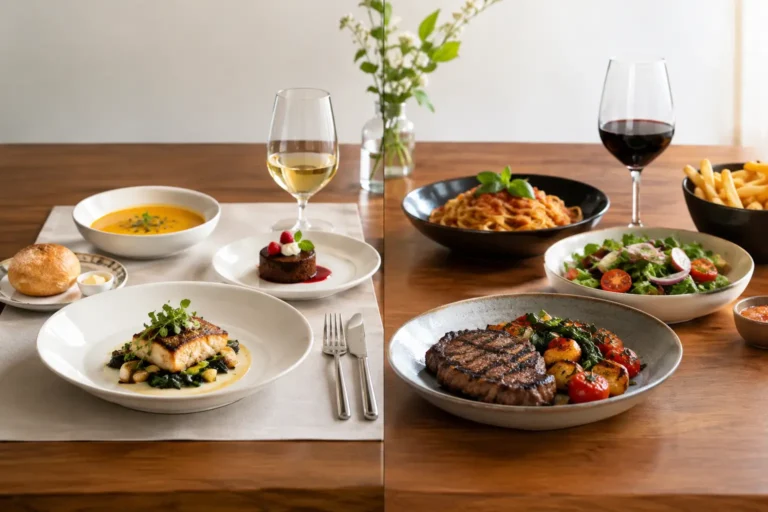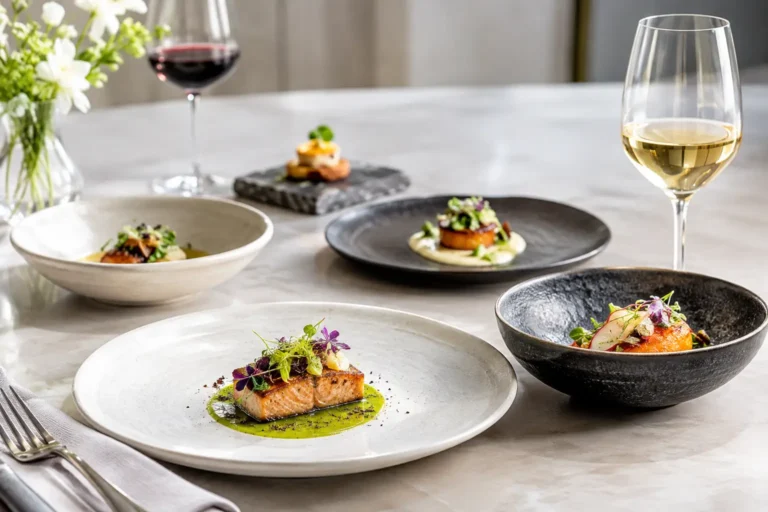

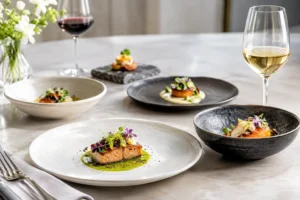
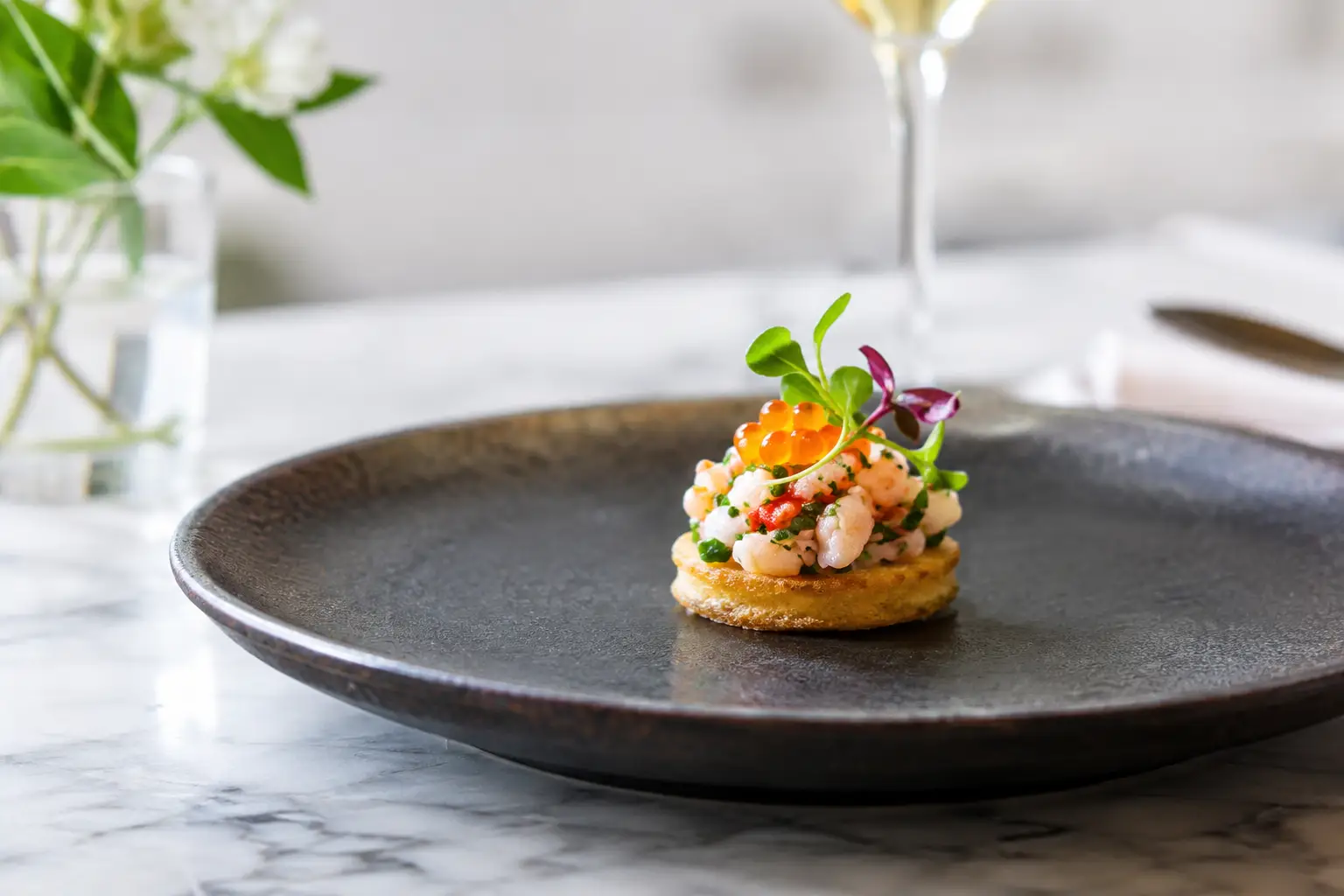
A chilled spoon arrives before the menu has fully settled: sweet crab under a veil of cucumber, perhaps, or a warm gougère filled with Comté cream. If you have wondered what is an amuse bouche, this is it – a chef’s small, complimentary opening bite, designed less to fill you up than to set the tone for everything that follows.
It may be one mouthful, but it carries unusual weight. In a serious dining room, the amuse-bouche is the first signal of a kitchen’s point of view: its restraint or exuberance, its sense of season, its affection for surprise. It can also tell you whether the meal ahead will be classical, playful, ingredient-driven, or technically ambitious.
What Is an Amuse Bouche, Exactly?
Amuse-bouche is French for “mouth amuser” or, more naturally, “a mouthful that amuses.” It is a small bite sent by the chef, usually before the first official course. You might receive it with cocktails, after you have ordered, or just as the tasting menu begins.
The key distinction is that it is not generally listed on the menu or ordered by the guest. It is a gesture of hospitality and a creative calling card. At one restaurant, that might mean a crisp tartlet of smoked trout and dill. At another, it could be a tiny cup of corn velouté with chile oil or a translucent tomato consommé meant to be sipped in two delicate pulls.
The spelling varies. “Amuse-bouche,” with a hyphen, is the standard French form, while “amuse bouche” is common in American restaurant writing. You may also see amuse-bouches when referring to several bites. The older term amuse-gueule means something closer to “mouth amuser” in a more colloquial register, but it has largely given way to the more polished-sounding amuse-bouche in fine dining.
Why Chefs Serve One Before the Meal
An amuse-bouche is not merely a free snack, though no one objects to that outcome. It gives the chef a moment of control before the familiar rhythms of ordering and courses take over. The bite can sharpen the palate with acid, offer comfort through richness, or introduce an ingredient that will reappear later in the meal.
Think of it as an opening scene rather than a preview trailer. A pea soup capped with mint foam in spring tells you the kitchen is paying attention to freshness and temperature. A bite of duck rillette on toasted brioche suggests a more generous, French-leaning meal. A single sphere that bursts with olive oil or yuzu may announce a restaurant interested in culinary theater.
For chefs, the format has practical freedom, too. Because the portion is tiny and not tied directly to a menu price, it can showcase a beautiful trim, a fleeting market ingredient, or an idea too specific to sustain as a full course. It lets the kitchen take a creative risk without asking diners to commit to a whole plate.
That freedom also explains why the best amuses are often simple. A perfect oyster with a bright granita needs no spectacle. The point is precision: one or two focused flavors, a deliberate temperature, and a texture that wakes up the palate rather than exhausting it.
Amuse-Bouche vs. Appetizer vs. Hors d’Oeuvre
These terms are often used interchangeably, but they play different roles at the table.
An appetizer is a menu course that you select and pay for. It is substantial enough to be shared or to stand as your personal first course, whether that is tuna tartare, grilled octopus, or a composed salad.
An hors d’oeuvre is a small savory item served outside the formal progression of a meal. At a reception, passed canapés, deviled eggs, and mini crab cakes are all hors d’oeuvres. They may be elaborate, but they are usually intended for mingling rather than seated, course-by-course dining.
An amuse-bouche is smaller and more personal. It is usually served to each guest at a seated meal, comes from the chef rather than the menu, and has a specific job: to begin the conversation between kitchen and diner. Some restaurants serve several in succession, especially at the start of an extended tasting menu, but each is still meant to feel like a fleeting opening gesture.
There are exceptions. A cocktail bar may call a complimentary snack an amuse-bouche, while a casual restaurant might use the phrase for a plated mini-appetizer. Labels can be loose. The useful clue is context: if it arrives unbidden, in a bite or two, before the meal’s formal courses, it is functioning as an amuse-bouche.
How to Read the Bite in Front of You
No one needs to decode a spoonful of beet gel like a wine list. Still, paying attention can make a tasting menu more vivid.
Start with the dish’s temperature and texture. A cold, crisp, acidic bite often clears the palate and creates anticipation. A warm, savory bite can establish comfort and depth. If there is a contrast – silky custard with brittle seeds, raw fish with a fried element – the chef may be signaling that texture will matter throughout the meal.
Then notice the scale of the flavors. Is the seasoning gentle and clean, or deliberately forceful? A sharply fermented note, chile heat, or a concentrated broth can be a way of waking up the senses. In a highly technical restaurant, a seemingly whimsical bite may also establish a theme: illusion, compression, unexpected temperature, or a familiar ingredient presented in an unfamiliar form.
It is worth remembering that the amuse-bouche is not always a reliable promise of every course to come. Some chefs use it as a welcome from a separate, more spontaneous corner of the kitchen. But it almost always reveals something about their instincts.
The Etiquette Is Easier Than It Looks
The right way to eat an amuse-bouche is usually the obvious way. If it arrives on a spoon, take the spoon in one bite. If it is a small tart or croquette, use your fingers unless cutlery has been set beside it. If you are unsure, a quick glance at the table is enough; your server will not expect a performance.
Avoid saving it for later. These bites are often temperature-sensitive, and a crisp shell, warm foam, or frozen granita can change quickly. Eat it when served, ideally before reaching for bread. Bread is there for enjoyment, but it can mute the clean first impression the chef has built.
If you have an allergy or dietary restriction, mention it when you make the reservation and remind the restaurant when you are seated. Because an amuse-bouche is frequently a surprise, it can contain shellfish, dairy, nuts, or meat even when your chosen courses do not. A polished dining room will plan accordingly, but clear communication is always the better move.
You also do not need to identify every component. Asking your server, “Could you tell me what’s in this?” is entirely appropriate, particularly if the bite is complex or you would like to understand a wine pairing. Curiosity reads better than pretending to know.
What It Means When There Is No Amuse-Bouche
Its absence is not a mark against a restaurant. Many excellent restaurants reserve the practice for tasting-menu guests, while others prefer to focus their resources on bread, first courses, or generous portions. A neighborhood bistro may offer a more memorable meal than a formal dining room without sending anything before your appetizer.
The most compelling amuses feel aligned with the restaurant rather than obligatory. At a Japanese-influenced counter, that could be a precise bite of seasonal fish. At an Italian restaurant, it might be a spoon of warm broth with fresh pasta or a shard of focaccia with anchovy butter. At an ambitious New American restaurant, expect the ingredient, technique, or presentation to carry more of the message.
For home cooks hosting a special dinner, the lesson is not to manufacture a fussy restaurant moment. A single bite of chilled melon with prosciutto, a tiny cup of soup, or a warm date stuffed with blue cheese can do the job beautifully. Keep it small, serve it at its ideal temperature, and make it distinct from the first course.
The next time a small, unexpected plate lands in front of you, give it your attention before the conversation moves on. An amuse-bouche is a brief act of hospitality, but it is also the chef saying, in the clearest possible language, “This is how I want you to begin.”