

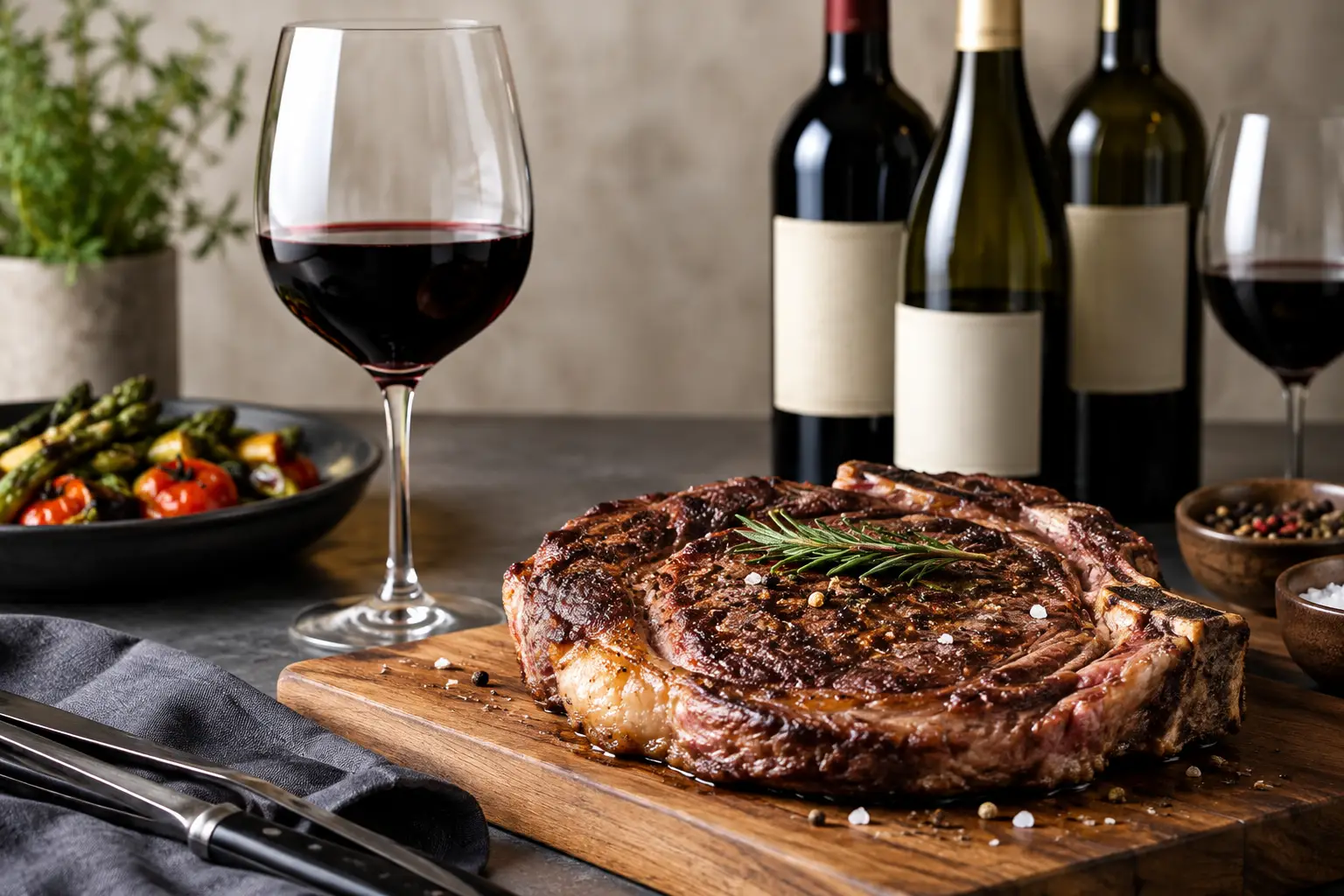
A ribeye announces itself before the first bite: a deeply browned crust, a warm center, and veins of intramuscular fat turning glossy on the plate. The best wine for ribeye steak has to meet that richness with enough structure to feel purposeful, not disappear beside it. But the automatic answer, Cabernet Sauvignon, is only the beginning.
Ribeye is one of the most wine-friendly cuts on the menu because its marbling softens tannin and makes fuller reds taste more polished. Preparation matters, though. A coal-grilled ribeye with peppery bark asks for something different than a butter-basted steak with rosemary, and a dry-aged ribeye brings savory, almost nutty notes that can send the pairing in a more mature direction.
The Best Wine for Ribeye Steak Starts With Fat
The central pairing fact is simple: fat changes wine. Ribeye’s abundant marbling coats the palate, reducing the drying sensation of tannin and allowing a structured red to feel velvety rather than severe. The steak also has enough flavor to stand up to dark fruit, oak, smoke, and savory bottle age.
That makes Cabernet Sauvignon an excellent default, particularly from Napa Valley, Sonoma County, Paso Robles, or Washington State. Look for a wine with black currant, cassis, cedar, and firm but ripe tannins. Those flavors mirror the char on a grilled steak while acidity keeps the meal from becoming heavy.
Still, “biggest red possible” is not a pairing strategy. An aggressively oaked, high-alcohol Cabernet can flatten a carefully cooked ribeye, especially if the steak is simply seasoned with salt and finished with butter. The goal is contrast and refreshment, not a contest of force.
7 Wines That Pair Beautifully With Ribeye
Cabernet Sauvignon for the Classic Steakhouse Order
If the ribeye comes with creamed spinach, potatoes, and a peppercorn or red-wine sauce, Cabernet Sauvignon is the confident choice. Its tannins find a natural partner in the steak’s fat, while its dark-fruit profile holds up to the richer sides that define the American steakhouse table.
For a celebratory bottle, Napa Cabernet delivers generous fruit and polished texture. For more restraint and often better value, consider Washington Cabernet or a Bordeaux-inspired California blend. At the table, the best bottles feel powerful but still have enough lift to invite another bite.
Syrah for Char, Pepper, and a Grill-Forward Ribeye
Syrah may be the most compelling alternative when the steak has been cooked over wood or charcoal. Northern Rhône examples, such as Saint-Joseph or Crozes-Hermitage, bring black pepper, smoked meat, olive, violet, and dark berries. Those savory notes seem designed for a ribeye with a hard sear.
California Syrah can be plusher and riper, with more blackberry and chocolate character. Choose it when the meal leans toward grilled onions, mushrooms, or a peppery rub. If the steak is very spicy, avoid the hottest, most alcoholic versions, which can amplify the heat.
Malbec for a Generous, Crowd-Pleasing Pour
Argentine Malbec remains one of the easiest wines to serve with ribeye, particularly for a casual dinner where the bottle needs to please several palates. It often offers plum, blackberry, cocoa, and violet notes, with softer tannins than Cabernet Sauvignon.
Malbec is especially good with a ribeye topped by chimichurri. The wine’s dark fruit complements the beef, while the sauce’s herbs and acidity keep the pairing lively. A Mendoza Malbec with some freshness is a better choice than a jammy, heavily sweet-fruited example.
Zinfandel for Sweet-Smoky Rubs and Barbecue Edges
A dry Zinfandel belongs on the table when ribeye meets smoke, caramelization, and a touch of sweetness. Think coffee rub, sticky onions, bacon, or a restrained barbecue glaze. Its brambly berry fruit and peppery warmth can echo those flavors with real pleasure.
This is a conditional pairing. Zinfandel can feel too ripe beside an elegantly seasoned steak, and its alcohol can make a rich meal seem heavier. Serve it slightly cool, around 60 to 65 degrees, to bring its spice and acidity into focus.
Rioja Reserva for Savory, Dry-Aged Ribeye
Dry-aged ribeye has a different personality from a fresh-cut steak. Its flavor can be nutty, earthy, and deeply savory, with a funk that good wine should answer rather than conceal. Rioja Reserva or Gran Reserva, made primarily from Tempranillo, is a smart match.
Its cherry fruit, leather, tobacco, dried herbs, and American oak spice offer complexity without excessive weight. A mature Rioja also brings gentler tannins than young Cabernet, which can be welcome if the steak has been aged for 30 days or more and needs nuance rather than sheer intensity.
Barolo or Barbaresco for Truffle and Mushroom Lovers
Nebbiolo-based wines from Piedmont are not the obvious ribeye choice, but they can be exceptional with a more refined plate. Their high acidity and pronounced tannin cut through marbling, while aromas of rose, tar, cherry, and dried herbs pair beautifully with mushrooms, truffle, or a porcini sauce.
Choose Barolo for a larger, more structured expression and Barbaresco for something a little more aromatic and graceful. These are best reserved for a ribeye that is not overwhelmed by sugary sauces or aggressively spicy seasoning. Decant a young bottle and let the wine open while the steak rests.
Champagne for a Luxurious Change of Pace
A mature, fuller-bodied Champagne with ribeye is not a stunt. The bubbles reset the palate after each rich bite, and the wine’s toast, hazelnut, and citrus notes can be startlingly good with a browned butter finish. Blanc de Noirs, made from Pinot Noir and Pinot Meunier, is a particularly apt style.
This pairing shines with a smaller ribeye served as part of a dinner rather than a huge steakhouse portion. It also works when the plate includes fries, because Champagne and crisp potatoes are a famously persuasive combination. Skip very lean, sharply acidic styles if the steak is heavily charred.
Match the Wine to How the Ribeye Is Cooked
A pan-seared ribeye with butter, garlic, and thyme favors Cabernet, Merlot-based Bordeaux blends, or Rioja. The savory aromatics pull the pairing toward wines with cedar, herbs, and supple oak rather than overtly sweet fruit.
For a charcoal-grilled ribeye, Syrah and Cabernet Sauvignon make more sense. Smoke and crust give the wine something assertive to hold onto. If the grill produces a serious blackened edge, a peppery Northern Rhône Syrah may be more convincing than a glossy Napa Cabernet.
With steak au poivre, consider a Cabernet Franc blend, Syrah, or a cooler-climate Cabernet Sauvignon. Their herbal or peppery notes extend the sauce instead of competing with it. For chimichurri, Malbec is a natural answer, though a fresh, savory Cabernet Franc can be just as compelling.
Don’t ignore the sauce in favor of the beef. Béarnaise, blue cheese, red wine reduction, and chimichurri each shift the entire pairing. When in doubt, let the most assertive element on the plate guide the bottle.
Serving Details That Make the Pairing Better
A great bottle can seem disappointing if it is served too warm. Most full-bodied reds show best around 60 to 65 degrees, cooler than the average dining room. Fifteen to 20 minutes in the refrigerator before dinner is often enough to sharpen the fruit and make tannins feel more composed.
Young Cabernet, Barolo, and Syrah benefit from air. Open them 30 to 60 minutes before serving, or decant if the wine is tightly wound. Older Rioja and mature Bordeaux deserve a gentler approach: stand the bottle upright beforehand if possible, pour carefully, and do not leave it in a wide decanter for hours.
Finally, season the steak confidently. Wine pairing is easier when ribeye tastes like beef, salt, fire, and fat rather than an indistinct layer of seasoning. Choose a bottle that suits the occasion, cook the steak to a proper medium-rare or medium, and let the contrast between the seared crust and the first cool sip do the rest.