

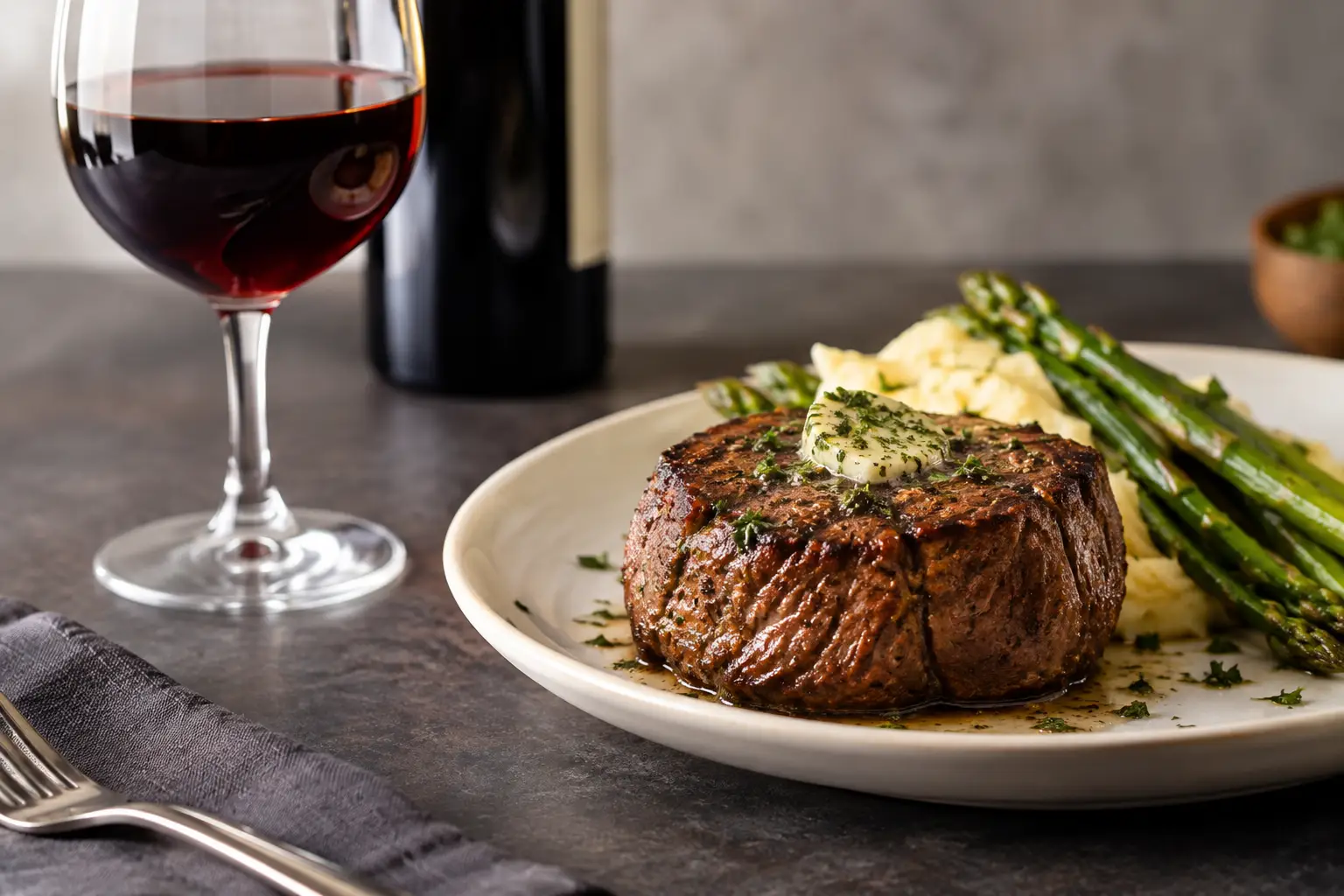
A filet mignon arrives at the table with a different kind of authority than a ribeye. There is no thick cap of fat to tame, no dramatic marbling to meet with a bruising red. Its appeal is texture: a fine-grained, almost buttery tenderness that can make an overly tannic wine feel abrasive. The best wine with filet mignon respects that delicacy while bringing enough structure to make each bite feel more complete.
That does not mean every filet requires Pinot Noir, nor does it banish Cabernet Sauvignon from the table. It means the details matter more than the familiar steakhouse reflex. Consider the sear, the sauce, the side dishes, and whether the bottle has the polish to complement rather than dominate the plate.
Why Filet Mignon Changes the Pairing Equation
Filet mignon is lean relative to most prized steakhouse cuts. Fat softens the impression of tannin, which is why a deeply marbled ribeye can make a youthful Napa Cabernet seem smoother and more generous. Filet offers less of that cushion. A wine packed with drying tannins, high alcohol, and heavy new-oak flavor can turn a graceful steak into little more than a delivery system for the bottle.
The ideal pairing has three qualities: moderate-to-firm structure, fresh acidity, and savory depth. Tannin should frame the meat rather than coat the palate. Acidity keeps a rich beurre blanc, potato gratin, or mushroom sauce from feeling heavy. Savory notes – cedar, tobacco, herbs, forest floor, black olive, or pepper – echo the browned crust created by a hot pan or grill.
This is also why filet can be one of the most versatile steaks for wine. Its restrained flavor leaves room for a polished red, but it can also accommodate mature bottles, lighter reds, and even certain whites when the preparation points in that direction.
Best Wine With Filet Mignon: The Classic Choices
Cabernet Sauvignon, with restraint
Cabernet Sauvignon remains the classic answer, especially for a filet served simply with a charred exterior, roasted potatoes, and a reduction of red wine or stock. Look for balance over sheer power. A refined Napa Cabernet with ripe black currant fruit, integrated oak, and softened tannins can be exceptional, as can a structured Cabernet from Sonoma, Washington State, or Chile.
The key is timing. A young, highly extracted Cabernet may need a decanter and a steak with a particularly forceful crust, or a richer accompaniment such as bordelaise. A bottle with eight to 12 years of age often lands more gracefully, its tannins relaxed into flavors of cigar box, dried herbs, and dark fruit. At a restaurant, this is the moment to ask the sommelier for a Cabernet that is elegant rather than muscular.
Bordeaux for a composed steakhouse dinner
Left Bank Bordeaux is one of filet mignon’s most natural partners. Cabernet-led blends offer the black-fruited structure many diners expect with steak, while Merlot rounds the edges. The result is often less sweet and less oak-forward than many domestic Cabernets, with a savory, graphite-tinged character that feels especially right beside a pepper-crusted filet.
A mature classified Bordeaux can be memorable for an anniversary dinner, though it should not be chosen merely for the label. Older vintages may be delicate, and a heavily charred steak or aggressively sweet sauce can overwhelm them. For a more dependable middle ground, choose a well-regarded Bordeaux from a strong recent vintage and give it air before pouring.
Merlot for softness and immediate pleasure
Merlot is routinely underestimated at the steakhouse, perhaps because Cabernet owns the cultural shorthand. Yet a serious Merlot can be precisely what filet needs. Its plum and black-cherry fruit, supple tannins, and cocoa-like richness mirror the steak’s velvety texture without making the pairing feel stern.
This is an especially smart choice for filet topped with sautéed mushrooms, caramelized shallots, or a red wine reduction. Right Bank Bordeaux, California Merlot, and Washington Merlot all deserve attention. If guests have different tolerances for tannin, Merlot is often the bottle that keeps the table happy.
Syrah for pepper, smoke, and a hard sear
When filet mignon has been grilled over charcoal, finished with black pepper, or served with smoky vegetables, reach for Syrah. Northern Rhône Syrah, particularly from Hermitage, Cornas, or Saint-Joseph, brings black pepper, cured meat, violets, and olive notes that speak beautifully to fire and crust.
New World Syrah can work too, though the ripest examples may be too sweet-fruited or alcoholic for this cut. Seek cool-climate versions from Washington, Sonoma Coast, Santa Barbara County, or Australia’s Victoria region. The goal is savory lift, not a wall of jammy fruit.
Pinot Noir when the plate leans earthy
Pinot Noir is not the default steak wine, which is exactly why it can make a dinner feel considered. A concentrated Oregon Pinot, a serious California coastal bottling, or a red Burgundy with some bottle age can be superb with filet served alongside mushrooms, truffles, lentils, or a silky jus.
Its lighter body is an advantage when the meat is cooked rare to medium-rare and the meal has more finesse than spectacle. Do not pair a fragile Pinot with a heavily blackened filet and blue cheese sauce. But with a pan-roasted medallion, pommes purée, and mushrooms glazed in butter, it can be more precise than Cabernet.
Let the Sauce Choose the Bottle
A filet mignon without sauce gives the wine center stage. Once sauce enters the picture, it can become the pairing’s loudest voice. A bordelaise or red wine reduction supports Cabernet, Bordeaux, Merlot, and Syrah. Peppercorn sauce favors savory Syrah or Cabernet Franc, whose leafy, peppery edge meets the spice without amplifying it.
Mushroom sauce opens the door to Pinot Noir, aged Nebbiolo, or earthy Bordeaux. The forest-floor character of these wines creates a bridge between meat and mushrooms rather than simply adding more weight. Blue cheese sauce calls for bolder reds with fruit and tannin, but avoid bottles so austere that the salt makes them taste hard. A plush Cabernet blend or a ripe, balanced Zinfandel is often more successful.
With béarnaise, hollandaise, or another butter-rich sauce, the pairing becomes more flexible. The sauce supplies the fat filet lacks, allowing a structured red to feel smoother. It also makes room for white Burgundy. A mature, full-bodied Chardonnay with bright acidity and restrained oak can be striking with filet and béarnaise, particularly when the meal is more French bistro than classic American steakhouse.
Can You Serve White Wine With Filet Mignon?
Yes, but choose purposefully. White wine with filet mignon makes the most sense when the preparation is delicate: a smaller medallion, a beurre blanc, roasted lobster, spring vegetables, or truffle. White Burgundy is the leading choice because it has texture, acidity, and savory complexity. High-quality Chardonnay from California or Oregon can work if it is not excessively buttery or sweet-smelling.
An aged Chenin Blanc is another compelling option, particularly with a mustard cream sauce or a plate that includes root vegetables. Its waxy texture and bright acidity have enough presence for beef while keeping the dinner unexpectedly light. This is not a pairing for a massive grilled steak with barbecue glaze. It is for the host who wants the table to feel less predictable.
Serve the Bottle as Carefully as the Steak
Temperature and glassware can rescue a good pairing or flatten it. Serve most red wines with filet slightly cool, around 60 to 65 degrees Fahrenheit, not at a warm room temperature. Alcohol becomes more pronounced as wine warms, and cool service keeps fruit, tannin, and acidity in proportion.
Decant young Cabernet, Bordeaux, and Syrah for roughly 45 minutes if they seem closed or severe. Older bottles need less oxygen and more care: stand them upright ahead of dinner so sediment settles, then pour gently. Pinot Noir needs no theatrical treatment, but a large-bowled glass will help its aroma unfold.
The best bottle is not necessarily the biggest or most expensive one on the list. With filet mignon, elegance is a form of generosity. Choose a wine with enough character to hold the room, then let the steak keep its most persuasive quality: its quiet, unmistakable tenderness.