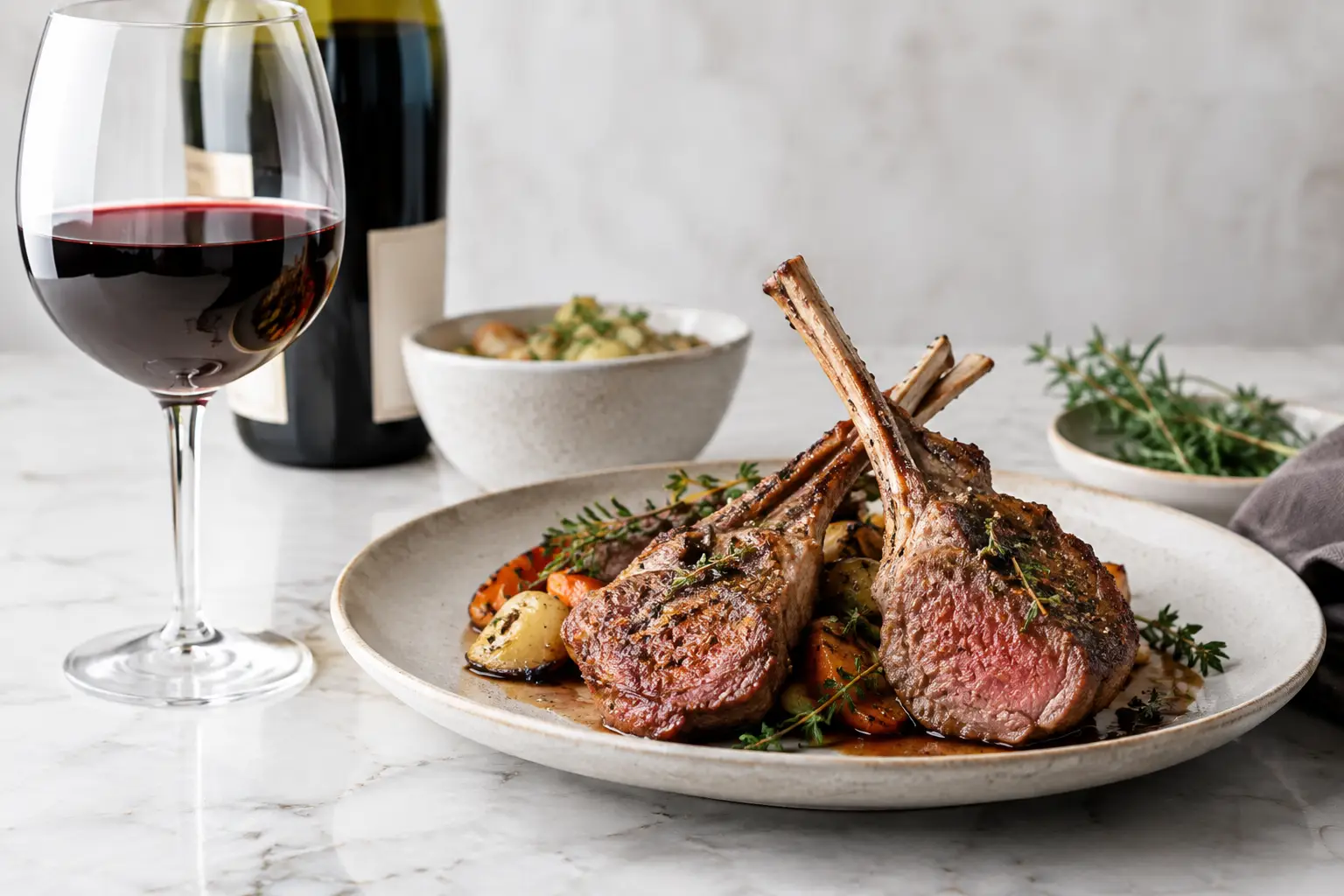
A rack of lamb with its browned herb crust does not ask for the same bottle as a slow-braised shank sliding from the bone. That is the useful answer to the question, what wine goes with lamb: start with the cut, the cooking method, and what is on the plate around it. Lamb has enough savory depth to welcome serious red wine, but its distinctive sweetness and grassy richness can make a heavy, drying Cabernet feel more imposing than impressive.
The classic answer is Syrah or Cabernet Sauvignon, and either can be excellent. But a better bottle choice often sits one step closer to the recipe. Peppery Syrah loves char and rosemary. Bordeaux-style Cabernet blends suit an elegant roast. Pinot Noir can be the smartest move with pink, delicate lamb loin. And for a long-cooked shank in a wine-dark sauce, you want a red with freshness as much as muscle.
What Wine Goes With Lamb? Start With the Cut
Lamb’s fat is flavorful rather than neutral, which is why reds with acidity, tannin, or a savory edge tend to work so well. Yet the amount of fat, the degree of browning, and the tenderness of the meat all change the equation. Treat lamb as a category, not a single pairing problem.
Rack of lamb: Cabernet Sauvignon or Bordeaux blend
For a rosy rack of lamb, especially one rubbed with garlic, rosemary, thyme, and Dijon, reach for Cabernet Sauvignon or a Bordeaux blend led by Cabernet. The wine’s black currant fruit, cedar, and structured tannins meet the meat’s richness without losing their shape. A bottle with some age can be particularly graceful: tannins soften, while savory notes of tobacco, dried herbs, and leather begin to echo the lamb.
This is the classic special-occasion pairing, and it earns its reputation. The caveat is sauce. If the rack arrives with a bright mint salsa verde or a tart cherry reduction, a very oaky, high-alcohol Napa Cabernet may dominate. In that case, choose a more restrained Cabernet from Sonoma, Washington State, or Bordeaux, or move toward Syrah.
Lamb chops: Syrah or Grenache-based Rhône
Grilled lamb chops are the natural home of Syrah. A Northern Rhône-style Syrah brings black pepper, olive, smoked meat, and violet notes that seem designed for lamb kissed by charcoal. Domestic Syrah from cooler sites can offer a similarly savory profile, often with a generous dark-fruit core.
For chops seasoned with cumin, coriander, Aleppo pepper, or warm spices, consider a Grenache-based Southern Rhône blend. Grenache brings red berry fruit and a rounded texture; Mourvèdre and Syrah add earth, spice, and grip. This is also an easy choice for a table where lamb is served alongside grilled vegetables, flatbread, or eggplant.
Lamb loin: Pinot Noir or cru Beaujolais
Tender lamb loin, cooked medium-rare and served with spring vegetables, is where the conventional big-red rule can become a mistake. Pinot Noir has enough savory complexity for lamb but preserves the delicacy of the cut. Its bright acidity refreshes the palate, while notes of cherry, forest floor, and dried rose can feel especially at home with mushrooms, peas, morels, or a lighter jus.
A cru Beaujolais, such as Morgon or Moulin-à-Vent, is another quietly excellent option. It is lively, floral, and earthy, with less tannin than Cabernet. Serve it slightly cool, around cellar temperature rather than warm room temperature, and it will make a refined plate feel more animated.
Lamb shank: Rioja, Nebbiolo, or Sangiovese
A braised lamb shank is a different kind of luxury. The meat is soft, the sauce is concentrated, and the dish often includes tomato, red wine, aromatic vegetables, olives, or beans. Here, acidity becomes essential.
Traditional Rioja Reserva or Gran Reserva is a particularly comfortable match. Its red-fruit profile, dried herbs, vanilla, and savory tertiary character complement braised lamb without making the meal feel too dark or dense. Nebbiolo, whether Barolo, Barbaresco, or a more accessible Langhe bottling, brings tannin and lift for shanks with mushroom, truffle, or rosemary notes. With tomato-based braises, Chianti Classico or another Sangiovese is often the clearest choice: tart cherry and high acidity cut through the richness beautifully.
Roast leg of lamb: Let the seasoning decide
A roast leg is the most adaptable lamb centerpiece because it can travel in several flavor directions. Garlic-and-rosemary leg of lamb is excellent with Cabernet Sauvignon, Syrah, or a Bordeaux blend. If the roast is prepared with anchovy, olives, and lemon, choose a Mediterranean red with acidity and herbal character, such as Rioja, Sangiovese, or a savory red from the Rhône.
For a Persian-inspired leg with saffron, dried fruit, pistachios, or pomegranate, step away from stern tannins. Grenache, a supple GSM blend, or even a mature Merlot-based Bordeaux will be more harmonious. Wines that are too austere can turn bitter beside sweetness and fruit; wines with ripe red-fruit character will meet those flavors more generously.
The Sauce Usually Has the Final Word
At a restaurant, the wine pairing is rarely built around the protein alone. The sauce, garnish, and level of smoke are what steer the sommelier toward one bottle rather than another. Use that same logic at home.
A lamb dish with mint is not automatically a white-wine occasion, despite the old idea that mint changes everything. Fresh mint, parsley, lemon, and green herbs do favor brighter reds, however. Pinot Noir, cru Beaujolais, Cabernet Franc, and cooler-climate Syrah will usually feel more balanced than a plush, heavily extracted red.
Fruit sauces need similar care. Pomegranate, cherry, currant, or apricot can make an alcoholic wine taste hotter and a tannic wine taste more bitter. Choose wines with their own red-fruit notes and moderate tannin, such as Grenache, Pinot Noir, Merlot, or Rioja. With a deeply reduced port-style sauce, go bolder, but retain acidity: Syrah or a structured Bordeaux blend has the necessary frame.
Spicy lamb, whether flavored with harissa, chiles, or assertive North African spice blends, calls for a red with less tannin and modest alcohol. Grenache is a strong default. A dry rosé with enough body can also be unexpectedly persuasive, particularly with grilled lamb kebabs, yogurt sauce, and a spread of summer vegetables.
Can White Wine Work With Lamb?
Yes, provided the preparation leaves room for it. White wine is most convincing with lighter lamb dishes: rare lamb loin, lamb kebabs with lemon and herbs, or gently roasted lamb served with spring peas, artichokes, or a yogurt-based sauce. Look for whites with texture and acidity rather than overt sweetness.
White Rhône varieties, especially blends based on Roussanne, Marsanne, or Grenache Blanc, have enough body for lamb without feeling heavy. A serious, dry Chenin Blanc can be excellent with lamb and creamy gratin or a lemony pan sauce. If the dish leans Greek, with oregano, feta, olive oil, and lemon, a mineral-driven Assyrtiko offers a sharp, saline contrast that makes sense.
The boundary is browning. Once lamb has a pronounced charred crust, a smoky barbecue glaze, or a dense red-wine reduction, red wine is usually the more satisfying path.
A Smart Bottle Strategy for Dinner
If you are serving one bottle to a mixed table, choose a flexible red rather than the most powerful one on the shelf. Syrah is the confident choice for grilled chops and herb-crusted rack. Rioja Reserva is the crowd-pleasing answer for roast leg or braised lamb. Pinot Noir is the elegant choice when the lamb is tender, lightly sauced, and cooked pink.
Temperature matters more than many hosts realize. Full-bodied reds should be cool enough to feel composed, around 60 to 65 degrees, not left warming beside the oven. Open a young Cabernet or Syrah 30 to 60 minutes before dinner if it seems tightly wound. Pinot Noir and Beaujolais benefit from a brief chill, which sharpens their fruit and makes them more refreshing alongside rich meat.
If the bottle is for a celebratory rack of lamb, choose the wine you would be pleased to discuss across the table, not merely the one with the most tannin. The right pairing should leave room for the rosemary, the crust, the first pink slice, and the people gathered to enjoy it.


One thought on “What Wine Goes With Lamb? Pairings by Cut”