
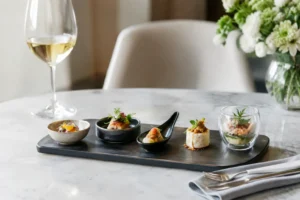
The first thing that arrives is not on the menu. A server sets down a single porcelain spoon holding a glistening bead of beetroot gel, topped with a sliver of pickled walnut and a single micro-thyme leaf. “From the chef, with our compliments.” You have not even unfolded your napkin. The evening has already begun.
That moment of confusion, where something arrives that you did not order and cannot find on the printed card in front of you, is the first test of fine dining menu literacy. A fine dining menu is not a list of dishes you choose from. It is a sequence of signals, each course engineered to do something specific to your palate, your attention, and your expectations. Once you can read that sequence, the anxiety dissolves. You stop wondering what is coming next and start understanding why.
What Is Actually on a Fine Dining Menu
A fine dining menu is a curated sequence of courses, not a catalog of options. Unlike a casual dining menu, which offers broad choice across categories so you can assemble your own meal, a fine dining menu restricts choice and substitutes structure. The kitchen decides the order, the pacing, and the progression. Your job is to receive it, not to construct it.
Three formats dominate. The tasting menu offers a single, fixed progression of five to twelve small courses with no substitutions outside of dietary restrictions. The prix fixe offers two or three choices within each course category, but the sequence itself is fixed. The a la carte selection, rare at the highest tier, lets you order individual plates, but even here the kitchen expects you to follow the conventional order: starter, then main, then dessert. Ordering a main course before a starter at a fine dining restaurant is not impossible, but it disrupts the pacing the kitchen has built its service around.
What distinguishes a fine dining menu from other formats is the presence of courses that exist outside the conventional appetizer-main-dessert skeleton. The amuse-bouche, the intermezzo, the pre-dessert, the mignardises: these are structural elements that do not appear on casual dining menus because they serve a function that casual dining does not attempt. They are the grammar of the meal, not the content. Understanding them is the difference between sitting through a tasting menu and actually reading one.
If you are deciding whether this format fits your evening at all, our comparison of fine dining and casual dining breaks down the room engineering, staffing, and pacing that separate the two experiences. This piece assumes you have already chosen the format and want to understand the menu itself.
Decoding the Course Structure
A fine dining menu follows a dramatic arc: light to rich, delicate to bold, savory to sweet, then back to light. Every course occupies a specific position in that arc, and each position carries a function. The kitchen is not serving you a series of dishes. It is building a structure, and each plate is a load-bearing element.
Amuse-Bouche: The Overture
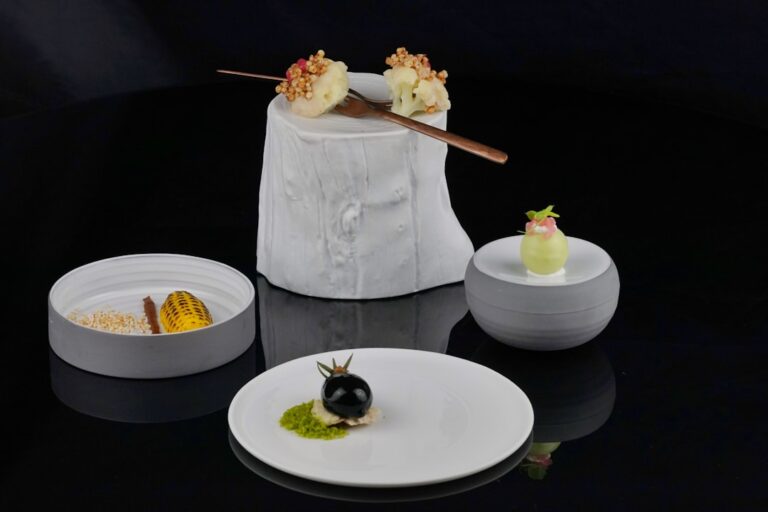
The amuse-bouche, literally “mouth amuser” in French, is a single-bite course sent from the kitchen at no charge before the formal menu begins. It is not listed on the menu card. You did not order it. It arrives as a gift, and its function is to introduce the chef’s voice in compressed form. Bold, concentrated, and precise, it primes your palate and signals the tone of everything that follows.
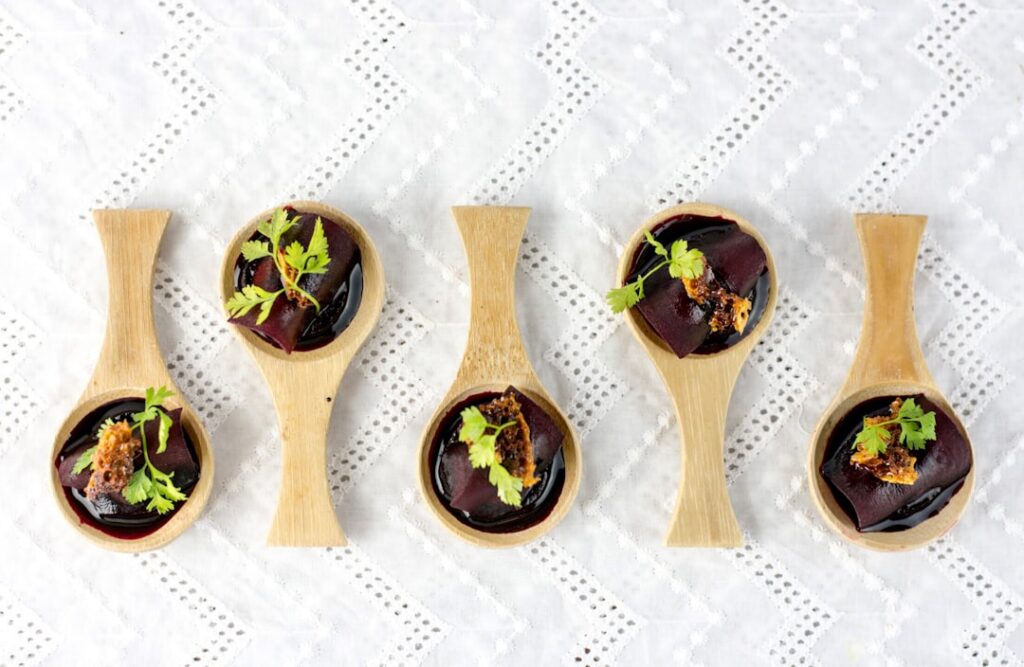
Picture a porcelain spoon holding a cold dashi gel with a shaving of black truffle, or a tiny buckwheat tartlet filled with smoked creme fraiche and a single pearl of salmon roe. In one bite, you learn whether the kitchen leans toward Japanese restraint, French classical technique, or something more playful. The amuse-bouche is the overture: a compressed statement of the entire meal’s thesis. If you want to understand the chef’s sensibility before committing to the full sequence, pay close attention to this first bite. It tells you more than the menu description ever could.
Entrée: The Opening Statement
Here is where terminology trips up many English-speaking diners. In French fine dining, “entrée” means the first course, the entry into the meal: a light starter such as a tartare, a seasonal soup, or a delicate vegetable composition. In North America, “entrée” has shifted to mean the main course. On a fine dining menu written in the French tradition, the entrée is the appetizer, not the centerpiece.
According to the historical record, the term “entrée” first appeared in print around 1536 in a French cookbook as the “entrée de table,” literally the entrance to the table. By 1650, it had come to refer to the stage of the meal after the soup and before the roast. In modern French service, it settled into its current position: the first course, light and acidic, designed to stimulate salivation and prepare the palate for richer courses ahead. A bright hamachi crudo with yuzu kosho, or a chilled asparagus velouté with a swirl of creme fraiche, would occupy this position. The acidity is functional. It wakes your palate up.
The Savory Heart: Main Courses
The middle of the menu is where the kitchen commits. After the light, acidic opening courses, the progression builds toward richness and technical ambition. You might see a hand-rolled pasta with brown butter and sage as a structural midpoint, substantial enough to anchor the meal without overwhelming what follows. Then the main protein arrives: a slow-braised short rib with bone marrow jus, a dry-aged duck breast with a cherry reduction, or a whole-roasted turbot with a brown butter caper sauce.
These courses are the meal’s center of gravity. They carry the most technique, the most expensive ingredients, and the most deliberate sourcing. The chef has likely been refining these dishes for months. In longer menus, a second main course may follow the first, often lighter in weight but equally considered: a saddle of lamb with fermented garlic, or a line-caught sea bass with fennel and saffron. The sequence within the savory heart generally moves from delicate to bold, then eases back before the transition to sweet.
Intermezzo: The Reset Button
Somewhere around the fifth or sixth course, a familiar feeling surfaces. You have eaten well. The richness has accumulated. You do a quiet calculation, how many courses are left, and wonder whether you will make it to the end. This is the exact moment the intermezzo arrives.
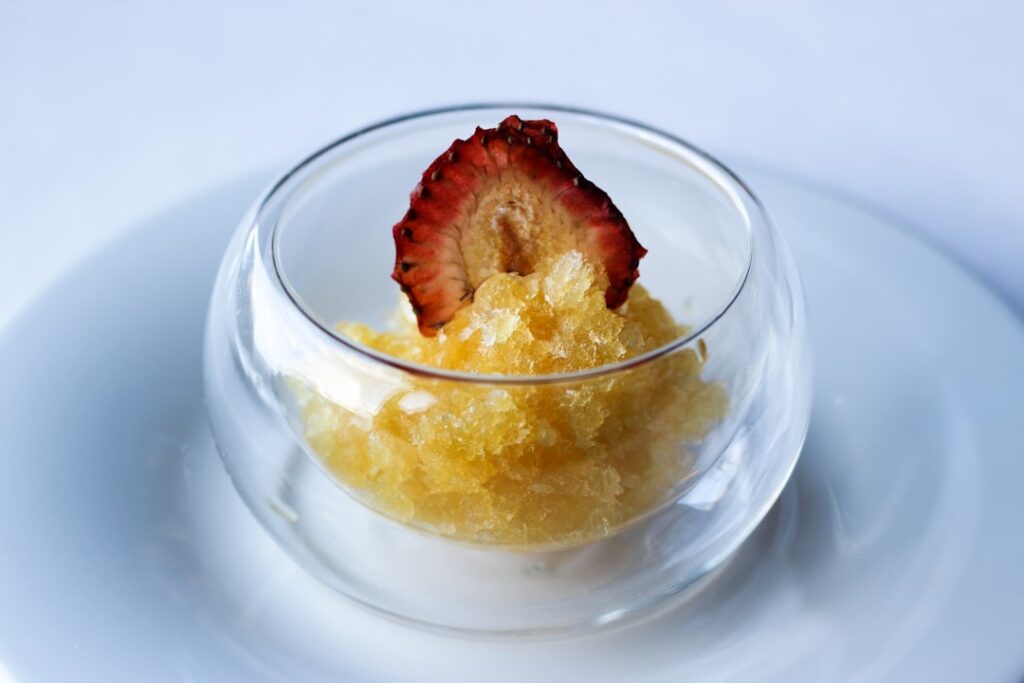
The intermezzo, an Italian term meaning “interlude,” is a palate cleanser served between the savory courses and the dessert. It is typically a citrus sorbet or a granita: a small, chilled, sharp, almost astringent spoonful that strips away the accumulated fat and richness of the preceding courses. A yuzu sorbet, a Campari and grapefruit granita, a cucumber and mint ice: these are the archetypes. The intermezzo does not exist to feed you. It exists to reset your palate so the sweet courses that follow feel approachable rather than overwhelming. The kitchen knew you would feel the weight of the savory progression, and built the solution into the structure of the meal itself.
Pre-Dessert: The Bridge
After the intermezzo, but before the main dessert, many fine dining menus insert a pre-dessert, sometimes called an “avant-dessert” in French. This is a small, lightly sweet course designed to bridge the transition from savory to sweet. It is usually fruit-based: a strawberry consomme with a drop of basil oil, a lemon-thyme sorbet with a crumble of shortbread, a single perfect fig with a quenelle of goat cheese mousse.
The pre-dessert is not the dessert. It is the course that makes the dessert possible. By introducing sweetness gradually, it prevents the main dessert from arriving as a shock to a palate still calibrated for savory flavors. Some kitchens treat the pre-dessert as a canonical course with its own slot on the menu. Others fold it into the dessert progression. Either way, it serves the same structural function: easing you across the savory-to-sweet boundary without a jarring jump.
Mignardises: The Final Punctuation
The meal does not end with dessert. It ends with mignardises, the small, sweet bites that arrive after the main dessert course, alongside coffee or tea. Two to four items per guest is typical: a dark chocolate truffle with a clean snap, a pate de fruit that bursts with concentrated fruit flavor, a tiny financier with a crackling crust and an almond-soft center, a single madeleine still warm enough to release its butter-and-honey aroma.
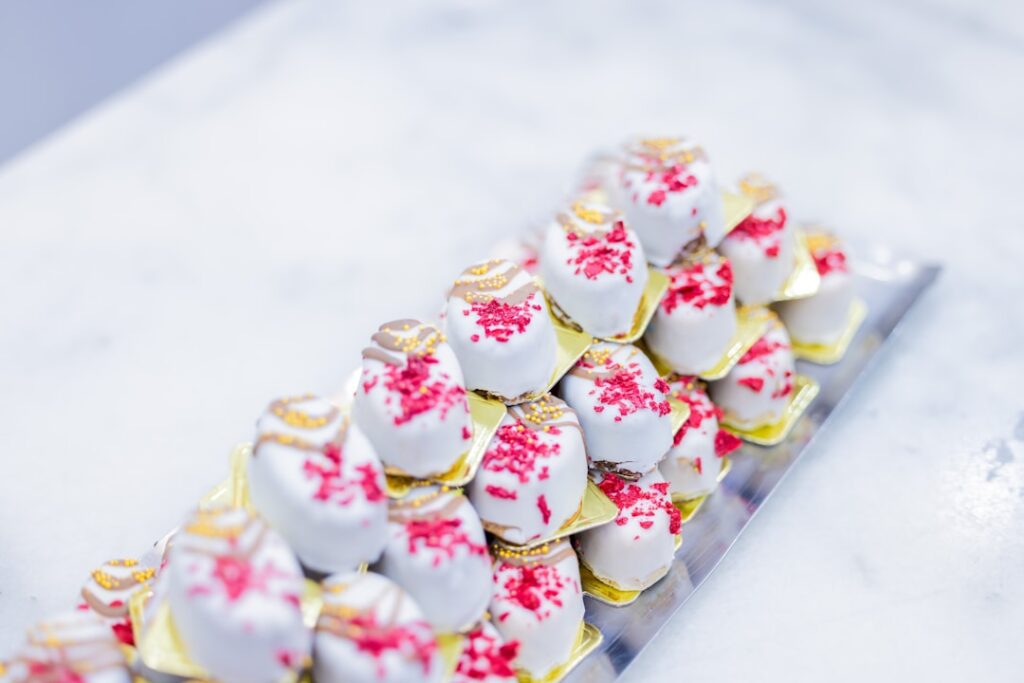
There is a distinction worth knowing. “Mignardise” is the modern fine dining term for any small sweet served at the end of the meal. “Petit four” refers specifically to small baked items, since the term translates literally to “little oven.” A madeleine or a canele is a petit four because it is baked. A chocolate truffle or a pate de fruit is a mignardise but not a petit four, because it is not baked. In practice, most fine dining servers use “mignardise” as the umbrella term, and you will rarely need to correct anyone. But knowing the distinction tells you something about the level of precision the kitchen is operating at.
Palate Cleansers, Amuse-Bouche, and Mignardises Explained
These three course types cause more confusion than any others on a fine dining menu, because they do not fit the appetizer-main-dessert framework that most diners carry from casual dining. They are structural elements, not dishes you choose. Understanding what each one does, when it appears, and why it exists lets you read the menu as a designed sequence rather than a random parade of small plates.
The table below maps each element to its position, function, and a concrete dish example so you can recognize it when it arrives.
| Course Type | Position in Sequence | Function | Typical Example | On the Menu? |
|---|---|---|---|---|
| Amuse-bouche | First item, before formal courses | Introduces chef’s style; primes palate with bold, concentrated flavor | Beetroot gel on a porcelain spoon with pickled walnut and micro-thyme | No, complimentary from kitchen |
| Entrée (French) | First formal course | Opens the meal with light, acidic flavors that stimulate salivation | Hamachi crudo with yuzu kosho and chrysanthemum petal | Yes, listed on menu |
| Intermezzo | Between savory courses and dessert | Resets palate, strips accumulated richness, prepares for sweet | Campari and grapefruit granita in a chilled cup | <Sometimes listed, often unannounced |
| Pre-dessert | After intermezzo, before main dessert | Bridges savory-to-sweet transition with gradual, light sweetness | Strawberry consomme with basil oil and shortbread crumble | Usually not listed separately |
| Mignardises | Final course, with coffee or tea | Leaves a gentle last impression; signals graceful conclusion | Chocolate truffle, pate de fruit, financier, madeleine | No, complimentary with coffee service |
How the Menu Format Shapes Your Ordering
Reading the Arc Before You Sit Down
Most fine dining menus are published online before you arrive. This is not an accident. The kitchen wants you to understand what you are committing to. Before your reservation, read the menu not as a list of dishes but as a sequence with a trajectory. Where does it start? Where does it peak? How does it resolve? If the menu opens with raw fish and closes with a cheese course before dessert, you can trace the arc: light, acidic, rich, pungent, sweet, gentle. That is the meal’s architecture, and knowing it in advance lets you relax into the experience instead of guessing what comes next.
Tasting Menu vs Prix Fixe: A Practical Choice
The choice between a tasting menu and a prix fixe is the first ordering decision you will make, and it shapes everything that follows. A tasting menu gives you no choices. The kitchen sends what it sends, in the order it decides, and you surrender control entirely. This is the format most likely to deliver a coherent narrative arc, because every course is designed to relate to the ones around it. It is also the format most likely to feel constraining if you prefer to eat what you want, not what the chef wants you to eat.
A prix fixe offers limited choice within each course: perhaps two starters, three mains, and two desserts. You still follow the sequence, but you select the content. This format suits diners who want structure without total surrender. For a deeper walkthrough of what the tasting menu experience feels like course by course, our tasting menu guide for first-timers covers pacing, portions, and the question of fullness in detail.
Dietary Restrictions: Timing Is Everything
If you have allergies, intolerances, or dietary restrictions, the single most important ordering decision happens before you sit down. Mention restrictions at the time of booking, not at the table. Fine dining kitchens plan their menus days in advance, with every component prepped and portioned to the gram. Announcing a gluten allergy when you sit down forces the kitchen into rushed substitutions rather than thoughtful alternatives. Most booking platforms, whether Tock, Resy, or OpenTable, include a dietary notes field. Use it. For complex restrictions, call the restaurant directly a few days before.
Wine Pairings: Let the Sequence Guide You
The wine pairing is optional, but it transforms the menu from a sequence of plates into a unified sensory experience. A sommelier selects a different pour for each course, chosen to amplify, contrast, or complete what is on the plate. A delicate raw fish course might receive a dry Riesling from the Mosel, all mineral and citrus. A slow-braised meat course might call for a Burgundy or a Northern Rhone red. The sommelier’s job is to find the wine that makes the food taste more like itself.
If the full pairing is too much, financially or in terms of alcohol, ask whether the restaurant offers non-alcoholic pairings or half-pours. Many now do, and a well-built non-alcoholic pairing uses infusions, juices, and ferments with the same course-by-course logic as the wine list. For a sense of how wine pairings function within the full starred dining experience, our piece on what a Michelin star meal actually feels like walks through the sommelier’s role in detail.
A Decision Framework for the Menu
Before you book, ask yourself three questions.
First, how much control do you want over what you eat? If the answer is “complete,” choose a la carte or prix fixe. If the answer is “none, surprise me,” choose the tasting menu.
Second, how long do you want to stay? A five-course prix fixe runs roughly two to two and a half hours. A ten-course tasting menu fills three hours or more. Do not schedule anything immediately after.
Third, are there dietary restrictions in your party? If yes, the tasting menu can accommodate them, but only if the kitchen knows in advance. The prix fixe offers more inherent flexibility because you can select around restrictions within each course.
Before Your Next Reservation
A fine dining menu is a designed sequence, and reading it with confidence is a skill that compounds. Once you understand the arc, the amuse-bouche stops being a surprise and starts being a thesis statement. The intermezzo stops being a random sorbet and starts being a structural hinge. The mignardises stop being afterthoughts and start being the final note the kitchen chose to leave ringing in your memory.
You do not need to memorize French terminology to order well. You need to understand that each course occupies a position in a progression, and that the progression has a logic: light, then rich, then reset, then sweet, then gentle. When you sit down and the first spoon arrives, you will know exactly what it means. The Dining Post covers the full spectrum of the dining experience, from how to read a room before you book to what is worth ordering when you get there. Browse our latest restaurant features and dining guides, or subscribe to our weekly dispatch for new reviews and recommendations every week. Have a question about a specific menu format? We would love to hear from you.
Frequently Asked Questions
What is the difference between an amuse-bouche and an appetizer?
An amuse-bouche is a single-bite course sent from the kitchen at no charge before the formal menu begins. It is not listed on the menu and you do not order it. An appetizer, or entrée in French terminology, is the first formal course listed on the menu that you select yourself.
Does entrée mean appetizer or main course?
In French fine dining, entrée means the first course, a light starter. In North American usage, entrée has shifted to mean the main course. On a fine dining menu written in the French tradition, entrée refers to the appetizer, not the centerpiece.
What is an intermezzo in a fine dining menu?
The intermezzo is a palate cleanser served between the savory courses and dessert, typically a citrus sorbet or granita. It strips away accumulated richness from the savory progression and prepares your palate for the sweet courses that follow.
What is the difference between mignardises and petit fours?
Mignardise is the modern fine dining term for any small sweet served at the end of the meal with coffee or tea. Petit four refers specifically to small baked items, since the term translates to little oven. A madeleine is a petit four because it is baked. A chocolate truffle is a mignardise but not a petit four.
How many courses are on a typical fine dining menu?
Fine dining menus typically range from five to twelve courses. A compact menu of five to seven courses runs about two to two and a half hours, while a ten to twelve course tasting menu can fill three hours or more.


One thought on “Fine Dining Menu Decoded: What Each Course Signals”