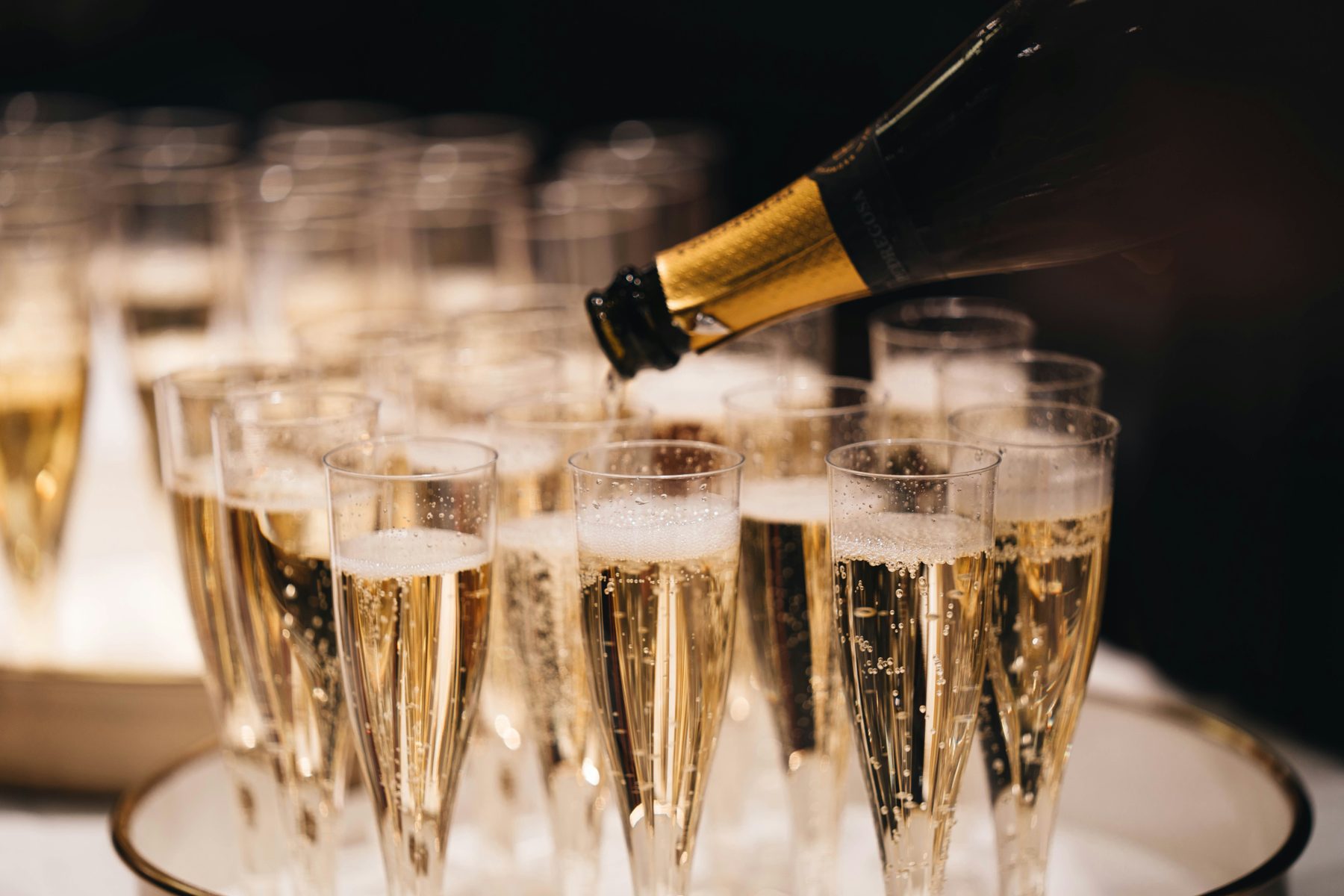
A bottle of sparkling wine has a way of raising the stakes before anyone takes a sip. The cork, the cold glass, the first fine stream of bubbles: each detail signals that dinner has moved from ordinary to occasion. Knowing how to serve sparkling wine is not about performing tableside theater. It is about protecting the wine’s freshness, texture, and sense of ceremony.
Whether you are opening grower Champagne before a tasting menu, pouring Cava with fried chicken, or bringing a good California sparkling wine to the table for roast chicken, the fundamentals are remarkably consistent. Temperature matters. So does the glass. And the loud pop, despite its movie-star appeal, is rarely the goal.
Start With the Right Temperature
Sparkling wine should arrive at the table properly chilled, but not numbingly cold. For most bottles, aim for 45 to 50 degrees Fahrenheit. At this range, the bubbles remain lively while the wine’s aroma and flavor have room to emerge. Chill it much below 40 degrees and a nuanced Champagne can taste muted, all citrus and carbon dioxide. Serve it too warm and the pressure inside the bottle becomes harder to manage, while the wine can seem broad, frothy, and slightly sweet.
A standard 750-milliliter bottle needs about three hours in the refrigerator. If guests are arriving sooner, use an ice bucket filled with equal parts ice and water. Submerge the bottle to its shoulder and give it 20 to 30 minutes. Ice alone leaves pockets of warm air around the bottle, which is why the water matters.
Once opened, keep the bottle in the bucket between pours. This is particularly useful at a long dinner, where a cold first glass can become a warm, tired final pour. If you are serving vintage Champagne or a serious blanc de blancs, let the bottle sit for a few minutes after opening before pouring. That slight rise in temperature can reveal toast, hazelnut, orchard fruit, or the saline edge that made you choose it.
How to Serve Sparkling Wine Without Losing the Bubbles
There is no need to spray the room, no matter what a Formula 1 podium has taught us. The best opening makes a quiet sigh, not a bang. It keeps the wine in the bottle and preserves more of its pressure for the glass.
First, remove the foil and keep a thumb firmly over the cork. Loosen the wire cage, but leave it around the cork as an extra measure of control. Hold the bottle at a 45-degree angle, pointed away from people, glassware, and anything breakable. Grip the cork with one hand and turn the bottle slowly with the other. The bottle should rotate, not the cork.
As the cork begins to ease out, resist the urge to pull. Apply gentle counterpressure until it releases with that soft exhale. This is especially valuable with a bottle that has traveled in a warm car or been shaken on the way to a party.
Then pour slowly. Tilt each glass slightly and let the wine run down the inside, much as you would pour a beer with a controlled head. Start with a small amount, allow the foam to settle, then finish the pour. Filling a glass only about two-thirds full leaves room for aromas and makes the wine easier to carry through a crowded dining room or living room.
Choose Glassware for the Wine, Not Just the Photograph
The tall, narrow flute has undeniable visual appeal. It showcases a column of bubbles and fits naturally into a toast. But it is not always the most flattering choice for the wine itself. A very narrow bowl limits aroma, which can make an expressive sparkling wine seem simpler than it is.
For casual aperitifs, receptions, and large gatherings, flutes are perfectly practical. They preserve carbonation well and make it easier to circulate with a drink in hand. For a seated dinner or a bottle worth paying attention to, choose a tulip-shaped sparkling wine glass or a small white wine glass. Both give the aromas space to gather while retaining enough shape to keep the mousse, the wine term for that creamy bubble texture, energetic.
The classic coupe is the least useful option for serious service. Its broad, shallow bowl causes bubbles to fade quickly, and it offers little aromatic focus. Still, it can be charming for a retro party or a tower built for spectacle. Just pour the coupes immediately before serving and accept that the effect matters more than precision.
Whatever you use, make sure the glasses are clean and free of detergent residue. Soap film and kitchen grease can flatten bubbles faster than most hosts realize. Polish glassware with a lint-free towel, and avoid storing it in a cabinet that smells strongly of wood, spice, or dishwasher rinse aid.
Match the Bottle to the Moment
Not every sparkling wine needs the same service ritual. A crisp Prosecco is usually best young, very cold, and poured as an easy first drink. Its apple, pear, and floral character suits an afternoon gathering, brunch, or a spread of salty snacks. Champagne and traditional-method wines, including many top-quality California sparklers, often gain complexity at the table and can carry a full meal.
Consider the sweetness level, too. Brut is dry enough for most savory settings, though it is not bone-dry by definition. Extra brut and brut nature are leaner choices for oysters, crudo, and other briny dishes. Demi-sec, which is noticeably sweeter, can be excellent with fruit desserts, almond cake, or a salty blue cheese. The label tells part of the story, but acidity changes the experience, so a bright demi-sec may feel less sweet than expected.
Rosé sparkling wine deserves more than a ceremonial prelude. Its red-fruit character and broader structure can stand up to duck, salmon, charcuterie, or a spicy tuna roll. A mature vintage Champagne can even make sense alongside roast chicken with morels or a butter-basted lobster, provided the dish does not bury the wine under a heavy cream sauce.
Pour With Food in Mind
Sparkling wine’s great advantage at the table is not merely celebration. High acidity refreshes the palate, and bubbles lift richness, making it unusually adaptable with food. This is why sommeliers so often begin a meal with sparkling wine and why a well-chosen bottle can remain compelling through several courses.
Salt, fat, and crunch are its natural allies. Think potato chips with crème fraîche, oysters with a sharp mignonette, fried calamari, tempura, or a platter of warm gougères. A dry sparkling wine also handles the tricky sweet-salty equation of prosciutto and melon, or the heat of Korean fried chicken, better than many still wines.
For dinner, let intensity guide you. Delicate blanc de blancs works beautifully with raw seafood, goat cheese, and simply prepared fish. Pinot-driven rosé Champagne can take on grilled pork, duck breast, or mushroom dishes. Richer, oak-influenced vintage bottles suit dishes with browned butter, roasted poultry, and earthy truffles. The trade-off is that very delicate bottles can disappear beside smoke, aggressive chile heat, or deeply sweet glazes.
Pace the Bottle Like a Host
A standard bottle holds about six generous five-ounce pours, or closer to eight modest aperitif pours. Plan accordingly. If sparkling wine is the welcome drink for a party, estimate one bottle for every two to three guests during the first hour. If it will accompany dinner, count the number of courses and the other wines being poured rather than assuming everyone wants a full bottle’s share.
After opening, use a proper sparkling-wine stopper if the bottle will sit for more than an hour. A spoon in the neck is a persistent party myth, not an effective preservation method. Refrigerate the recorked bottle, and drink it within a day or two. It may still be pleasant after that, but its defining lift will have faded.
The best service is attentive without becoming fussy. Chill the bottle well, open it quietly, choose glassware that suits the occasion, and pour before the conversation needs a refill. When sparkling wine is handled with that kind of ease, it does more than mark a celebration. It gives the entire table a brighter rhythm.
One thought on “How to Serve Sparkling Wine for Every Occasion”